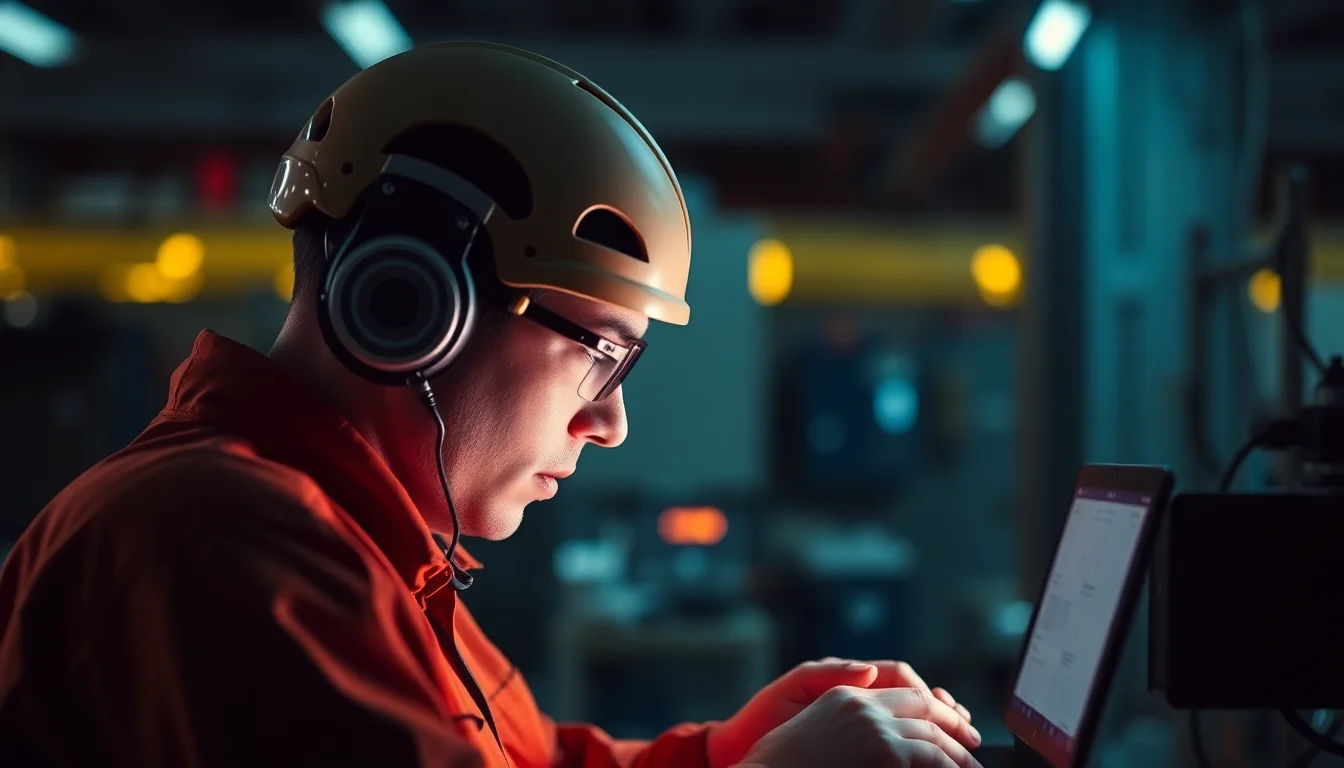
AWS has turned a familiar demo pattern into something closer to an operational workflow: a field repair assistant that can diagnose equipment faults, identify parts, and guide technicians through manufacturer-approved repair steps in natural language. The build, described in AWS’s new walkthrough, uses Amazon Bedrock AgentCore, Nova 2 Lite, a retrieval-augmented knowledge base, AgentCore Memory, and Cognito authentication to move beyond static manuals and toward an interactive troubleshooting layer for field-service teams.
That matters because field repair has always been a latency-sensitive problem in a different sense than web search or customer support. A technician is standing beside a machine, often with limited connectivity, a narrow maintenance window, and a strong penalty for getting the next step wrong. In that environment, an AI assistant is only useful if it can surface the right procedure quickly, stay grounded in approved documentation, and preserve enough conversational state to avoid forcing the technician to repeat the failure mode every time they ask a follow-up.
The stack: runtime, retrieval, memory, and identity
The architecture AWS sketches is straightforward enough to be legible, but there is a lot packed into it. The agent itself runs on AgentCore Runtime and is built with the Strands Agents SDK. Nova 2 Lite serves as the foundation model. A retrieval-augmented knowledge base supplies the repair content, giving the assistant access to indexed manufacturer documentation rather than relying on the model’s parametric memory. AgentCore Memory handles persistence across turns so the assistant can retain the context of a diagnostic session. Cognito provides authentication at the front door.
That combination reveals the intended product shape. This is not a freeform assistant asked to improvise repairs. It is an authenticated field repair assistant sitting on top of curated documentation, designed to answer equipment diagnostic questions, locate the relevant parts, and return repair procedures that are already approved by the manufacturer.
The data flow is also the point. A technician enters a problem description through a web front end. The request is authenticated through Cognito and handed to the hosted agent. The agent uses retrieval against the knowledge base to pull relevant documentation, then composes a response using Nova 2 Lite, with memory available to preserve the state of the interaction. In practical terms, the system is trying to reduce the time between symptom and procedure without letting the model invent a repair path from scratch.
Why the technical tradeoffs are not trivial
The promise is obvious: less downtime, fewer repeat visits, and better use of scarce service labor. The harder question is whether the system remains trustworthy once it leaves the controlled environment of a blog demo.
Latency is the first constraint. Field service is one of those domains where “fast enough” is not a vague product metric but a workflow requirement. If retrieval adds friction, or if the model is too large for responsive on-site use, technicians will route around it. That is likely why the build uses Nova 2 Lite rather than a heavier model class: the design appears optimized for practical interaction speed rather than maximal model capacity.
Accuracy is the second. Retrieval-augmented generation improves grounding, but only if the underlying corpus is clean, current, and well indexed. A field repair assistant is only as good as the maintenance manuals, parts catalogs, and service bulletins it can retrieve. Missing a revision, misclassifying a part number, or surfacing an outdated procedure can turn a useful assistant into a liability.
Memory adds another layer of complexity. Persistent conversation state is valuable when a technician is tracing a fault across multiple symptoms, but it also raises operational questions: what exactly should be remembered, for how long, and under what access controls? In a safety-critical workflow, memory is not just a product feature. It is part of the system’s control surface, and it has to be treated accordingly.
Governance is where all of these issues converge. Repair guidance is not a generic chat use case. If the assistant can draw from sensitive documentation, then the deployment needs to address information leakage, authorization boundaries, logging, and the risk of hallucinated instructions. The difference between a useful suggestion and a dangerous one may be one missing torque specification or one misidentified replacement part.
What OEMs and service platforms can do with this
For OEMs, the competitive implication is clear: an AI-assisted repair layer can become part of the service relationship itself. Instead of treating manuals and troubleshooting trees as static assets, vendors can package them into a Cognito-authenticated, retrieval-augmented workflow that lives closer to the point of repair. That does not eliminate existing service systems, but it creates a new interface layer over documentation, parts data, and diagnosis.
For field-service platforms, the integration path is equally important. The assistant can be wired into existing toolchains and document repositories without requiring a wholesale rewrite of service operations. That makes adoption more plausible. It also means the real value may accrue to operators who already have disciplined documentation practices and a clean data model for parts, revisions, and service history.
The rollout question is therefore less about whether AI can answer repair questions and more about which organizations can operationalize it without compromising control. Companies with strong documentation pipelines and well-defined service processes will be better positioned to deploy a production-grade system. Those with fragmented manuals, inconsistent parts catalogs, or weak governance will likely struggle to make the assistant dependable.
The next test is trust under pressure
The most interesting part of this rollout is not that it uses an agent, or even that it uses retrieval. It is that the whole design is framed around production conditions: authenticated access, persistent memory, curated knowledge, and a model choice that suggests responsiveness matters. That is a meaningful step beyond the “look what an LLM can do” phase.
But field maintenance is unforgiving. The long-term viability of AI-guided repair in mission-critical environments will depend on responsible-AI controls, data governance, and continuous validation against real service outcomes. If the assistant cannot be audited, updated, and constrained tightly enough to keep pace with changing equipment and documentation, it will remain a pilot tool rather than an operational dependency.
For now, the signal is that AI-assisted field repair is moving from prototype to production-grade deployment. The interesting work is no longer in proving that a model can summarize a manual. It is in proving that a Cognito-authenticated, retrieval-augmented system built on AgentCore and Nova 2 Lite can stay accurate, fast, and governable when the machine is down and the technician is waiting on an answer.


