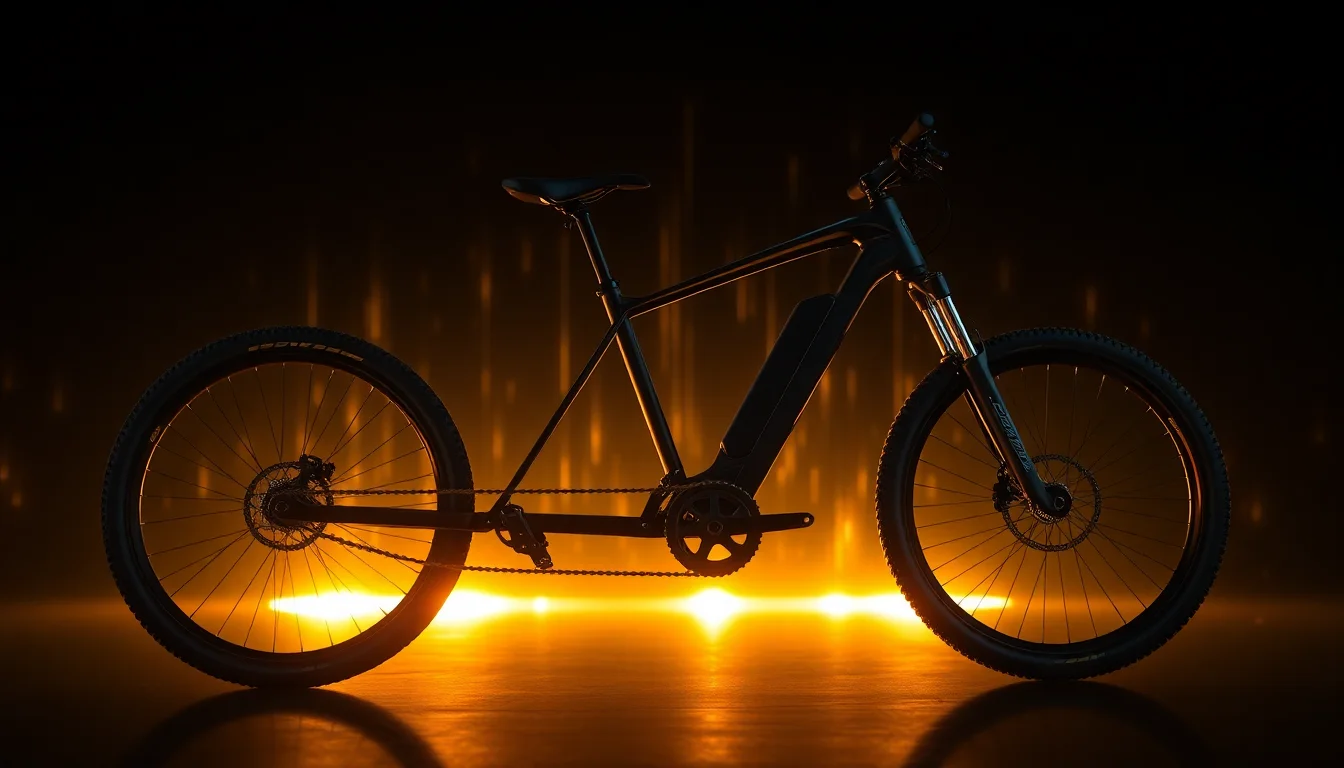
1. What changed now: Amflow’s PX and PR redefine power and configurability
Amflow’s latest pair of electric mountain bikes—PX and PR—are built around Avinox’s M2S and M2 drive systems. The Verge notes these motors enable up to 1,500W of peak power and torque up to 150Nm, a pairing that pushes the traditional power-versus-weight trade-offs for consumer e-bikes. The carbon fiber frames are deliberately tuned for configurability, offering up to 40 geometric configurations to tailor ride geometry and power delivery to different terrains and rider preferences. In short, Amflow is tying a higher power envelope to rider-specific geometry in a way DJI-backed branding can monetize through software-driven iteration.
Evidence anchor: The Verge describes PX and PR as built around Avinox’s M2S/M2 drive systems with 1,500W peak power and 150Nm torque, and highlights the carbon frame’s 40 geometric configurations as a key lever for tuning.
2. Hardware & software stack: a drive system engineered for AI-compatibility
The hardware stack is described as a dense, high-power platform designed to support a broad control spectrum. The M2S/M2 integration provides a tunable envelope, which, in a software context, could underpin real-time torque shaping, fault-detection signals, and software-driven performance profiles. This architecture aligns with a broader AI-enabled workflow: edge compute can be embedded in the drive chain, and software updates can refine behavior without requiring new hardware. The Verge’s coverage reinforces that these bikes are built around exceptionally capable motors, with riders able to “extensively tune” the ride through the available configurations.
Evidence anchor: The Verge notes that Amflow’s PX/PR use Avinox M2S/M2 drives delivering up to 1,500W peak power and 150Nm torque, and that the carbon frames enable significant configurability to tune performance.
3. Rollout strategy and market positioning: leveraging DJI’s ecosystem
Positioning hinges on brand strength and modularity. The DJI heritage provides premium branding leverage, while the product family emphasizes configurability—specifically, up to 40 geometric configurations—paired with a software-centric approach that supports rapid iteration. The Verge’s coverage frames Amflow as a follow-on from a brand known for engineering density, with the new e-bikes designed to tolerate aggressive riding styles by virtue of the high power and tunable geometry.
Evidence anchor: The Verge identifies Amflow as a DJI-backed brand and highlights the 40 geometric configurations that enable rider-tuned performance. The family branding and premium positioning are implicit in the reporting.
4. Risks and governance: safety, reliability, and regulatory implications in AI-enabled powertrains
Hitting a consumer platform with 1,500W peak power raises the stakes for mechanical integrity and rider safety. High power magnifies consequences of faults in the drive or control loop, and any AI-enabled surface—if introduced—will raise questions about data handling, privacy, and repairability within consumer mobility hardware. The Verge’s coverage emphasizes the power and tuning capabilities, which implies a need for rigorous validation of materials, joints, and software controls to stay within safety and regulatory expectations as deployments scale.
Evidence anchor: The Verge covers the high power and torque of the M2S/M2-based AMFLOW stack, underscoring the safety and reliability considerations inherent in a system that can deliver substantial instantaneous power.
5. What to watch next: AI-driven features, software cadence, and data strategy
Looking ahead, the architecture invites ongoing software-driven evolution. Near-term threads likely include exposure of torque maps and efficiency profiles through software, with real-world data guiding refinements in performance models across the 40 geometry configurations. Analysts will be watching how Amflow translates the AI-relevant implications of edge compute, real-time sensing, and potential OTA-style software cadence into measurable gains in reliability and user experience while maintaining compliance with mobility regulations.
Evidence anchor: The Verge’s portrayal of a high-density, tunable drive system implies a software-forward trajectory and the potential for accumulated data to inform future tuning, even as explicit OTA features are not described in the article.
Evidence-backed takeaway
The Amflow PX and PR launch, anchored by Avinox’s M2S and M2 drive systems, demonstrates a deliberate move to couple high power with configurability on a DJI-backed platform. The 1,500W peak, 150Nm torque, and 40-geometry configurability create a technical envelope that could support AI-enabled drive control and edge compute under a software-first rollout strategy. The rollout context positions Amflow to push post-launch software evolution as a differentiator in a market where premium branding and hardware density intersect with data-informed performance tuning.


