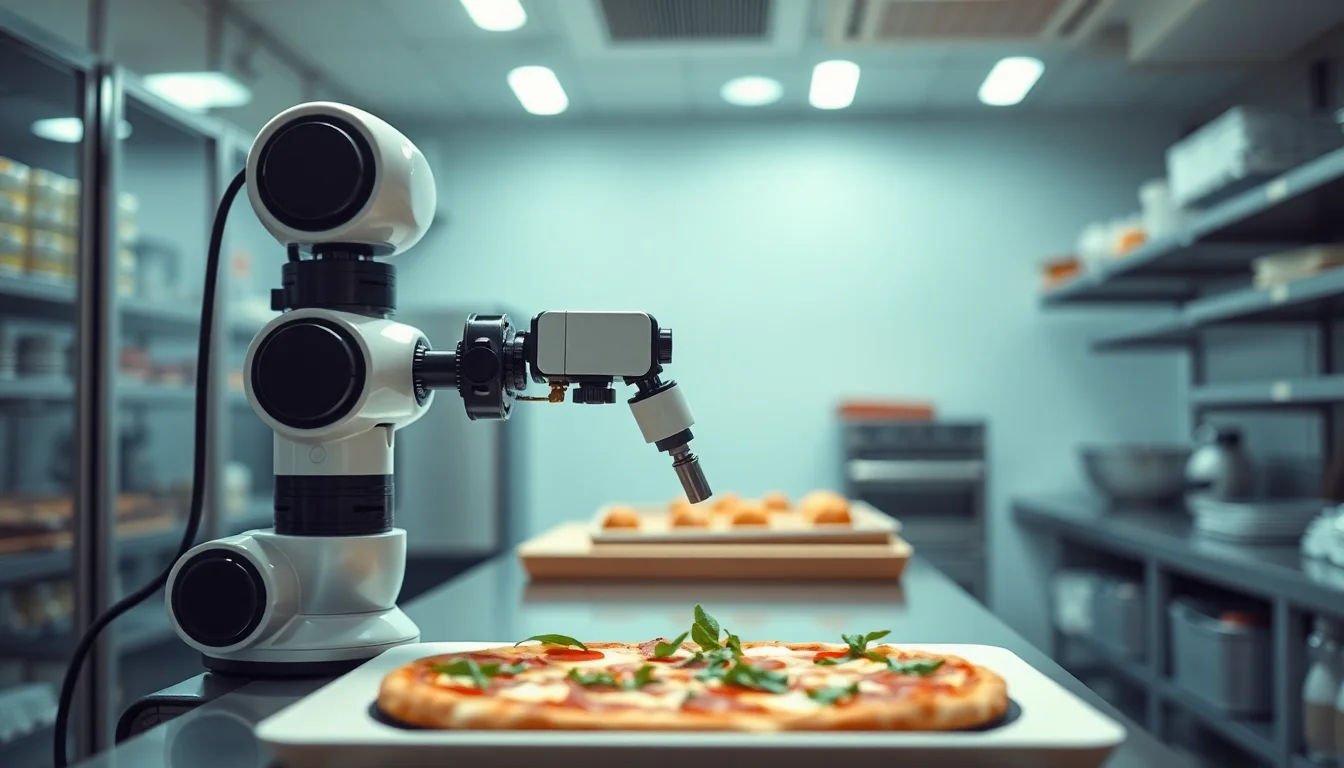
Appetronix’s acquisition of Cibotica is a clear signal that the company wants to move from pizza-centric automation toward a kitchen-wide robotics platform. The most important asset in that shift is not just another machine, but Remy, Cibotica’s bowl and salad assembly system, which combines automated ingredient dispensing and portioning with machine-learning-driven control. Cibotica says Remy can assemble up to 300 bowls an hour, a scale claim that immediately raises the bar for what Appetronix has to preserve as it integrates the technology into its own stack.
That matters because the category expansion is not simply a menu expansion. A pizza system can be optimized around a relatively constrained set of ingredient geometries, preparation sequences, and thermal constraints. Bowl assembly, salad builds, and other assembled foods add far more variability: ingredient density, flow characteristics, portion variance, visual recognition of container fill states, and frequent configuration changes across recipes. Once ML-based dispensing is inserted into the loop, the system needs to make policy decisions in real time about when to dispense, how much to dispense, and when to correct for drift. In practice, that means the model is part of the control plane, not just an upstream classifier.
For operators, the technical implication is that performance will hinge on the quality of the feedback loop. A dispensing model has to be trained against ingredient-specific data, then calibrated to the physical realities of pumps, nozzles, conveyors, and bowl positions. Small changes in ingredient texture or humidity can affect flow rate and accuracy. If Appetronix wants to preserve the promised throughput of up to 300 bowls per hour, it will need robust calibration routines, fault detection, and exception handling that prevent one bad dispense from cascading into a throughput drop or a waste spike. In a production kitchen, the model cannot be judged only on top-line accuracy; it has to hold up under maintenance drift, ingredient substitution, and daily operational variance.
The platform question is even more important than the machine question. Appetronix is not just buying dispensing hardware; it is adding Cibotica’s automated ingredient dispensing and portioning technology into its portfolio in a way that could support a broader kitchen operating layer. That kind of “kitchen OS” ambition requires a shared data model across categories: common ingredient catalogs, recipe definitions, telemetry schemas, scheduling logic, error codes, and audit logs. Without that standardization, every new food category becomes a bespoke integration project, and the supposed platform begins to look like a collection of one-off automations.
A unified platform also introduces governance requirements that pizza-only automation can sometimes avoid. If the same orchestration layer is going to manage different menu types, the system needs traceability across model versions, ingredient provenance, dispense events, and operator overrides. That is particularly important for food safety, where reproducibility matters as much as speed. If Appetronix wants to “elevate the entire food robotics ecosystem,” as CEO Nipun Sharma put it, it will have to prove that its telemetry and controls are mature enough to support not only new cuisine types but also consistent reporting and rollback when model behavior changes.
The strategic upside is real. A cross-category automation platform can spread development cost across more use cases, improve utilization, and give operators a single vendor relationship for multiple kitchen workflows. It also creates a stronger differentiated position than a single-format robot, especially if the same core perception and dispensing stack can serve bowls, salads, and eventually other assembled foods. But the risks are just as concrete. Integration complexity can erode the throughput gains that made the acquisition attractive in the first place, and the more categories Appetronix supports, the more it has to manage cross-domain data, calibration schedules, and reliability across environments that are not identical.
The deal also leaves important commercial questions unanswered. Financial terms were not disclosed, so there is no public basis for evaluating the purchase price against the throughput, deployment, or software-platform upside Appetronix may be expecting. That makes the rollout cadence the next critical signal. Investors and operators should watch for whether the company moves first through narrow pilots, then expands to multi-site deployments, or whether it tries to unify the platform too quickly. The proof point will not be the announcement itself, but the sequence of releases, the stability of the model-and-control stack, and the concrete KPIs Appetronix uses to show that a pizza robot can become a broader kitchen automation system without losing industrial discipline.


