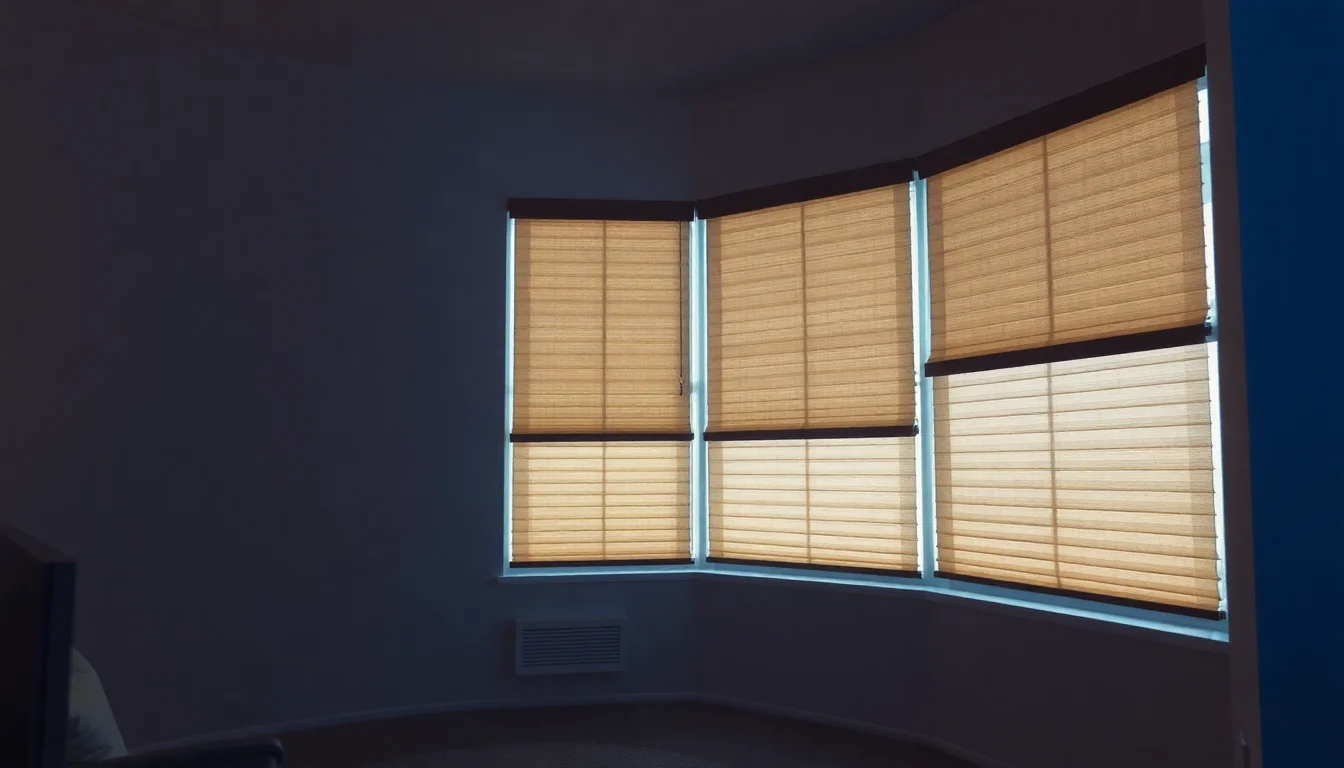
Lede: AI-enabled shades become a platform
The WIRED roundup for 2026 positions smart window coverings not as gadgetry but as a platform category poised to redefine how buildings respond to light, presence, and privacy. From motorized units to tailor-made fabrics, the article frames these products as data-driven control surfaces that must be governed by standardized interfaces, model governance, and rigorous security postures. In other words, the kitten-soft comfort of automated drapes now sits alongside decision-scale requirements for interoperability across brands, firmware updates, and auditable data flows. The gap between “best-in-class feature lists” and “best-in-class platform posture” is no longer cosmetic; it’s a gating factor for real-world deployment. As WIRED puts it, the coolest shades are those that fit into a cross-brand ecosystem and a governance model, not only a single-vendor smile sheet. From made-to-measure systems to retrofit curtain bots, these are our favorite WIRED-tested drapes for your windows. The shift matters because it reframes how product teams should think about hardware–software co-design, edge execution, and deployment strategy in 2026.
Technical implications: models, data, and edge compute
The platform perspective forces a breakdown of AI workloads that historically lived inside a few black-box modules attached to a motor. Edge inference on actuators is no longer a novelty; it’s a design constraint tied to latency, reliability, and privacy. Sensor fusion for ambient light, occupancy, and shadow prediction drives the need for lightweight, certified models that can run on constrained hardware without sacrificing accuracy or safety. OTA firmware updates become a continuous risk-and-ops loop rather than a quarterly ritual, demanding secure patching, rollback paths, and provenance for model weights and configuration. This setup elevates data pipelines from simple telemetry streams to carefully engineered privacy-preserving flows: local feature extraction, edge-only inference where possible, and selective cloud retries for non-critical analytics.WIRED’s 2026 survey highlights a spectrum of devices—made-to-measure shades and retrofit curtain bots—whose architectures must accommodate modular sensors, actuators, and model lifecycles while preserving user privacy and predictable performance.
Product rollout realities: customization vs retrofit and interoperability
Market reality is bifurcating into two tracks: bespoke, made-to-measure systems with tight data models and calibration loops, and retrofit solutions that convert existing drapes into AI-enabled agents. The made-to-measure path promises tighter integration with architectural data models and calibrated light-control scenes, but it also tightens the data contract across the stack and creates a more demanding calibration and certification regime. Retrofit curtain bots, by contrast, offer speed to pilot and integration into existing windows but complicate interoperability and certification because they must contend with varied curtain geometries, mounting surfaces, and control interfaces. The WIRED piece emphasizes this tension, noting the breadth of options—from tailor-made setups to retrofit devices—that must be evaluated against shared standards and APIs if cross-brand interoperability is to materialize in 2026.
Security, privacy, and governance in window AI
Every data path—from ambient sensors to cloud or edge inference—carries risk. The governance question is not abstract: it determines who can access what data, where processing occurs, and how patches are delivered without destabilizing user control. Secure OTA patching is a baseline, but vendor-agnostic privacy controls and auditable data handling policies become differentiators as shades grow more capable. In 2026 deployments, a consistent, auditable data governance posture—data minimization, on-device processing where feasible, and transparent data-sharing agreements—will separate platforms from one-off gadgets. The WIRED roundup underscores this reality by presenting a landscape where security and privacy are part of the platform’s value proposition, not afterthought features.
What this means for teams: signals and actions
If 2026 is the year platforms take hold, engineers, product leaders, and deployment planners must act accordingly. The signal is modular hardware–software stacks with clean API surfaces that enable plug-and-play interoperability across brands and models. Teams should define and pursue interoperability standards that support a spectrum of devices—from tailor-made installations to retrofit bots—without compromising safety or data integrity. Pilot programs should be designed around measurable metrics for security, performance, and user acceptance, with clear success criteria for latency, calibration drift, and privacy guarantees. The WIRED piece reinforces that this is not merely a feature race; it’s a governance and architecture race that will determine which shades can scale across environments and which remain niche devices.
Conclusion: a platform-plus-protocol moment for window AI
The takeaway from WIRED’s 2026 roundup is not just about better blinds or smarter drapes. It’s about rethinking the entire envelope of how window treatments collect, process, and act on data. That repositioning—treating AI-enabled shades as a platform with standardized interfaces and robust governance—requires a deliberate strategy that spans hardware design, edge compute, data engineering, and compliance. The opportunity, condensed, is clear: platforms unlock cross-brand interoperability that reduces vendor lock-in, while robust security and governance unlocks the rollouts necessary for real-world adoption. In 2026, the best window coverings will be those that can talk to other devices, protect user data, and prove their performance in the wild, not just in a lab spec.


