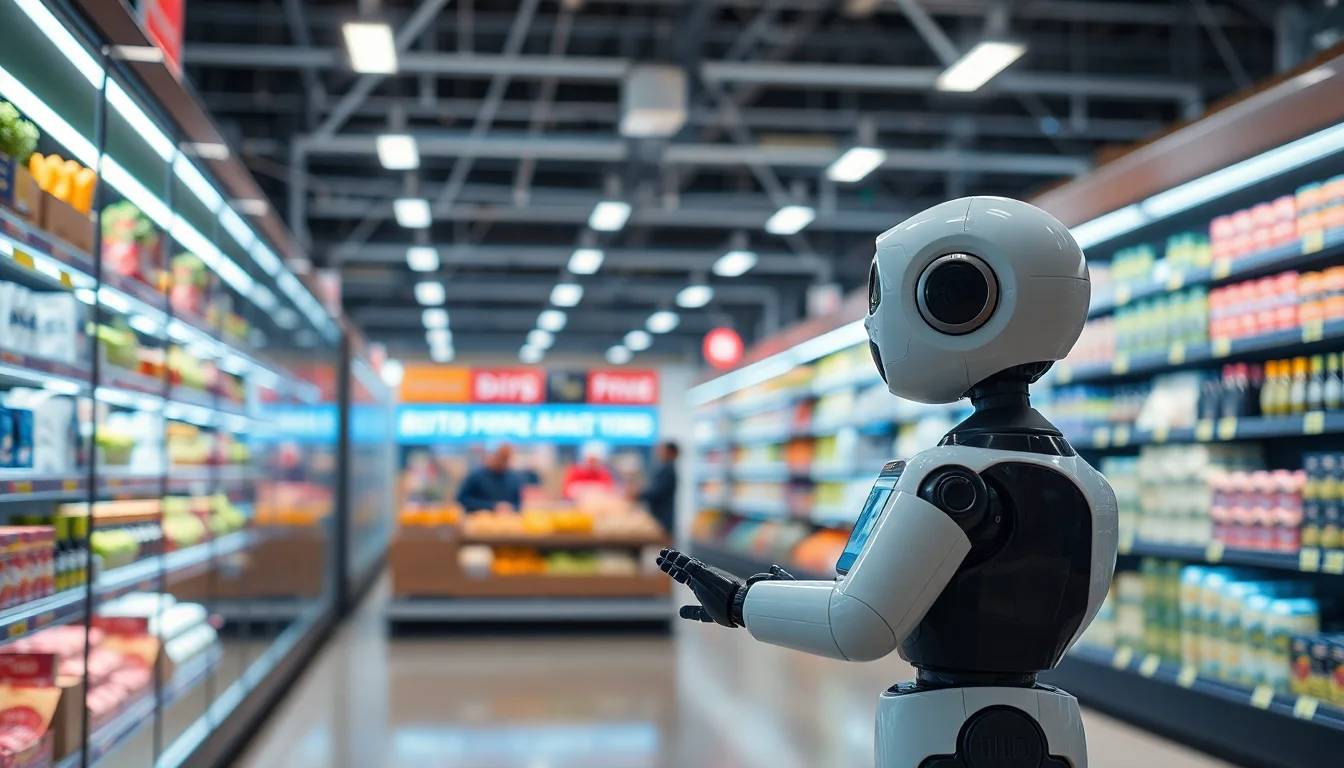
Brain Corp says its BrainOS shelf-scanning robots are delivering strong results at Albert, the Czech supermarket chain owned by Ahold Delhaize, and the scale of the rollout is what makes the news matter now: this is no longer a controlled pilot in a few stores, but a deployment across Albert’s 350-store footprint. For technical readers, that shift changes the question from whether computer-vision shelf scanning works at all to whether it can stay accurate, governable, and economically useful when it is threaded into daily retail operations.
Albert’s problem is familiar to anyone who has watched store automation move from lab to floor. Its inventory process is structured but still heavily manual: after replenishment cycles, associates and managers scan empty shelves to correct the system. That works until staffing gaps, time pressure, and uneven experience slow the corrections down. Brain Corp’s case is that autonomous shelf scanning can close that visibility gap sooner, reducing the lag between an empty facing and a replenishment action. In a grocery setting, that lag is not cosmetic; it affects on-shelf availability, sales capture, and the store’s ability to keep inventory records aligned with reality.
From pilot to scale: what changed and why it matters now
The move to 350 stores is the real story. At pilot scale, robotics deployments can look better than they are because support is concentrated, store layouts are carefully selected, and engineers can absorb exceptions manually. At chain scale, the system has to handle variation: different aisle geometries, endcaps, promotional displays, seasonal resets, and the operational rhythms of hundreds of store teams.
That is why Albert matters as a test case. A rollout across a national footprint signals that BrainOS is being asked to behave less like a showcase system and more like retail infrastructure. If it can do that, the business case extends beyond shelf-scanning labor savings. It also includes improved inventory fidelity, faster exception handling, and the possibility of more responsive replenishment planning.
How BrainOS and Albert are talking to each other
The integration story is where the economics either hold together or fall apart. BrainOS robots capture shelf imagery, then apply computer vision and data normalization to identify stock conditions and discrepancies. In practical terms, that means turning raw images into structured observations: what SKU is present, what facings are missing, where a shelf looks understocked, and where there is a mismatch between what the store believes it has and what the camera sees.
Those observations only become operational value if they flow into Albert’s inventory management workflow quickly enough to trigger action. That requires a closed loop: scan, classify, reconcile, and feed the result into replenishment processes without turning the store into a data-entry exercise. The less human cleanup required after the scan, the more credible the automation story becomes.
This is also where integration quality matters more than the headline itself. Shelf-scanning systems are only as good as their ability to map vision outputs onto the retailer’s item master, store planograms, and replenishment logic. If the robot sees a gap but cannot reliably distinguish a product variant, seasonal pack, or misplaced item, the signal degrades. At scale, that kind of classification error is not a one-off annoyance; it becomes a recurring operational cost.
What the numbers actually imply for ROI
Brain Corp has framed the Albert results as strong, but the available reporting stops short of publishing the kind of hard ROI model that would settle the case. That caution is important. A successful deployment does not automatically mean a profitable one.
The value chain likely runs through a few measurable levers:
- better inventory accuracy
- improved shelf visibility
- faster correction cycles
- less manual scanning time for staff
- fewer out-of-stock hours before replenishment
Those benefits can absolutely support a return on investment, especially in an environment where staff shortages make manual checks unreliable. But the unit economics are not just software economics. The cost stack includes robots, maintenance, calibration, network connectivity, integration work, store-level support, and training. As the deployment grows, so does the burden of keeping the fleet accurate and available.
That means ROI is sensitive to utilization. If robots scan frequently enough to keep data fresh and trigger actionable replenishment, they can plausibly reduce waste and lost sales. If they require too much exception handling, or if store teams do not trust the output and re-check everything manually, the savings shrink quickly.
Risks in scaling: reliability, governance, and vendor lock-in
The central risk in a rollout like this is not that the technology fails in dramatic fashion. It is that it degrades quietly.
Retail stores are controlled chaos. Layouts change. Displays move. Products are swapped. Associates work around customer traffic. Hardware wears out. Models drift if the visual environment shifts faster than the system is retrained or recalibrated. A shelf-scanning robot that performs well in one store type may underperform in another if aisle widths, lighting, or merchandising practices differ enough.
Then there is governance. If an autonomous system is driving inventory corrections, who owns the exception path when the robot is wrong? How are false positives audited? How often is the model validated against human counts? Those questions matter because inventory data is operationally sensitive: bad data can lead to misplaced replenishment, unnecessary labor, or false confidence in stock levels.
Data governance and security also rise in importance once the system becomes a chain-level workflow rather than a pilot. Retailers will want clarity on what image data is retained, how it is used, and how it is secured. The more deeply a vendor’s software is embedded in the replenishment process, the harder switching becomes. That creates a classic lock-in risk: the retailer gains automation, but also inherits dependence on one robotics stack and its upgrade path.
What to watch next and what it means for the market
The next useful question is not whether Brain Corp can declare success in the abstract. It is whether the Albert deployment produces consistent metrics over time: scan accuracy, exception rates, time-to-correction, maintenance downtime, and whether store teams actually spend less time on shelf verification.
If those numbers hold across hundreds of stores, the implications are broader than one retailer. It would suggest that AI shelf scanning has moved from experimental robotics into a more standardizable retail capability, one that could be adapted by other chains facing the same staffing pressure and inventory visibility problems.
If the metrics slip as the deployment grows, that would not kill the category, but it would reinforce a familiar pattern in retail automation: strong pilots, uneven scale. The difference this time is that the deployment footprint is large enough to show which way the market is heading.
For now, Brain Corp and Albert have delivered something more consequential than another proof-of-concept demo. They have created a real-world stress test for AI-powered retail robotics — one that will say as much about store operations, data discipline, and maintenance overhead as it does about computer vision.


