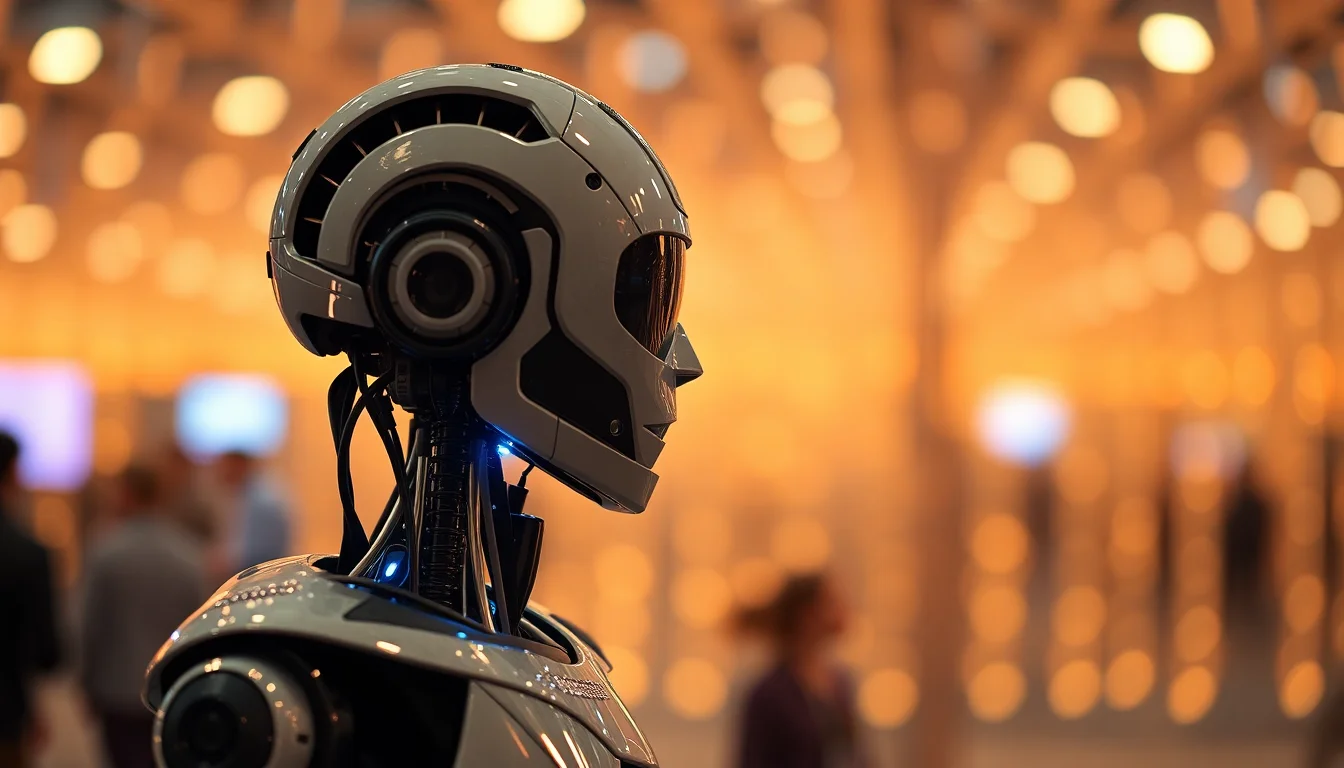
CVPR 2026 looks less like a showcase of algorithmic progress and more like a forcing function for deployment reality. When the conference opens in Denver on June 3 and runs through June 7, with the expo floor active June 5–7, more than 100 technology companies are expected to use the event to position embodied AI, robotics, autonomous systems, AR, spatial computing, real-time vision, and AI-enabled healthcare as production categories rather than experimental ones.
That shift matters because the industry’s bottleneck is no longer just model quality. The harder problem is how perception, planning, control, safety, and edge inference fit together in a system that can tolerate latency, sensor noise, changing environments, and governance constraints. CVPR has always been a major venue for computer vision research, but the 2026 edition appears to reflect a broader market transition: the discussion is moving from what models can detect to what machines can safely do.
Nvidia’s Nemotron 3 Nano Omni model is a useful example of the kind of stack becoming strategically important. The model is described as combining vision, audio, and language into a unified AI system, which is exactly the sort of multimodal foundation vendors now need if they want robots, agentic devices, or spatial computing interfaces to operate with some continuity across senses and tasks. The appeal is obvious: a system that can interpret a scene, listen for a command or environmental cue, and generate an appropriate response without stitching together a brittle chain of separate components.
But integration is not the same thing as deployment. A multimodal model may improve the front end of an embodied system, yet product teams still have to solve the rest of the stack: low-latency inference on constrained hardware, reliable handoff from perception to action, fallbacks when confidence drops, and safety boundaries that are enforceable in the field. In robotics and autonomous systems, a model that performs well in a benchmark or polished demo can still fail if timing drifts, sensor fusion becomes unstable, or the control layer cannot guarantee repeatable behavior under distribution shift.
That is why the most important theme at CVPR 2026 may be the end-to-end pipeline itself. For embodied AI, the question is not whether a model can recognize an object, a gesture, or a spoken instruction. The question is whether the full system can translate that input into a physical action in a way that is predictable enough to ship. In AR and spatial computing, the same logic applies to real-time vision: tracking, scene understanding, and user interaction must be fast enough to preserve immersion and robust enough to survive cluttered, dynamic settings. In healthcare, where AI-enabled systems face stricter operational and regulatory scrutiny, the bar rises again because latency, auditability, and failure modes are part of the product definition, not afterthoughts.
That changes the competitive landscape. Large platform vendors such as Nvidia are likely to use CVPR 2026 to signal that multimodal agent stacks are becoming part of their broader compute and software strategy. Smaller robotics companies, meanwhile, will need to prove that they can turn those building blocks into reliable systems for warehouses, industrial sites, clinics, or consumer environments. The winners in the embodied AI race are unlikely to be the teams with the most fluent demos alone. They will be the ones that can prove their systems run on edge devices, maintain bounded latency, respect safety constraints, and integrate into operational workflows without exploding deployment costs.
For reporters covering the conference, the most useful test is to ignore the syntactic polish of announcements and ask whether a claim survives contact with operations. Look for live demonstrations that expose the full loop from perception to action. Ask for measured latency budgets, not vague claims of real-time performance. Probe for how safety is handled when confidence falls, sensors fail, or the environment changes. Press vendors on whether they have fail-operational guarantees, how data is governed, and whether the system has moved beyond lab conditions into repeatable field use.
The same standard should be applied across the conference’s most hyped segments. In robotics, a manipulation demo is interesting only if the system can sustain performance across objects, lighting conditions, and human interference. In autonomous systems, a navigation stack matters only if it can explain its decisions, degrade gracefully, and meet operational constraints. In AR and spatial computing, visual fidelity is secondary to tracking stability and interaction latency. In healthcare, the decisive question is whether AI can fit into clinical workflows without creating new safety, compliance, or usability risks.
CVPR 2026, then, is not just a calendar event for the computer vision community. It is a read on where embodied AI is in the commercialization cycle. The conference’s scale, its 100-plus exhibitors, and its emphasis on robotics, autonomous systems, and real-world vision suggest an industry trying to move from capability demonstrations to integrated products. The next phase of competition will not be won by the sharpest isolated model. It will be won by the teams that can make perception, reasoning, action, and oversight work together under deployment constraints that are far less forgiving than a conference stage.


