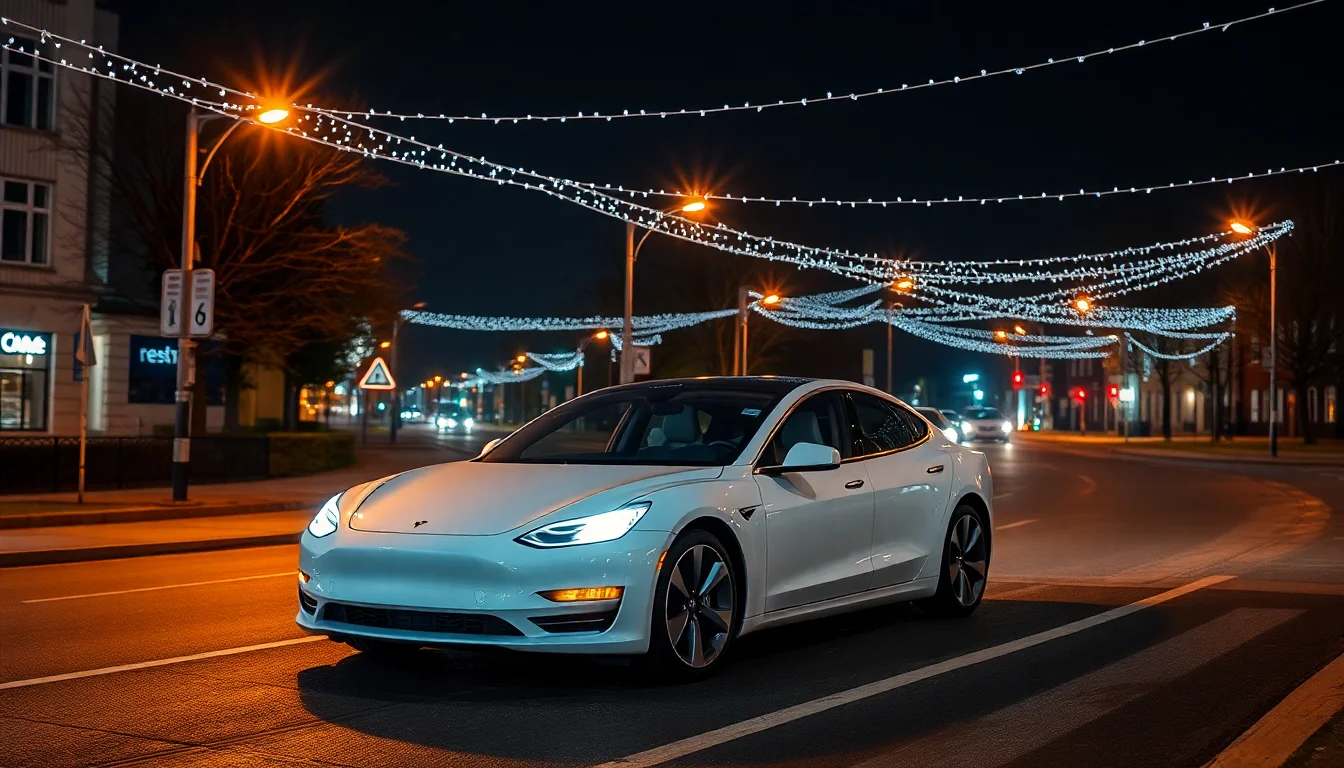
The Netherlands has become the first European country to approve Tesla’s supervised self-driving under a human-supervisor model, a decision that matters less as a headline about capability than as a template for governance. For Tesla, the clearance is a foothold in Europe; for everyone else building advanced driver-assistance systems, it is a signal that the next competitive gate is no longer just model performance, but whether the system can be supervised, audited, and bounded on public roads.
Reuters’ framing is the useful one here: the Dutch approval is not a blanket endorsement of full autonomy. It is a regulatory gate that permits a defined mode of use, with a human driver supervising and ready to intervene. That distinction is technical, not semantic. In Europe, the path to wider deployment now appears to run through supervised self-driving architectures that can prove their behavior under regulatory guardrails, not through marketing claims about autonomy.
What “supervised” changes in the stack
Once supervision becomes the allowed operating mode, the product stops being only a perception-and-planning system and becomes a monitoring-and-control system with explicit constraints. Driver-monitoring moves from a safety accessory to a core runtime dependency. The system has to detect distraction, misuse, and degraded attention with enough fidelity to justify on-road use. If the car expects a human to be the last line of defense, then the human’s state is part of the safety envelope.
The same applies to deterministic handover. A supervised system is only as credible as its ability to hand control back to the driver in a way that is timely, legible, and repeatable. That means the handover path cannot depend on vague alerts or best-effort timing. It needs deterministic behavior under known conditions, with the system able to signal, escalate, and transition in a way that can be tested, measured, and reproduced.
That is why OTA safety updates also matter differently in this regime. Over-the-air updates are no longer just a convenience for shipping improvements faster. They become part of the compliance story: every software revision potentially alters the operational safety case, so deployment discipline, version traceability, rollback capability, and release notes all start to carry regulatory weight.
Why the safety case now sits at the center
The Dutch approval also pulls the auditable safety-case into the foreground. A safety case is not a slogan; it is the structured argument, backed by evidence, that the system is acceptably safe within a defined operating design domain. For supervised self-driving, that evidence has to cover not only how the vehicle performs, but how the system constrains the supervising driver, how it monitors attention, how it handles fallback, and how it logs events for later review.
That shift changes the economics of release readiness. Teams can no longer treat safety artifacts as paperwork assembled at the end of development. They have to be produced continuously, because regulators will want traceability from feature behavior to validation evidence to deployment scope. In practice, that means stronger simulation coverage, better scenario catalogs, tighter incident logging, and more formal gating before a software build can go live in a jurisdiction like Europe.
It also changes how liability is discussed at the edge of the stack. A supervised system creates a shared responsibility model: the manufacturer is responsible for the system’s behavior within its approved envelope, while the supervising driver remains responsible for attention and intervention. The precise boundary will vary by jurisdiction, but the direction of travel is clear. Governance is becoming part of the product architecture because regulators need to know not just what the car can do, but who is accountable when it does it.
Product roadmaps now need a governance spine
For Tesla and its competitors, the Dutch approval suggests that roadmaps in Europe must absorb a governance spine alongside model improvements. A team that ships better lane keeping but weak driver-monitoring, ambiguous takeover alerts, or incomplete safety-case tooling is unlikely to clear the next regulatory hurdle. The technical bar is shifting toward systems that can demonstrate supervised operation with measurable controls, not just higher capability in isolated demos.
That may slow some deployment timelines. More evidence gathering means more validation work, and more validation work means slower release cadence. But it also creates a more durable competitive position for companies that can translate system performance into regulator-readable artifacts. In a market where supervised self-driving is under scrutiny, the ability to produce auditable safety-case documentation can become a differentiator in itself.
For Tesla specifically, the Dutch approval improves its position in Europe without resolving the harder questions. It broadens the conversation from whether the software can operate to whether the supervision model can scale safely and consistently across roads, drivers, and jurisdictions. If the company wants broader adoption across Europe, it will need to keep proving that driver-monitoring is robust, that deterministic handover works under stress, and that its safety case remains intelligible to regulators who are not judging the product on brand momentum.
What to watch next in Europe
The immediate question is whether other European regulators treat the Dutch move as a one-off or as a reference point. If more countries follow, the market will increasingly test the same governance pattern: supervised self-driving allowed within defined constraints, with explicit expectations around monitoring, handover, and safety evidence. If they do not, deployment will stay fragmented, and every market entry will require a new regulatory argument.
The broader test is whether supervision can scale without eroding safety margins. That means watching for incidents around delayed takeovers, attention monitoring failures, or ambiguous system behavior at the point of handover. Those are the failure modes that will shape liability debates and determine how much confidence regulators place in the supervision model.
For product teams, the lesson is straightforward: in Europe, supervised self-driving is now a governance-led deployment problem. The winning stack will not just perceive the road. It will monitor the driver, execute deterministic handovers, preserve an auditable safety-case, and satisfy regulatory guardrails well enough to keep shipping.


