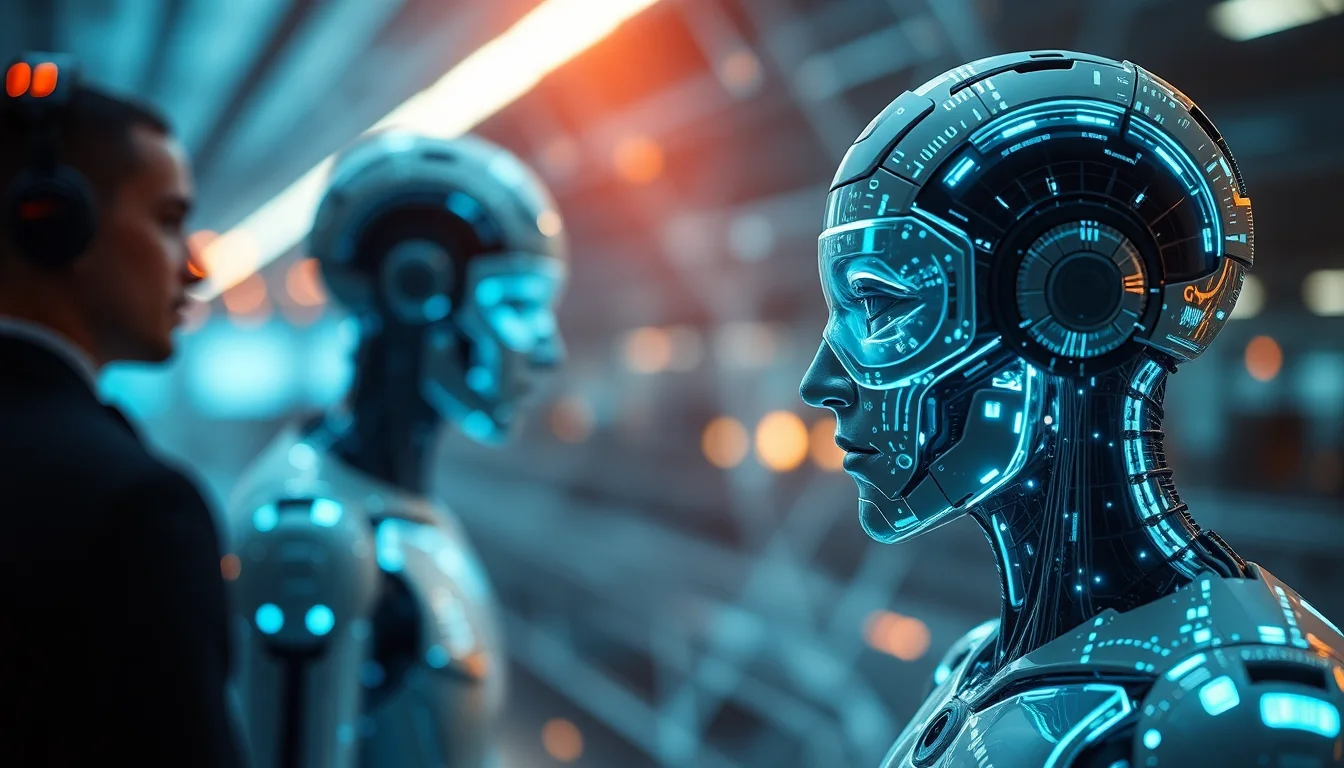
Google is resetting the default assumption for AI media generation. With Gemini Omni, the company is no longer treating video as a downstream output from text prompts or image mashups. It is treating video as the starting point for a model that can accept images, audio, video, and text together, reason across them, and generate output grounded in Gemini’s real-world knowledge.
That distinction matters for builders. A text-to-video system can be impressive and still behave like a one-way renderer. A natively multimodal system changes the interface layer: inputs become mixed, edits become conversational, and the model has to preserve coherence across modalities instead of merely synthesizing them sequentially. Google’s launch note is explicit on that framing, describing Gemini as “natively multimodal from the ground up” and positioning Omni as the next step in that design.
The first model in the family is Gemini Omni Flash, and Google says it is rolling out to the Gemini app, Google Flow, and YouTube Shorts. That rollout path is as important as the model itself. It signals that Omni is not being introduced only as a research artifact or a developer preview; it is being inserted into consumer and creator workflows where the operational constraints are immediate: response time, editing fidelity, moderation, and the need to fit into existing production habits.
A video-first model with cross-modal reasoning
Omni’s technical claim is not simply that it can ingest more data types. Google says it can combine images, audio, video, and text as input and then generate high-quality video grounded in Gemini’s real-world knowledge. TechCrunch’s coverage adds an important interpretation: the model is not just stitching inputs together, but reasoning across them to produce a consistent output.
That is the core architectural shift. In a video-editing workflow, the model must keep track of scene continuity, temporal ordering, object identity, and the causal structure of the clip while also respecting prompt instructions. If a user says to change the tone, replace an object, or reframe a sequence, the model is no longer doing isolated generation. It is performing cross-modal alignment under constraints.
Google’s own language suggests that the family may expand beyond video over time, with output modalities such as image and audio planned for later support. For now, the meaningful point is that video is the proving ground. If the model can hold together semantics, timing, and visual consistency in motion, it becomes easier to imagine analogous behavior elsewhere. But that expansion is still future tense, and the announcement does not claim those outputs are available today.
Conversational editing changes the product surface
Omni Flash’s most practical feature is also the one most likely to reshape tooling: conversation-based video editing. Google says users can edit their videos through conversation, which lowers the interface barrier between creative intent and execution.
For creators, that means less dependence on timeline manipulation for routine changes. For product teams, it suggests a new class of embedded workflows where natural language becomes the control plane for media operations. Instead of exposing every transform through a bespoke UI, apps can route instructions through the model and let the model handle compositing, re-creation, and revision.
But conversational editing also raises the bar for reliability. A model that edits video must preserve invariants the user may not have stated explicitly: continuity of a subject, consistency of lighting, spatial relationships, brand assets, and editorial intent. If those invariants fail, the edit may still look plausible while being wrong in ways that are hard to catch quickly.
This is where the rollout to Gemini app, Flow, and YouTube Shorts becomes instructive. Each surface implies a different tolerance for mistakes. A consumer app can absorb some imperfection. A creation workflow inside a production pipeline cannot. The same model may be able to demo well in one context and underperform in another because the expectations for determinism and revision control are different.
What changes for platform teams
For AI developers and platform teams, Omni’s launch points toward a broader integration pattern: multimodal generation as an interaction layer rather than a standalone feature.
That has several technical implications.
First, orchestration becomes more complex. Systems will need to route mixed inputs, track state across turns, and preserve edit history in a way that makes the model’s outputs auditable. Second, latency becomes product-defining. Conversational editing only feels conversational if iteration is fast enough to support back-and-forth refinement. Third, asset management matters more. When text, audio, images, and video all participate in a single workflow, the surrounding application has to manage permissions, provenance, and storage with more precision than a simple prompt box requires.
There is also a tooling implication for vendors building on top of Gemini. If Omni becomes the default media-generation primitive inside Google’s surfaces, third-party products will need to decide whether to integrate at the model layer, the workflow layer, or the review layer. Each choice carries different costs. Model-layer integration offers power but ties the product tightly to a specific capability profile. Workflow-layer integration is safer but may be easier to commoditize. Review-layer tools may become more valuable as synthetic media volumes increase and quality assurance becomes a bottleneck.
Competitive differentiation is real, but so are the constraints
Omni’s launch positions Google differently from vendors that focus on single-purpose video generation or on multimodal systems that still behave like separate encoders glued to a decoder. The combination of video-first input, cross-modal reasoning, and conversational editing creates a more integrated product story than a simple text-to-video generator.
That does not mean the market will reward it automatically. The practical constraints are still substantial. Video generation is expensive. Editing workflows are sensitive to small errors. Enterprises care about whether outputs are reproducible, policy-compliant, and defensible if challenged. None of those concerns disappear because a model is grounded in real-world knowledge.
In fact, grounding can sharpen the governance problem. If a model is drawing on real-world knowledge to make media more coherent, then questions about attribution, sourcing, licensing, and factual fidelity become harder to separate from the generation process itself. A synthetic clip that looks believable but encodes an incorrect or unlicensed transformation can create legal and editorial risk, especially in media production environments where provenance matters.
TechCrunch’s coverage underscores the competitive context: Google already has Veo for text-and-image-to-video generation, and Omni is not just another renderer but a broader multimodal family. That suggests Google is not only adding capacity; it is reorganizing its media stack around a model that can both understand and produce across modalities. For rivals, the response may not be to match one feature, but to decide whether they can offer better control, lower latency, or stronger governance.
The adoption test will be operational, not rhetorical
The strongest evidence that Omni matters will not be the launch copy. It will be the shape of the rollout and the behavior of early production users.
Watch three signals closely.
One is latency. If conversational editing remains slow, it will stay in the demo zone. Two is reliability across repeated edits. The ability to preserve scene integrity after multiple turns will matter more than the first generation pass. Three is scope. Google has said Omni Flash is the first model in the family and that future output modalities like image and audio may come later. The pace and consistency of that expansion will reveal whether Omni is a narrow video initiative or the foundation for a broader multimodal interface strategy.
For now, the important shift is conceptual. Gemini Omni treats generation as a cross-modal reasoning problem, not just a prompt-to-clip problem. That is a more powerful architecture, but also a harder one to operationalize. The teams that adopt it first will not be the ones chasing novelty. They will be the ones ready to absorb the new constraints that come with a model that can edit, create, and ground output across media types in a single workflow.


