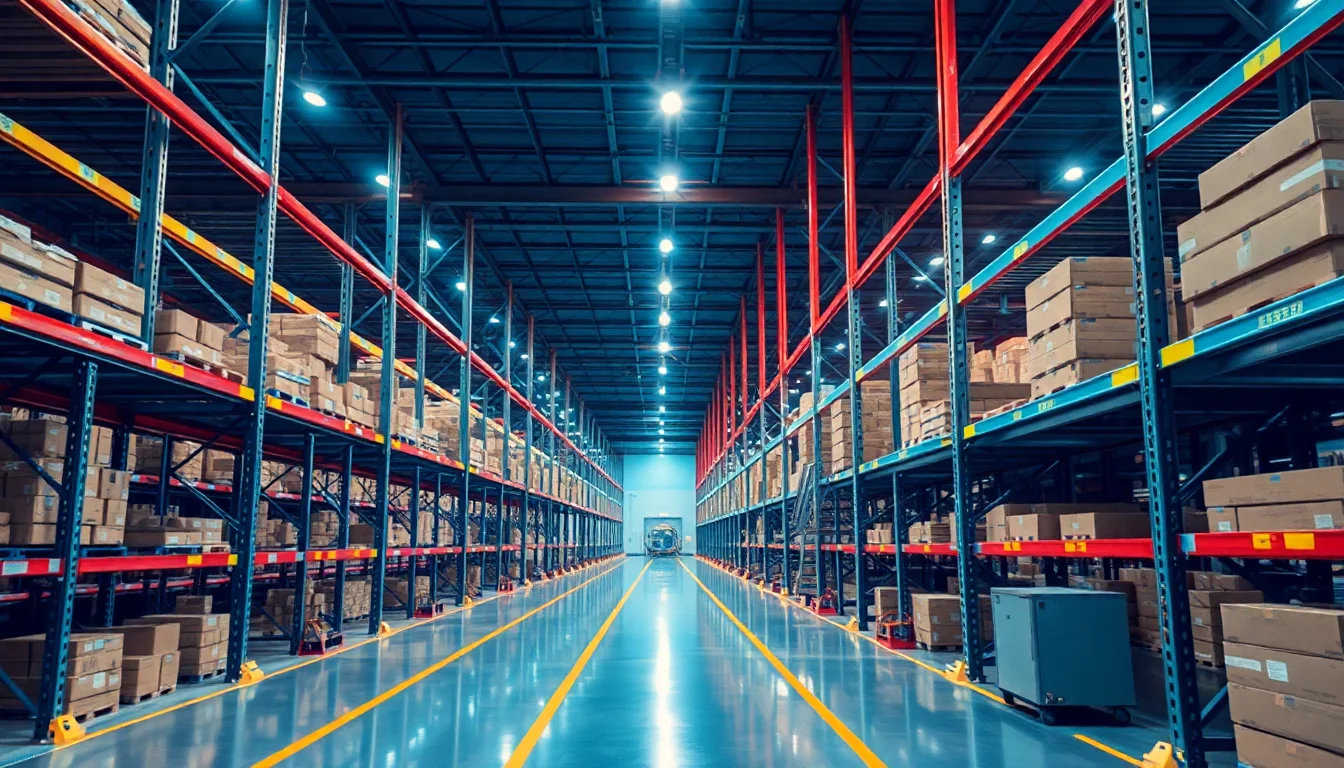
GreyOrange is pushing warehouse automation planning one step further upstream. With the launch of GreyMatter Foundry, the company is asking operators to judge deployments in simulation first, before moving equipment, changing layouts or committing capital to a physical buildout.
That matters because warehouse automation projects have traditionally been evaluated through a sequence of site surveys, pilot deployments and incremental rollouts. Foundry reframes that process as a modeling problem: if the warehouse can be represented as a digital twin early enough, then deployment design, layout and sizing can be tested before any on-site changes are made. In theory, that gives operators a way to estimate cost and performance with more structure than the usual spreadsheet-and-experience approach.
GreyOrange describes Foundry as an AI-driven warehouse simulator that combines warehouse flow design, layout planning and automation sizing inside one environment. The platform is also built to model mixed fleets — robots, automation equipment and human workers operating together — which is increasingly how real fulfillment sites run. That mixed-fleet detail matters. Most warehouses are not greenfield robot labs; they are layered systems where manual processes, fixed automation and mobile robots have to coexist across aisles, stations and exceptions.
The launch also ties Foundry closely to GreyOrange’s broader orchestration stack. GreyOrange says the simulator draws on operational data gathered through GreyMatter orchestration, the software layer the company says is deployed across thousands of warehouses and currently orchestrates more than 130,000 robotic agents through its Certified Ranger Network. That connection suggests Foundry is not meant to be a standalone planning tool. It is positioned as an extension of the company’s execution stack, using real operating data to inform what a future deployment might look like.
What Foundry is trying to model
The technical promise here is not just visualization. Foundry is meant to estimate how a warehouse design will behave once automation is introduced, resized or rebalanced. In practical terms, that means operators can test whether a given layout supports the right flow, whether the automation footprint is large enough for the throughput target, and how different combinations of robots, equipment and people may affect performance.
That makes the platform relevant in a few familiar planning scenarios:
- sizing automation for a new site or a major retrofit
- comparing layouts before committing to physical changes
- estimating deployment cost under different operating assumptions
- testing how mixed fleets interact in the same fulfillment environment
- evaluating performance tradeoffs across multi-vendor automation stacks
The last point is especially important. Warehouses increasingly mix technologies from multiple vendors, which makes planning harder, not easier. A simulator that can represent that heterogeneity may help operators reason about integration risk before procurement locks them into a particular configuration.
Still, the usefulness of any simulator depends on what it knows and how well it maps to reality. A model can only forecast what its inputs and assumptions allow it to see. If the underlying process data is incomplete, stale or overly averaged, the output can look precise while missing the operational edge cases that matter most.
Why digital-twin-first planning is attractive
GreyOrange’s timing reflects a broader shift in automation buying behavior. The appeal of a digital twin is straightforward: if the simulation is credible, operators can de-risk capital allocation before they touch the site.
That changes the conversation from “Can we make this work after installation?” to “What should we build in the first place?” It also compresses the planning cycle. Instead of discovering sizing errors after equipment is installed, teams can iterate on scenarios in advance, compare options and pressure-test assumptions around throughput and labor mix.
For large distribution networks, that can be especially valuable. A warehouse program may involve multiple facilities, each with different layouts, labor models and automation maturity. Forecasting across those environments is hard enough without the added complexity of vendor-specific tooling, local process variation and changing demand patterns. Foundry’s pitch is that the simulator can act as a common planning layer across that complexity.
But that also means the forecast becomes part of the decision-making chain, not just a presentation artifact. Once a simulation informs capital planning, operators need to know what the model is actually grounded in.
Where the validation burden sits
The main risk with AI-driven simulation is not that it is useless. It is that it can be persuasive without being sufficiently validated.
For Foundry, the questions operators should ask are familiar ones:
- What operational data is being used to train or parameterize the model?
- How current is that data, and how does it reflect seasonal or exception-heavy behavior?
- Which assumptions are fixed by the system versus configurable by the operator?
- How are mixed-fleet interactions represented when humans and automation share the same workflow?
- What evidence exists that the forecasted performance matches later real-world outcomes?
Those questions matter because the simulator sits at the intersection of software and operations. GreyOrange can draw on its own orchestration data, but that does not automatically eliminate bias. A model trained on one class of facilities may underperform in another. A design that looks optimal in simulation may still fail if staffing patterns, order profiles or physical constraints differ from the inputs used to build the twin.
That is the core tension in this launch. Foundry promises more disciplined pre-deployment planning, but the reliability of its forecasts will depend on data quality, transparent assumptions and post-implementation checks.
The strategic implication for GreyOrange
GreyOrange is clearly trying to deepen its role in the automation stack. By pairing a simulation environment with its orchestration software, the company is extending itself from execution into planning and design. That can be a powerful position if customers want one vendor to cover both the decision layer and the operating layer.
It also raises familiar ecosystem questions. If the simulator depends heavily on GreyOrange data and orchestration context, then customers will want to understand how portable the forecasts are, how much they depend on proprietary infrastructure and how easy it is to compare outcomes across heterogeneous technology stacks.
For buyers, the attraction is obvious: a tighter loop between planning and operations. For the market, the more interesting question is whether warehouse simulation becomes a default step in automation procurement, rather than a specialist exercise reserved for the largest projects.
Foundry makes that future feel closer. Whether it becomes a dependable planning standard will depend less on the AI branding and more on how well its forecasts survive contact with messy, data-limited, mixed-fleet warehouses.


