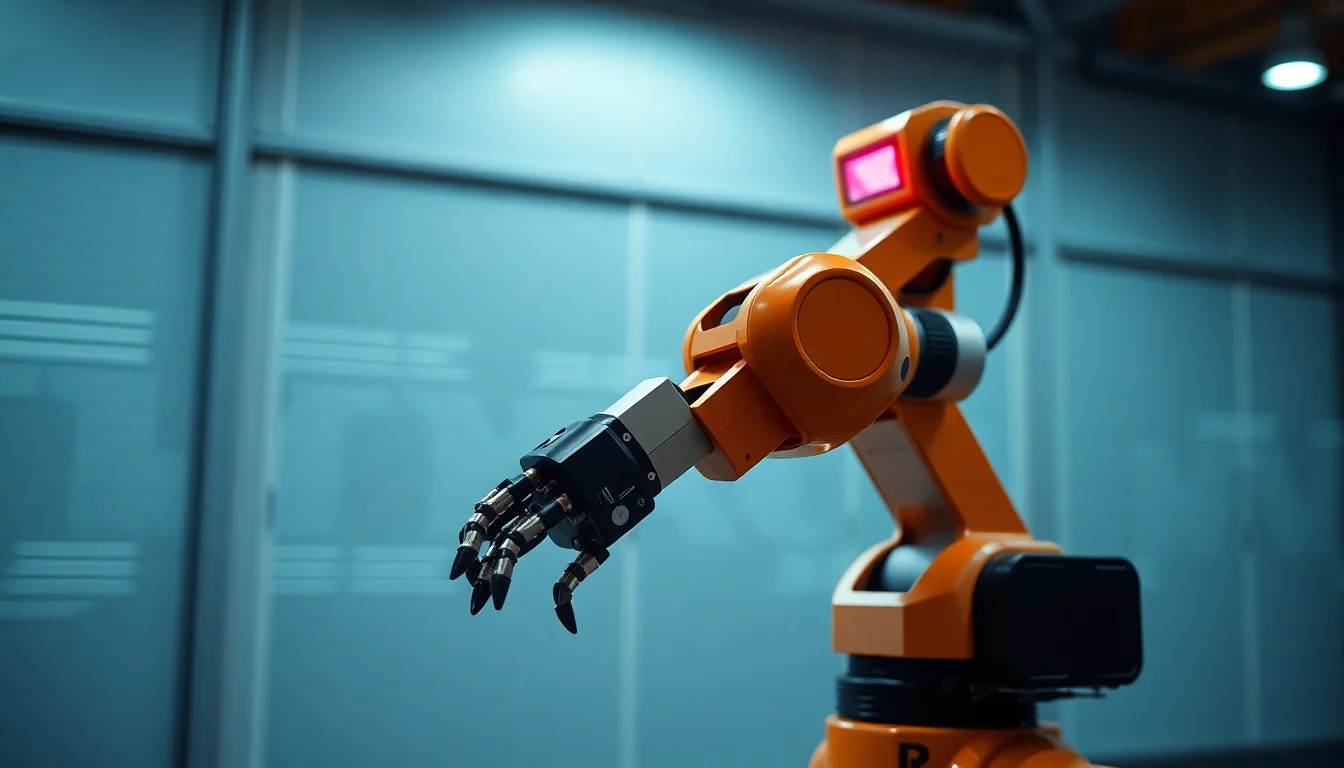
A new benchmark in hazardous-environment painting
Hirebotics has launched what it describes as the first explosion-proof cobot painting solution built on the Fanuc CRX-10iA/L Paint hardware and its Beacon no-code platform. The product, called Cobot Painter, is aimed at manufacturers that need coating capability in hazardous environments but have historically been pushed toward either manual spraying or expensive, highly customized automation cells.
That combination matters because industrial painting is one of the more difficult automation problems to simplify. Paint processes often involve volatile atmospheres, compliance-sensitive safety requirements, and enough variability in part geometry and workflow that a rigid production cell can become more burden than benefit. Hirebotics is betting that a cobot packaged for hazardous environments, and configured without traditional robot programming, can change the deployment calculus.
The company is positioning Cobot Painter for liquid painting, powder coating, and gel coatings, with an emphasis on high-mix, low-volume work where flexibility tends to matter as much as throughput. For shops that previously outsourced coating because a conventional line was too costly or too slow to justify, the promise here is not just robotization, but a shorter path to production.
Hardware safety and the no-code layer
The technical core of the product is the pairing of Fanuc’s CRX-10iA/L Paint hardware with Hirebotics’ Beacon platform. The hardware side is what makes the system relevant in hazardous environments in the first place: a paint-rated collaborative robot designed for coating applications rather than a generic cobot adapted after the fact.
Beacon is the layer that changes how the system is configured and maintained. Instead of relying on bespoke PLC logic or deep robot programming to define paint routines, operators can use the no-code interface to set up and manage workflows. In practical terms, that can reduce the amount of specialized integration work required to get from a hardware purchase to a usable paint process.
That does not eliminate the need for engineering discipline. Hazardous-environment deployment still depends on site-specific safety design, correct enclosure and ventilation decisions, and compliance with the rules that govern the particular paint chemistry and facility layout. But the product architecture suggests a different operating model: one where the robot program is not the bottleneck every time a new part, finish, or production run is introduced.
The appeal for technical teams is auditability as much as convenience. A no-code system can still be structured around constrained recipes, repeatable process definitions, and operator permissions, which is important when the automation target is a coating process that sits close to safety and quality controls.
Deployment in days, not a full line rebuild
Hirebotics is also making a deployment argument. Traditional automated paint systems often require dedicated cells and major exhaust or conveyor infrastructure overhauls. Cobot Painter is designed to work inside a manufacturer’s existing manual spray environment, which means a facility may not need to redesign the entire coating area before it can bring automation online.
That is a significant distinction for shops that have spent years trying to justify the capital expense of automation. If a system can be installed and working within days rather than months, the operational risk profile changes. The project becomes less like a facilities program and more like a controlled process upgrade.
For manufacturers, the deployment sequence implied by this approach is straightforward: identify the manual spray process that is already in place, fit the cobot into that environment, configure the coating routine through Beacon, and begin validating part coverage, cycle behavior, and process repeatability. That is still a serious engineering exercise, but it is a much smaller lift than introducing a fully bespoke automated line.
The portability and lightweight framing also matter. In coating operations, infrastructure often becomes the hidden constraint. If a system is dependent on major exhaust, conveyor, or cell redesign, the business case can collapse long before the first sprayed part. By reducing those dependencies, Hirebotics is trying to move paint automation closer to a modular equipment decision.
What it could change economically
The commercial significance of Cobot Painter is less about a single robot model than about the business model it supports. Shops handling high-mix, low-volume work are often the most exposed to the tradeoffs of coating automation: too much variation to justify a hard-coded line, but enough recurring work to make manual spraying costly and hard to standardize.
If the product performs as advertised, it could reduce outsourcing for coating jobs that were previously uneconomic to automate in-house. That would give manufacturers more control over lead times, quality, and margins, which are often the three variables that decide whether a coating process is strategically important or merely a sunk cost.
It also shifts where value is captured. In the legacy model, the automation vendor or integrator often owns the complexity, while the shop owns the capital bill and the disruption. A no-code paint system aimed at faster deployment pushes more of the configuration burden into software and process definition, potentially lowering the need for long integration projects and large upfront commitments.
That said, the economics will depend on actual utilization, coating quality, and the cost of keeping the system running in a real plant. A product designed to reduce deployment time is not automatically a low total-cost system; maintenance, consumables, operator training, and process tuning still decide whether the business case holds.
The risks that still matter
The launch signals a meaningful attempt to compress the time between buying a paint robot and producing usable output in a hazardous environment. But the hard questions are the ones that always follow an automation announcement.
How consistent is the system across different coating chemistries and part families? How quickly can a plant move from one job to the next without losing process stability? What does safety compliance look like across different jurisdictions and facility conditions? And how much of the promised speed comes from the platform itself versus the fact that a manufacturer already has a mature manual spray setup to build on?
Those questions are especially important in painting, where field performance is often harder to generalize than in simpler pick-and-place automation. Explosion-proof design is a meaningful specification, but it is not a substitute for local validation. Shops will still need to evaluate ventilation, grounding, material handling, and the broader hazard profile of their operation.
Even so, the launch points to a notable shift in the automation conversation. Instead of treating hazardous-environment painting as a domain reserved for massive custom lines, Hirebotics is arguing that no-code configuration and cobot hardware can make it more deployable, more incremental, and less dependent on capital-heavy infrastructure. For manufacturers that have been waiting for a shorter path into coating automation, that is the real headline.


