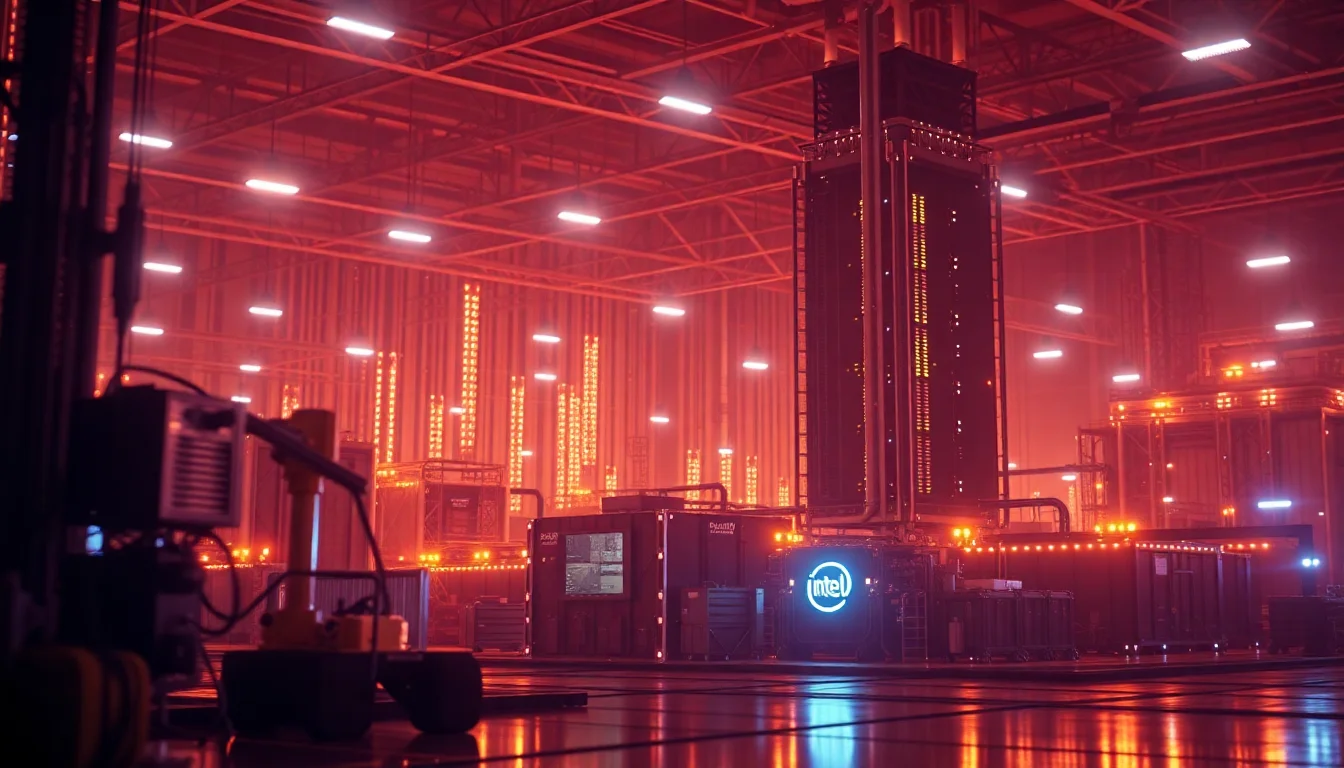
Lede: Intel joins Terafab—what changed, and why it matters now
Intel’s public pivot into Elon Musk’s Terafab project marks a concrete shift in the project’s trajectory. The Verge reported that Intel will help design and build the Terafab AI chip factory in Austin, elevating Terafab from a speculative blueprint to a potential, functioning supply route for Musk’s AI stack. That involvement formalizes a design-to-fab collaboration, bringing Intel’s engineering heft into the heart of an Austin-based facility intended to serve SpaceX/xAI and Tesla through bespoke AI accelerators. In practical terms, the partnership tilts Terafab from a novel concept toward an integrated pipeline—one that promises end-to-end control over chip fabrication and, by extension, deployment readiness. The news arrives alongside coverage of Musk’s broader ambitions for Terafab—fighters in a high-stakes race to bridge today’s supply gap with tomorrow’s demand—and underscores why readers should care now: the Austin factory could pivot how quickly and how tightly hardware can be invoked by Musk’s software and systems stack, from self-driving decisions to humanoid-robot workloads.
Context and Stakes: Terafab’s hardware-in-a-box ambition
Terafab’s pitch is overtly hardware-centric: a “hardware-in-a-box” approach aiming to close the gap between current production and future demand. Intel’s stated role in design-to-fab capabilities may compress timelines by embedding silicon-design proficiency directly into the fabrication flow at Austin. However, the feasibility and scale of such an integrated supply chain remain open questions. As Wired framing suggests, readers should watch for clarity on roles, governance, and how the collaboration translates into actionable manufacturing milestones. The core question: can a vertically integrated Terafab deliver consistent chip provisioning for Musk’s SpaceX/xAI and Tesla ecosystems without sacrificing yield, cost, or time-to-deploy? The evidence trail points to continued ambiguity as of now, with TechCrunch AI noting only that Intel has joined the Terafab chips project.
Technical Implications: Architecture, IP, and the fab puzzle
End-to-end ownership of design and fabrication could reframe several hard technical levers. A vertically integrated Terafab could alter how customization is pursued, how IP custody is handled, and how latency budgets are managed across deployment pipelines. Yet critical technical questions persist: what process nodes and foundry technologies will the Austin line optimize for? what are the expected yields and packaging strategies, and how will cross-compatibility be managed with existing AI accelerators? The partnership’s teeth are in the design-to-fab promise; without transparent node choices and yield trajectories, the “integration” risk could shift from software alignment to silicon supply fragility.
Product Rollout and Timeline: When and how will chips reach deployers?
A central appeal of the Terafab-Austin plan is cadence—could this push chip provisioning closer to SpaceX/xAI and Tesla-specific workloads? The public record stops short of concrete milestone dates. While The Verge frames the Austin facility as a crucial step toward closing the supply gap, actual ramp curves, yield ramps, and deployment schedules remain unconfirmed amid the project’s ambitious scope. Intel’s involvement signals intent and direction, but the pace of buildout and the readiness of silicon for early pilots will define how quickly Terafab can influence deployment pipelines.
Market Positioning: What this means for the AI silicon landscape
If Terafab succeeds in translating design-to-fab into reliable, scalable output, the balance of hardware leverage could tilt away from a pure-play foundry dynamic toward a more integrated, vertically aligned pipeline. That shift would test Nvidia’s dominance in AI silicon throughput and tighten the pricing and delivery dynamics across the ecosystem. The collaboration also raises questions about the resilience of established supply chains, supplier diversification, and the rate at which large-scale deployments (for example, autonomous systems or large data-center workloads) can migrate to a Terafab-backed stack. The presence of Intel on the project underscores a broader industry trend: hardware acceleration may increasingly rely on tightly coupled design and fabrication pathways, rather than a modular, market-tested ecosystem alone.
Risks, Questions, and Next Steps
The road ahead features several high-impact unknowns: capital intensity and the true cost of an Austin-based design-to-fab operation; production yield trajectories; IP protection and cross-licensing in an integrated supply chain; regulatory and export considerations; and alignment across Musk’s ecosystem (SpaceX/xAI, Tesla, and any ancillary hardware ventures). Readers should monitor the cadence of updates from Terafab and Intel, concrete milestones for the Austin fab, and any demonstrations of end-to-end workflows that validate the architecture, IP custody, and deployment readiness in pilot environments. The 5 Burning Questions About Elon Musk’s Terafab Chip Partnership with Intel remains a useful frame for ongoing scrutiny, as does ongoing coverage that the partnership is actively shaping how Musk envisions his AI hardware stack.
Evidence in the public record anchors these shifts: The Verge confirms Intel will help design and build Elon Musk’s Terafab AI chip factory in Austin; TechCrunch AI notes Intel’s formal sign-on to the Terafab chips project; and Wired frames lingering questions about the partnership’s roles and feasibility as readers’ crucible for risk assessment. Together, they sketch a picture of a hardware-first pivot that could reconfigure timelines and competitive dynamics, even as execution remains the central unknown.


