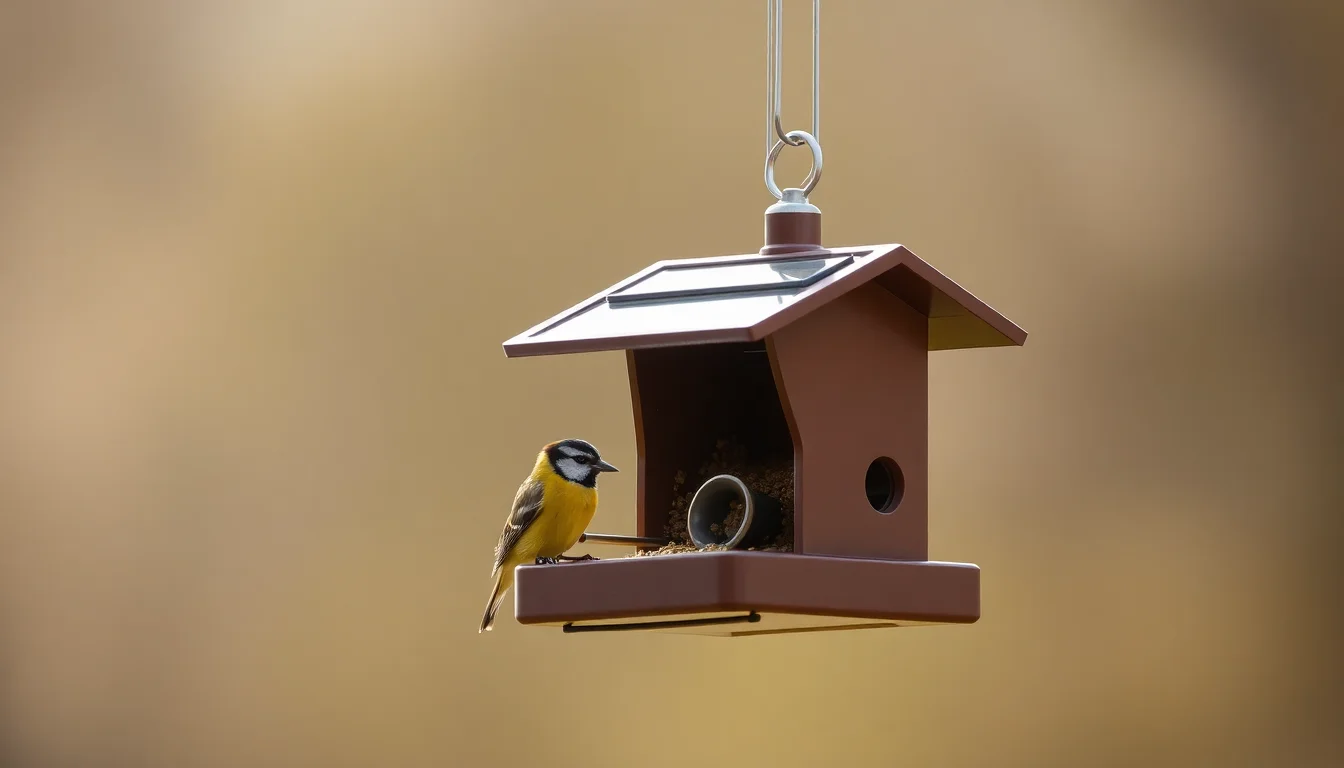
Kiwibit’s Bird Feeder Pro 4K AI Camera looks, at first glance, like the kind of consumer gadget that could be dismissed as seasonal curiosity. But the product is more interesting as a deployment pattern than as a bird feeder. It combines a camera, local AI processing, Wi‑Fi connectivity, cloud-backed storage, and mobile notifications into a single backyard sensor node. That makes it a small but useful signal that edge AI is moving out of demos and into consumer hardware with real operational constraints.
According to TechCrunch’s hands-on coverage, the device pairs a 130-degree wide-angle lens with dual seed compartments, a solar panel, 2.4 GHz Wi‑Fi, cloud storage, and built-in two-way audio. In practice, the companion app is where the AI product experience is concentrated: users get notified when a bird arrives, can review recordings, and can track visits over time. The system is designed to infer events at the edge, then push selected observations into a cloud workflow that keeps the app alive with real-time alerts and replayable history.
That architecture matters. For consumer hardware teams, edge inference is often less about raw model sophistication than about reducing latency, lowering bandwidth costs, and making the device feel responsive enough to be useful. Here, a bird feeder becomes a persistent sensing endpoint. The AI does not need to solve a general vision problem; it needs to identify visits reliably, trigger notifications quickly, and do so within the power envelope of a solar-assisted device. That is a very different product constraint than running a model in a data center or even a smartphone.
The solar panel and mounting flexibility are not incidental design features; they are what make the deployment model scale. Kiwibit says the feeder can be mounted on a pole, window ledge, or tree, which lowers installation friction and expands the number of environments where the device can be placed without custom hardware. Solar charging, meanwhile, reduces maintenance overhead and makes the hardware more plausible as a semi-permanent outdoor sensor. In edge AI terms, that is important because the easier it is to place and keep powered, the more viable it becomes as a distributed observation layer rather than a novelty device that gets used once and forgotten.
That same convenience also creates a more durable ecosystem relationship. Once the feeder is paired to an app that handles notifications, recordings, and visit history, the value shifts away from the box itself and toward the software stack behind it. The device is no longer just selling hardware; it is selling a data pipeline. For the vendor, that can mean recurring engagement, opportunities for feature expansion, and a cleaner path to monetization. For users, it means the long-term usefulness of the device depends on the health of the app, cloud services, and update mechanism.
That dependency introduces the real governance questions. A connected camera that records wildlife activity is still a camera. Even if the intended subject is birds, the system is capturing video or video-derived telemetry from a private property boundary, and that raises ordinary questions about retention, access control, and how long recordings remain available in cloud storage. The product description points to cloud storage and app-based review, but any architecture like this needs a clear answer to what is retained, what is processed locally, what is uploaded, and who can access the data. Those are not abstract privacy concerns; they are operational requirements for a system that may be running continuously outdoors.
Reliability is the other side of the same coin. If the AI is doing on-device inference, model updates become part of the hardware lifecycle. If the cloud is responsible for storage, notifications, or visit tracking, then outages and API changes can degrade the product even when the camera itself still works. Consumer edge devices often fail not because the sensor stops sensing, but because the software stack around the sensor ages poorly. OTA maintenance, mobile app compatibility, and backend continuity become part of the product’s durability story.
There is also a technical trade-off in how the experience is framed. Real-time notifications are compelling because they make the feeder feel active and autonomous, but they also set expectations for latency and accuracy that are hard to sustain at scale. False alerts, missed detections, or inconsistent classification can quickly erode trust. In an outdoor deployment, the model has to contend with changing light, rain, motion from branches, and variable signal quality from 2.4 GHz Wi‑Fi. Those are exactly the kinds of conditions that make edge AI valuable and fragile at the same time.
For AI product teams, the lesson is not that a bird feeder is a breakout platform. It is that consumer hardware is becoming one of the most visible proving grounds for edge AI architecture. The interesting questions are no longer limited to model accuracy. Teams now have to design for power budgets, mountability, update cadence, retention policies, cloud dependence, and whether the user relationship is anchored in the device, the app, or the data history. That combination will shape which products become sticky and which become disposable.
Kiwibit’s feeder is useful precisely because it compresses those trade-offs into a familiar form factor. A solar-powered backyard camera that can notify you in real time is easy to understand as a consumer product. It is also an unusually clear example of how edge AI is being packaged: small, persistent, cloud-connected, and operationally dependent on a software stack that extends well beyond the hardware shell.
That is the broader signal worth watching. As more devices adopt on-device inference and cloud-backed workflows, the hard part will not just be shipping a model. It will be maintaining a trustworthy data path, preserving utility across OTA updates, and avoiding the kind of ecosystem lock-in that makes a convenient sensor into a brittle dependency.


