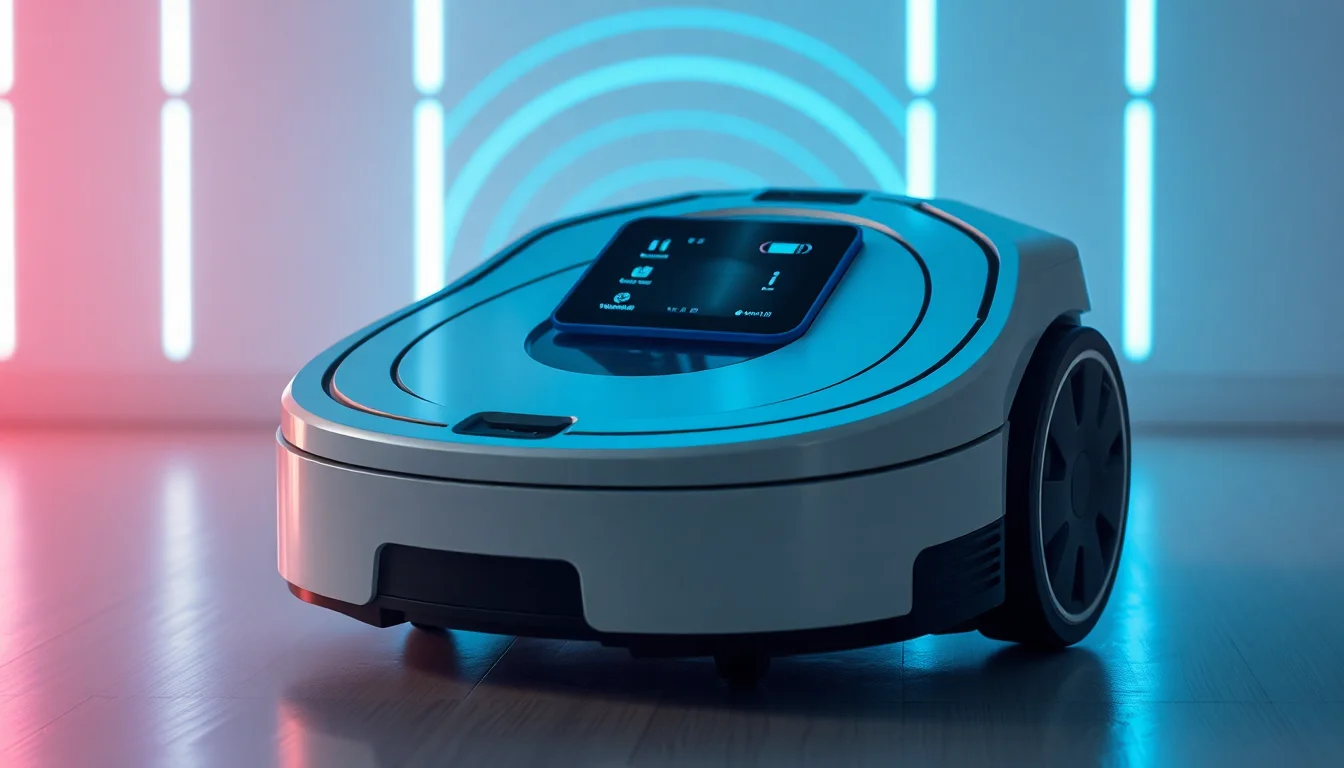
The Litter-Robot 4 is back at $799 at both Amazon and Best Buy, down from $859 and matching the best price seen this year. That matters less as a discount headline than as a signal: when a niche, AI-enabled home robot returns to a prior price floor instead of drifting upward, it suggests retailers still see demand elasticity—and some confidence that the category can absorb more volume without collapsing the margin story.
This is not the kind of product where the sticker price alone tells the whole story. The Litter-Robot 4 sits in a category that is still negotiating its identity: part appliance, part robotics platform, part convenience purchase. At $799, it remains expensive in ordinary household terms. But in the context of AI-enabled domestic robotics, the more important question is whether the product has reached a threshold where enough buyers can rationalize the upfront cost to make the ecosystem around it feel less speculative.
Price reset, not just a promo
The timing is notable. The last comparable deal surfaced in early January, and now the same $799 price has reappeared at Amazon and Best Buy. That recurrence suggests this is not a one-off clearance move. It looks more like a retail calibration: a price point used to keep the product visible while testing how much demand exists when the bundle lands just below a more psychologically distant $800 mark.
For technical readers watching AI products move into the home, that kind of reset is informative. It implies that the product is being treated less like an occasional luxury gadget and more like an item with a measurable adoption curve. The challenge for this category is not whether the product can demonstrate a clear “wow” moment—it can—but whether that moment survives contact with daily usage, maintenance cycles, and the friction of owning a robot that lives in a messy, high-variance environment.
Retailer bundling as a proxy for total cost of ownership
The headline price is identical, but the bundles are not. Amazon’s version includes the litter box, the mat that catches stray litter, three OdorTrap cartridges, 10 liners, 30 wipes, and two carbon filters. Best Buy’s bundle also includes the litter box and mat, but shifts the accessory mix to six OdorTrap cartridges, 25 liners, and 30 wipes.
That difference is small on paper and meaningful in practice. In a product like this, the hidden math is not just the purchase price; it is the pace at which consumables accumulate and shape the lived cost of ownership. Cartridges, liners, wipes, and filters are not cosmetic add-ons. They are part of the maintenance model that determines whether the device feels like a low-friction appliance or a recurring subscription-by-another-name.
Retailers understand this. Bundling is doing strategic work here: it changes the perceived value of the same core hardware while nudging buyers toward different maintenance profiles. Amazon’s bundle skews toward a broader starter kit. Best Buy’s version leans heavier on cartridge and liner counts. That is not trivial for consumers trying to estimate how long they can postpone the next spend, or for product teams thinking about what “affordable” means once the first accessory replenishment cycle begins.
Why the technical angle matters
The Litter-Robot 4 is relevant because it is a rare consumer product where automation, sensing, and maintenance management all matter at once. Its core value proposition is self-cleaning operation, triggered by sensor-driven behavior rather than manual intervention. That makes it a useful case study for AI-enabled domestic robotics more broadly: the system must perform reliably in an unstructured environment, tolerate variance in usage, and reduce the labor burden enough that the hardware feels justified.
A lower effective entry price changes the technical conversation. More units in more homes means more opportunities for the product category to prove out assumptions about sensor reliability, cycle consistency, odor management, and user tolerance for upkeep. Even without making claims beyond the product’s documented automation behavior, the implication is straightforward: the easier it is to get one into a home, the more the category can transition from a premium novelty to a real-world deployment problem.
That matters for developers and product teams because domestic robots do not scale like apps. The deployment surface is physical, messy, and preference-driven. A price cut paired with a more favorable bundle is not just a sales lever; it is also an adoption lever that can improve the data available to manufacturers about how real households actually use these systems over time.
What this says about the market
The Litter-Robot 4’s reappearance at $799 reads as a barometer for the broader AI home robotics market. If this category is going to move beyond enthusiast and premium buyers, the industry has to solve two things at once: make the hardware easier to justify upfront and make ownership feel predictable after purchase.
Retailers are helping shape that equation. By changing accessory bundles rather than the base product itself, Amazon and Best Buy are effectively competing on the cost and convenience of ownership, not just on the robot’s headline capability. That is likely to remain the playbook for AI-powered household devices for some time: hold the core product in a recognizable price band, then use accessories, replenishment, and bundle composition to influence perceived value.
For now, the signal is clear. At $799, the Litter-Robot 4 is still not cheap, but it is being positioned in a way that suggests the market wants to keep the conversation going. In a young category, that is often how mainstreaming begins: not with a dramatic spec leap, but with a price and bundle structure that make experimentation feel less risky.


