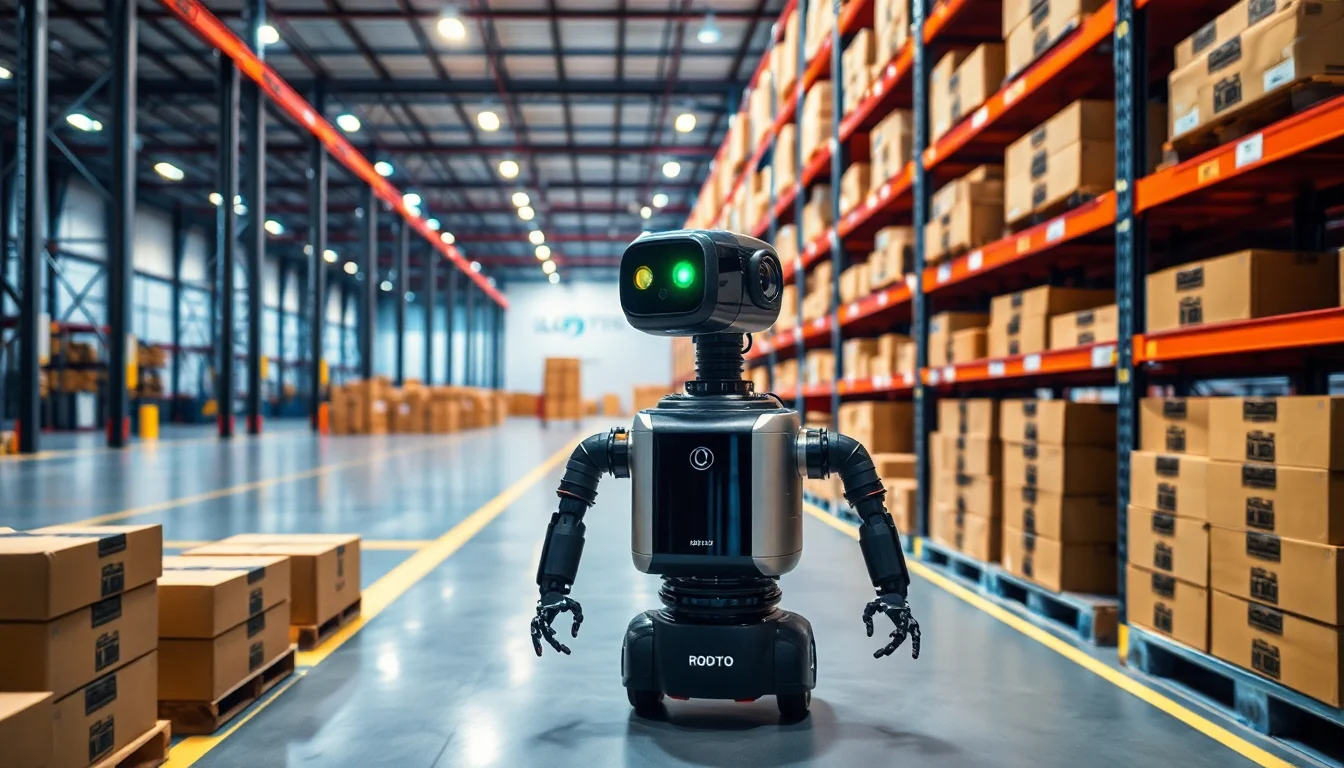
Locus Robotics is relocating its European headquarters operations to Logistics Campus Aalsmeer, and the significance goes beyond a bigger office. The company says the expanded footprint will create more space for European teams, warehouse operations, customer demonstrations, solution training, partner engagement, and regional robot lifecycle support. In practical terms, Locus is turning its European base into a live lab for warehouse automation at a time when demand for flexible capacity remains uneven and operationally messy.
That timing matters. The company says it now serves more than 160 customers across 20+ countries and supports more than 17,000 robots in the field, with hundreds more deployed during peak seasons to help customers absorb demand spikes. For an AI-driven robotics platform, that kind of installed base is not just a sales metric; it is the substrate for iteration. More sites, more shifts, and more exception cases mean more operational variation to observe, validate, and feed back into product and service workflows.
What changed and why now
The relocation to Logistics Campus Aalsmeer gives Locus a larger European operating base at a moment when warehouse operators are still balancing labour constraints, SKU complexity, and volatile volumes. The company’s own framing points to Europe as a major growth market, and the expanded headquarters is a physical expression of that strategy.
The important detail is not just real estate. By consolidating demonstrations, training, partner activity, and lifecycle support into a larger regional hub, Locus is making Europe a more central execution environment for its automation stack. That should matter to technical buyers because it shortens the distance between a customer’s workflow and the vendor’s operational teams.
A living lab for AI-driven fulfillment
The new automation demo and customer hub should function as more than a showroom. In a robotics context, demo spaces become controlled environments for live validation: testing how fleets behave under different pick patterns, aisle constraints, throughput demands, and exception-handling scenarios.
That matters for AI because warehouse orchestration is only as useful as its ability to handle changing conditions. A customer hub allows the company and its partners to observe how systems behave in realistic workflows, train operators against those workflows, and compare expected versus actual performance across deployments. It also creates a place where integration work can happen close to the operating system of the warehouse rather than through abstract documentation alone.
Technical implications: AI models, data, and integration
Locus is not publishing model details, and there is no need to speculate about architectures to understand the technical consequence of this move. The real point is that a larger European hub can improve the quality and diversity of operational data available for evaluation and lifecycle support.
With more European deployments feeding experience back into the organization, the company can refine how it monitors fleet behavior, flags anomalies, and supports human operators. A hub like this can also help standardize data interfaces across customers and partners, which is essential if a robotics platform needs to work across different warehouse management systems, process designs, and country-specific operating requirements.
That integration layer is often where real-world deployments slow down. The more partners and systems involved, the more important it becomes to have repeatable data pipelines, clear telemetry boundaries, and well-governed support processes. The new headquarters setup suggests Locus wants a stronger venue for exactly that kind of operational normalization.
Deployment velocity and market positioning
A bigger European live-lab environment can accelerate deployments in a few concrete ways. It can reduce friction in pre-sales validation, compress partner certification cycles, and give customer teams a place to rehearse workflows before systems go live. It can also help Locus and its ecosystem partners compare configurations more systematically, which tends to matter when a platform is scaling across countries with different fulfillment profiles.
That does not guarantee faster rollouts everywhere. But it does signal a company investing in the infrastructure needed to support more consistent time-to-value across a fragmented market. In Europe, that kind of repeatability is often a competitive advantage in itself.
Risks, governance, and standards
The same factors that make a regional hub useful also make it harder to run. Cross-border data handling, privacy requirements, data portability, and lifecycle governance all become more complex as deployments span more countries and more operating regimes.
If a robotics platform is collecting richer operational data from more customers, it has to be disciplined about what is retained, where it lives, and how it is used to support service and improvement. Interoperability is similarly unforgiving: the more warehouse systems and partner tools that need to connect, the more important shared standards become.
That means the European headquarters expansion is as much a governance story as a growth story. The technical challenge is not only scaling robots; it is scaling the processes that make those robots supportable across jurisdictions.
What to watch next
The clearest signals to watch are operational rather than rhetorical. Additional EU deployment announcements, partner certifications, and any concrete references to how the new Aalsmeer hub is being used will tell you whether this becomes a true regional execution center or just a larger office with a demo floor.
For now, the move suggests Locus is betting that Europe is no longer just a market to serve remotely. It is a place to run live tests, train customers, tighten support loops, and build the operational scaffolding required for AI-powered fulfillment at scale.


