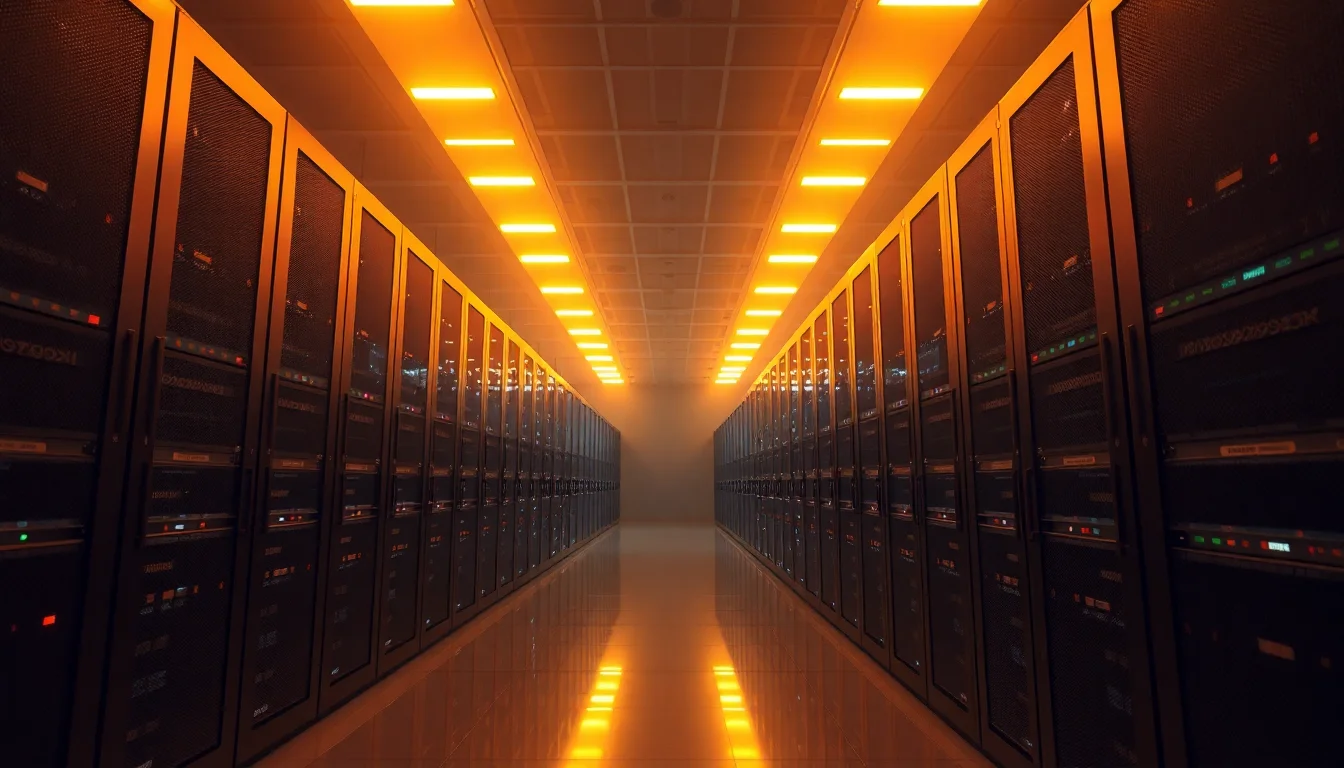
Meta’s Reliance deal turns India into a more serious AI infrastructure market
Meta’s first AI data center deal in India is notable not because it is the largest such project in the country, but because it confirms a shift in how major AI companies are thinking about deployment geography. The company is partnering with Reliance Industries on a 168-megawatt AI-enabled facility in Jamnagar, Gujarat, extending a relationship that already includes Meta’s investment in Jio Platforms and a $100 million joint venture focused on enterprise AI solutions for India and overseas markets.
That combination matters. It links raw compute capacity to a distribution relationship, a local enterprise sales channel, and a national market that is increasingly attractive to global cloud and AI vendors. The result is not just a new data center. It is an onshore AI infrastructure stack that could influence how models are trained, where inference runs, how products are packaged, and which customers are willing to commit to them.
What changed and why it matters now
The key change is that Meta is moving from partnership and product experimentation to a dedicated infrastructure commitment in India. A 168-MW facility is not a pilot. It is the kind of capacity that can support sustained workloads at meaningful scale, especially when paired with an existing relationship through Jio Platforms and a joint venture designed to sell enterprise AI services.
In the current market, compute is strategic inventory. Companies are not only racing to build AI products; they are racing to secure the electricity, land, cooling, and networking required to keep those products viable at scale. India has become a natural destination for that spending because it offers a large enterprise base, improving data center economics in some regions, and a policy environment that increasingly rewards local infrastructure.
Meta’s move also reflects a broader pattern. Microsoft, Amazon, Google, OpenAI, and Uber have all recently announced data center or cloud infrastructure investments in India. That does not mean every company is pursuing the same architecture or workload mix, but it does indicate that India is no longer being treated as a downstream sales market. It is becoming part of the compute map.
Technical implications: scale, architecture, and onshore training
A 168-MW AI-enabled data center changes the engineering conversation immediately. At that scale, the central questions are no longer whether a facility can host AI workloads, but what mix of training, fine-tuning, offline preprocessing, and low-latency inference it can sustain without running into power, cooling, or supply constraints.
For AI infrastructure, 168 MW suggests a high-density deployment with substantial electrical and thermal planning requirements. That almost certainly implies aggressive cooling design, careful power distribution, and a hardware procurement strategy built around accelerator availability rather than generic server density. The press materials do not specify the exact configuration, and they should not be read as if they do. But even without a bill of materials, the scale alone tells you this is intended to support more than conventional enterprise hosting.
The most important workload implication is that an onshore facility of this size can make several parts of the AI pipeline more practical inside India:
- Model training and fine-tuning: Not necessarily frontier-scale foundation model training in the most literal sense, but large enough for substantial training runs, domain adaptation, and continual updating of models serving enterprise use cases.
- Data preparation and governance: Localized storage and preprocessing can reduce latency and improve compliance for customers sensitive to cross-border data movement.
- Inference for enterprise deployment: If Meta and Reliance use the facility to serve business customers, inference economics become a major factor. Proximity to users can lower response times and improve SLA performance for applications that need predictable, regionalized deployment.
- Hybrid cloud and on-prem integration: The existing enterprise AI JV with Reliance is relevant here because many Indian customers will want services that can bridge hosted cloud, local infrastructure, and private environments.
There is also a supply-chain angle. India’s growing appetite for AI infrastructure puts pressure on accelerator availability, network components, and power systems. That makes the data center less like a standalone asset and more like a node in a regional procurement and operations strategy. If the build is successful, the bottleneck is unlikely to be only real estate. It will be the ability to secure enough compute, power stability, and cooling efficiency to keep utilization high.
Market positioning: India as a global AI infrastructure hub
The Jamnagar deal strengthens India’s position in the global hyperscale playbook. In practical terms, this means the country is increasingly viewed as a place where cloud and AI vendors can do three things at once: scale capacity, localize services, and reduce friction around data residency and latency.
That matters for enterprise AI packaging. If models and services are hosted onshore, vendors can more easily tailor deployments to Indian customers who care about jurisdiction, performance, and procurement preferences. For some workloads, local infrastructure can also simplify the sales process by reducing concerns about moving sensitive data offshore.
Meta’s relationship with Reliance gives it an especially strong bridge into that market. Reliance does not just bring capital and infrastructure capability; Jio Platforms gives Meta a route into one of the country’s largest digital distribution ecosystems. The $100 million enterprise AI JV also signals that the company is not treating this as a pure infrastructure lease. It is a product and go-to-market arrangement.
That is important because the competitive landscape in India is tightening. Global cloud incumbents are building capacity. AI firms are looking for deployment footprints that can support regional compliance and lower latency. And local partners can increasingly shape which vendors get access to enterprise demand. A deal like this does not eliminate competition; it raises the bar. Anyone trying to serve the same customers will have to match not only model quality, but also the infrastructure story behind it.
Execution risk and governance: regulatory, energy, and dependency questions
The appeal of onshore AI infrastructure is obvious. The risks are just as real.
First, regulatory trajectories remain a live variable. India’s policy environment is favorable to digital infrastructure development in broad terms, but the long-term shape of AI governance, data localization, and cross-border transfer rules will influence how much value a local data center actually creates. If compliance obligations tighten, the case for onshore compute improves. If rules remain fragmented, vendors may still need to support multiple deployment models, which complicates operations.
Second, energy economics will matter as much as compute economics. Large AI facilities draw on steady power and depend on resilient cooling systems. That raises exposure to pricing, grid reliability, water usage, and local infrastructure constraints. Even if the headline megawatt capacity is secured, the effective output of the facility will depend on how efficiently it can keep hardware running under real operating conditions.
Third, there is partner dependency. A lot of this strategy flows through Reliance and Jio Platforms. That is a strength in the near term because it combines infrastructure, market access, and local execution. But it also concentrates operational and commercial dependence in a single ecosystem. If the relationship works, Meta gains scale and distribution. If it runs into friction, the same integration could become a constraint.
This is the tradeoff behind much of the current AI infrastructure boom: latency, cost, and sovereignty favor regional buildouts, but regional buildouts increase reliance on local partners and local energy systems. The companies making these commitments are betting that the benefits outweigh the complexity.
Product and deployment implications: what this enables for AI tooling and enterprise rollout
The most immediate product implication is that onshore capacity makes enterprise AI deployment more credible for customers who need regional performance and deployment flexibility.
That could affect how Meta and Reliance package AI tooling in India. A local facility can support faster iteration cycles for enterprise customers, especially if the joint venture is used to deliver integrated services rather than standalone APIs. It also gives the companies more room to design offerings around Indian procurement realities, which often favor clear SLAs, local support, and predictable pricing.
In deployment terms, a facility of this size can shorten the path from model development to customer rollout. Workloads that previously might have been staged across overseas regions can be hosted locally, reducing network hops and making performance more consistent. For enterprise clients, that can translate into lower latency, simpler compliance workflows, and better control over data handling.
It can also influence pricing. Infrastructure close to demand can reduce some transport and operational overhead, but only if utilization remains high and the hardware supply chain stays manageable. If Meta and Reliance can keep the facility busy with a mix of training, fine-tuning, and inference, they may be able to offer more competitive terms than an offshore-only deployment model would allow. If not, the economics become harder to justify.
The larger point is that infrastructure is now a product decision. For AI vendors, the question is no longer just what model to ship. It is where to run it, who owns the layer beneath it, and which customers are best served by putting the compute inside the market rather than outside it.
Meta’s Jamnagar deal suggests that, in India, the answer is increasingly local. The company is not simply expanding capacity; it is rewriting the assumptions behind its enterprise AI strategy in one of the world’s most closely watched infrastructure markets.


