Meta’s latest power move is not another gas turbine order or a nuclear-adjacent long-term hedge. It is a deal with Overview Energy for space-based solar power — a concept that, if it works at scale, could give AI data centers something the grid has struggled to provide on demand: uninterrupted energy.
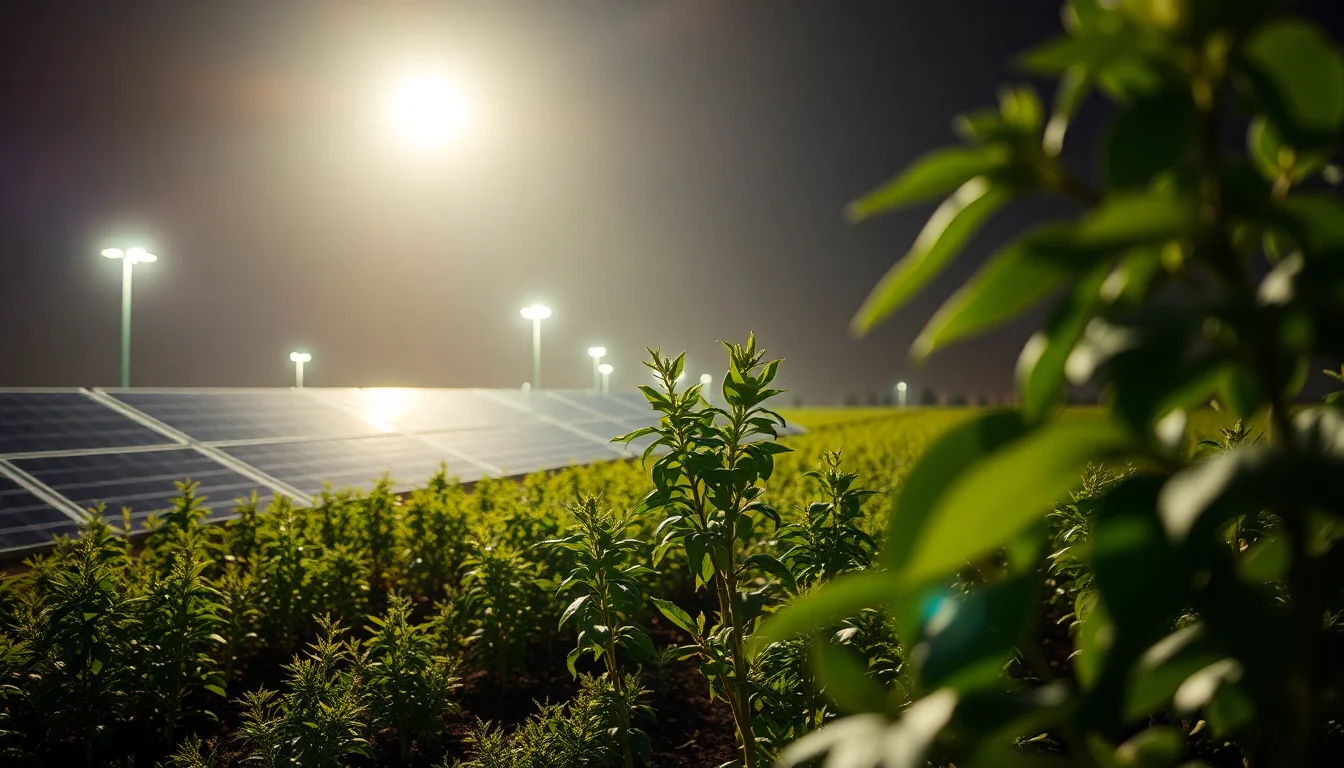
The headline number is striking. According to reporting on the agreement, Meta could source up to 1 GW of solar power collected in orbit and delivered to Earth. The pitch is not that satellites will directly run servers. Instead, spacecraft would harvest sunlight in space, convert that energy into near-infrared light, and beam it to large terrestrial solar farms. Those ground receivers would then convert the light back into electricity for data centers.
That matters because the operational problem for AI infrastructure is no longer just raw capacity; it is timing. Compute demand does not stop when the sun goes down, and utility-scale solar does. For operators trying to support round-the-clock training and inference, daytime generation is only part of the equation. The usual answer is batteries, overbuild, or another always-on source. Meta’s bet is that orbit could become another answer entirely.
A new energy anchor for AI: Meta strikes a space-based solar deal
Meta’s agreement with Overview Energy is notable less for the immediate power it will deliver than for the problem it is trying to solve. In 2024, Meta’s data centers used more than 18,000 GWh of electricity, and the company has said it wants to build 30 GW of renewable power sources. That scale helps explain why a startup promising space-based solar power can get a serious hearing in Menlo Park.
The company’s AI buildout has made energy procurement a strategic issue, not just a facilities budget line. Every new model family, every larger training run, and every denser inference deployment pulls more power into the stack. If Meta believes its compute footprint will keep expanding, then locking in a new class of generation looks less like moonshot branding and more like procurement planning at the edge of what the grid can provide.
How space-based solar power would actually work
The technical concept is familiar to anyone who has followed space-based solar power research, but the implementation details are where the difficulty lives.
Satellites in orbit would collect solar energy continuously, without clouds, without night, and without the geographic constraints that shape terrestrial solar. That energy would then be converted into near-infrared light and transmitted to ground-based receivers — in this case, solar farms sized on the order of hundreds of megawatts. Those farms would reconvert the signal into electricity and feed it into data center loads.
In theory, that gives Meta a path to power that is available regardless of weather or time of day. In practice, “uninterrupted” is a systems-level claim, not a slogan. It depends on orbital availability, beam targeting precision, conversion efficiency at each stage, the ability to land the signal reliably on large receivers, and integration with the broader electrical system that ultimately supplies the data center.
There is also a subtle but important distinction between a solar farm and a direct line into a server hall. The ground segment still looks like power infrastructure: land, transmission, conversion equipment, and interconnection. Space may remove the intermittency of daylight, but it does not remove the need for a robust terrestrial power network.
Why Meta is betting on this now
The timing makes sense only if you assume Meta sees its energy appetite as structural, not temporary. The company has already signaled that it wants tens of gigawatts of renewable capacity, which suggests that conventional procurement paths are not enough on their own.
That view is consistent with the broader AI infrastructure market. Training runs are larger, inference traffic is stickier, and the power density of new systems is rising. For a hyperscaler, the question is no longer whether to buy electricity, but which mix of sources can support scale without turning compute planning into a bottleneck.
Space-based solar power is attractive in that context because it promises generation that is continuous and potentially dispatchable on a schedule useful to data center operators. But attraction is not the same as readiness. The concept is still trying to cross the gap from physics demonstration to industrial supply chain.
Feasibility, timing, and economics: what’s actually credible
The biggest caveat is timing. Reporting on the deal says commercial deliveries are not expected until 2030 at the earliest. That puts the technology squarely in the category of medium-term option, not an answer to next quarter’s power needs.
That timeline is not a minor footnote. It implies years of work on spacecraft design, launch cadence, beam control, receiver construction, interconnection, safety validation, and regulatory clearance. It also means the business case has to survive long enough for the technology to mature — and for the economics to look better than alternative options that are already bankable.
The cost question is equally unforgiving. Space-based power has to compete with terrestrial solar, storage, gas, and nuclear on a delivered-cost basis, not a concept basis. That means the system must overcome losses from generation, conversion, transmission, and reconversion while also paying for orbital hardware, launches, and ground infrastructure. Each stage introduces inefficiency and capital intensity.
Regulatory hurdles add another layer. Beaming energy from space is not just an engineering problem; it is a spectrum, aviation, safety, and cross-jurisdiction problem. Any claim about the system’s viability has to survive scrutiny from regulators and from the power buyers who would ultimately need guarantees about reliability and liability.
In that sense, the deal looks less like a solved procurement line and more like a call option on a future energy market.
What it could mean for Meta — and for the AI market
If Overview Energy can prove the model, Meta could gain access to a new category of power for mega-scale AI operations: a source that is not constrained by the day-night cycle and does not require batteries to shift solar output into nighttime demand. That would be strategically valuable in a world where compute growth is tied to power availability.
It would also set a benchmark. If one hyperscaler can make space-based solar power part of its infrastructure plan, others will at least have to evaluate whether the premium is justified for their own load profiles. For the AI tooling ecosystem, that could eventually influence where data centers get built, how training schedules are planned, and how aggressively operators hedge energy risk.
But the downside risk is just as obvious. If the technology slips, Meta could be left with another long-dated energy bet that consumes management attention without changing near-term capacity. The company is already investing in more conventional sources, including natural gas and nuclear. Those options may lack the futurist appeal of orbital power, but they are closer to the grid, and closer to reality.
What to watch next
The next milestones will matter more than the announcement itself. Watch for regulatory approvals, technical demonstrations of the beam-and-receive chain, and evidence that ground receivers can integrate cleanly with real data center loads.
Third-party validation will be especially important. Space-based solar power has lived in the realm of serious research for decades, but commercial credibility will depend on proving efficiency, reliability, and safety outside the lab.
If those milestones arrive on schedule, Meta’s deal could mark the beginning of a new energy regime for AI infrastructure. If they do not, it will look like another reminder that in power systems, as in compute, the physics gets the final vote.


