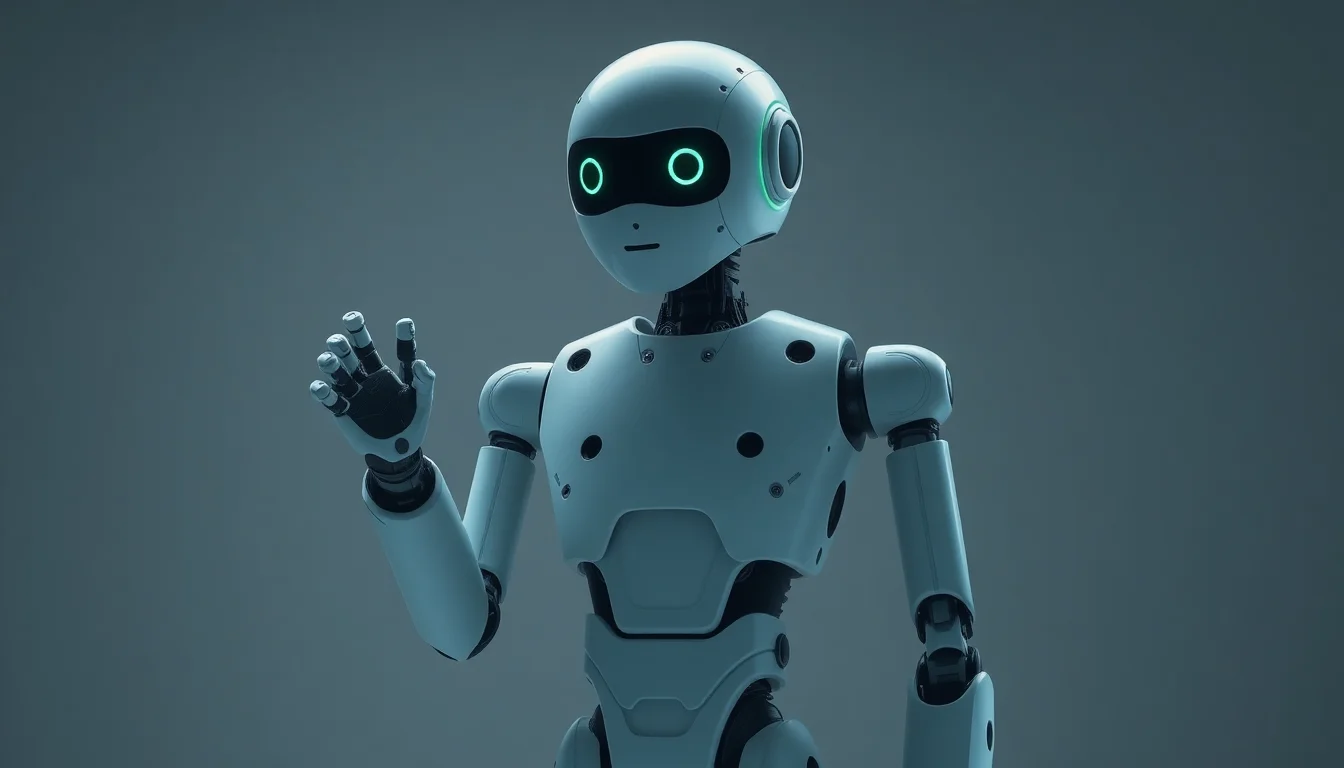
Nvidia has put a new marker in humanoid robotics research: the Isaac GR00T Reference Humanoid Robot, an open humanoid robot platform that combines a Unitree H2 Plus base, Sharpa Wave tactile five-finger hands, Nvidia Jetson Thor compute, and the Isaac GR00T software stack into a single reference design.
For robotics labs, that matters less as a product launch than as an attempt to define a shared research path. Humanoid work has been slowed by fragmentation in robotics research: different hardware, different sensor packages, different simulation tools, different data pipelines, and a constant mismatch between what can be trained in software and what can actually be deployed on a physical machine. Nvidia’s pitch is that the platform reduces those integration costs by packaging the hardware and the software together.
Nvidia’s Isaac GR00T opens a new reference path for robotics research
The company is positioning the platform as an open-stack starting point for physical AI and general-purpose robotics. That choice of framing is important. Nvidia is not just supplying compute or middleware; it is offering a reference design meant to be adopted, modified, and benchmarked by researchers who have been stitching together bespoke systems for years.
The bundle is doing several jobs at once. The Unitree H2 Plus supplies the humanoid form factor. The Sharpa Wave tactile hands add a manipulation layer that matters for grasping, dexterity, and contact-rich tasks. Jetson Thor provides onboard compute, which is central if the machine is to run perception and control closer to the edge. The Isaac GR00T software stack then ties together the workflows researchers care about most: data collection, simulation, training, and deployment.
That integration is the point. In humanoid robotics, the hard problem is rarely one component in isolation. It is the transfer between layers: simulation to reality, one sensor suite to another, one control policy to another, one vendor’s hardware to another vendor’s. Nvidia is trying to collapse some of that friction by making the stack visible and repeatable.
Inside the platform: hardware, software, and openness
The phrase open platform / open-stack will do a lot of work here, and it will also attract the most scrutiny. In the narrow sense, an open reference design gives labs a common baseline. That should make it easier to compare results, reproduce experiments, and run cross-vendor experiments without rebuilding the whole system each time.
For researchers, that could mean less time spent on integration and more time spent on model behavior, sensor fusion, manipulation policies, and sim-to-real transfer. For vendors, it creates a clearer target. Hardware, hands, compute modules, and software components can all be evaluated against the same design assumptions rather than against a dozen incompatible lab-specific setups.
The Isaac GR00T software stack is especially significant because it standardizes the parts of the workflow that often become invisible until they break: how data is structured, how simulation is used, how models are trained, and how deployment is managed. In robotics, those details determine whether a result is reproducible or merely local to one lab’s environment.
But openness in robotics is rarely binary. A platform can be open in documentation and reference architecture while still depending on a specific hardware and software center of gravity. Nvidia’s version is no exception: the stack is open in ambition, but it is still anchored to Nvidia compute and to named partners in the reference design.
Strategic stakes: ecosystem control through interoperability
Nvidia is framing GR00T as more than a research convenience. It is an ecosystem play. The company is effectively arguing that humanoid robotics will advance faster if the field converges around a reference design that others can build on, test against, and extend.
That has strategic value. If a large share of robotics research starts from the same open reference design, then tooling, benchmarking, and integration expertise accumulate around that platform. Vendors that align with it may find their products easier to slot into labs and pilot programs. Researchers may find that their work travels farther because the architecture is recognizable.
The company is also tying the rollout to a large market narrative, citing a multitrillion-dollar opportunity around humanoid robots and physical AI. That is a familiar way to justify platform investments, but the practical significance is not the market number itself. It is whether the platform becomes a default research substrate or just another well-packaged benchmark system.
Risks, friction, and what remains unproven
The biggest question is whether the platform actually reduces fragmentation in robotics research or simply relocates it.
Real-world interoperability will be the first test. Labs may welcome a reference design, but they will still want to swap components, compare non-Nvidia hardware, or port parts of the stack into existing systems. If those experiments become awkward, the platform may be less open than it appears in the abstract.
Certification and safety hurdles are another constraint. Humanoid systems are moving from controlled demos toward more realistic deployment environments, and that brings different standards for validation, reliability, and safe operation. A research reference design can accelerate prototyping, but it does not remove the burden of proving that a system is robust outside the lab.
There is also the matter of adoption incentives. Some companies will see value in a shared open-architecture robotics ecosystem. Others will resist a reference path that could narrow their differentiation or increase dependence on Nvidia-compatible tooling. In robotics, standards are only useful if enough of the field agrees to use them.
What researchers and vendors should do next
For research teams, the immediate task is not to treat GR00T as a finished answer, but as a baseline to benchmark. Labs should compare the Isaac GR00T stack against their current pipelines, especially around data movement, simulation fidelity, and the effort required to port policies from one hardware configuration to another.
They should also map where the platform fits into cross-vendor experimentation. If a lab can use the same reference design to test multiple hands, sensors, or control approaches, that will reveal whether the open-stack story is operational or mostly conceptual.
For vendors, the signal is clearer: participation in an open-architecture robotics ecosystem may matter more than trying to own every layer of the stack. That could affect procurement decisions, partner strategy, and how aggressively companies build around Nvidia-adjacent tooling versus more hardware-agnostic systems.
The practical question now is not whether humanoid robotics needs standardization. It does. The question is whether Nvidia’s reference design becomes the common language for that standardization, or whether the field keeps fragmenting around competing interpretations of what openness should look like.


