June 30, 2026 — NVIDIA’s Isaac ROS is best understood not as a single product, but as a software layer that changes the baseline for robotics development. Built on ROS 2, the open-source framework that already anchors much of modern robotics, Isaac ROS adds CUDA-accelerated libraries and AI models for autonomous mobile robots, manipulators and humanoids. That matters because robotics teams rarely lose time on the headline problem alone. They lose time on camera pipelines, perception latency, data movement, and the glue code required to turn a prototype into a system that can run repeatedly on real hardware.
That is the niche NVIDIA is targeting with Isaac ROS. In a conversation centered on the infrastructure behind robots rather than the spectacle of robots themselves, Jaiveer Singh, who leads the effort, frames the work as connective tissue for the “physical AI” era. The idea is not to replace ROS 2, but to extend it with accelerated primitives and pretrained models that can shorten the path from concept to deployment. For developers, the pitch is straightforward: keep the modular ROS 2 programming model, but add a stack that is more opinionated about performance and more ready to exploit NVIDIA hardware.
A robotics stack that treats acceleration as a first-class feature
The technical shift here is subtle but important. ROS 2 is widely used because it gives robotics teams a distributed systems framework for building nodes, message passing, and lifecycle management around robot functions. Isaac ROS layers on CUDA-accelerated components and AI models so that common robotics tasks — especially perception and inference-heavy stages — do not have to be hand-built around generic compute paths.
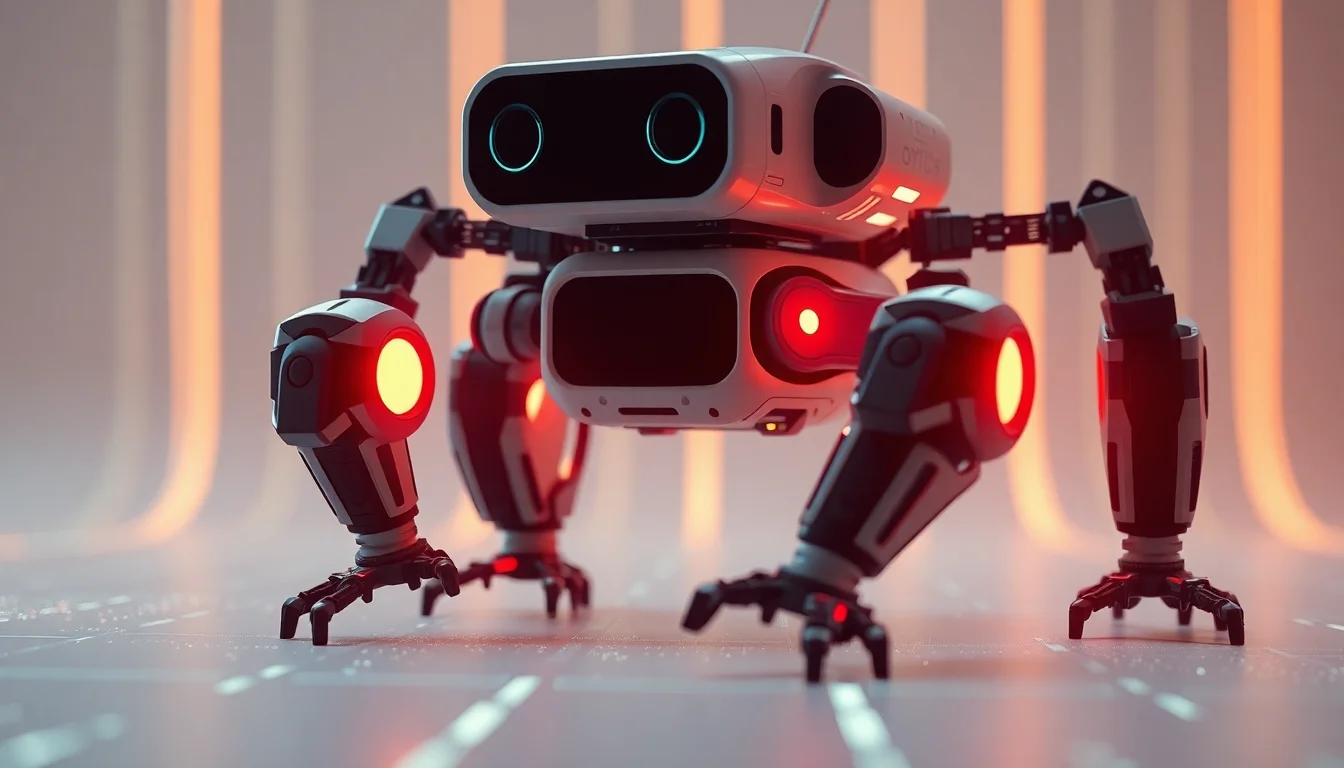
In practical terms, that means teams can assemble capabilities from modular pieces rather than reimplementing every stage of the pipeline. Singh describes the architecture in LEGO-like terms, and the analogy fits: ROS 2 nodes, accelerated libraries, and pretrained models act like composable building blocks. A team can wire together camera input, stereo depth, object detection, localization, or manipulation-related functions without starting from scratch each time.
That modularity is a real productivity gain, but it is not free. The closer a system gets to production, the more those blocks have to fit into a specific hardware footprint. CUDA acceleration implies an NVIDIA-aligned compute path, which can be a strong advantage for teams already standardizing on that stack, but a constraint for teams with heterogeneous robotics fleets or mixed accelerator environments. A prototype that works elegantly on a developer kit or lab robot still has to survive the realities of thermal envelopes, power budgets, sensor variation, and onboard compute limits.
This is where the architectural promise and the deployment burden meet. Isaac ROS lowers the amount of custom code needed to build advanced robotics features, but integration work does not disappear. Developers still need to validate sensor compatibility, tune message flows, and decide which components stay on-device versus in the edge or cloud. The more specialized the robot, the less likely a plug-and-play outcome becomes.
Open source, with a governance question attached
NVIDIA is positioning Isaac ROS as an open-source robotics stack, and that choice is more than a distribution tactic. Open access is intended to accelerate adoption by making the software easier to inspect, extend and integrate into existing ROS 2-based workflows. In robotics, that matters because ecosystem gravity is often built through compatibility, not slogans. If developers can adopt a familiar framework and then add accelerated components without a full rewrite, the odds of real-world usage improve.
But open source in robotics also carries a familiar set of questions: who maintains the interfaces, how quickly do components evolve, and how much friction appears when code meets diverse hardware? Governance matters because robotics deployments tend to live longer than typical software releases. A perception stack can ship into one generation of sensors and processors, only to find that the next fleet uses different cameras, different compute modules, or different safety requirements.
So the market question is not whether open source helps. It usually does. The question is whether Isaac ROS can become an ecosystem platform rather than a set of useful accelerators. That depends on sustained compatibility across ROS 2, NVIDIA’s CUDA-oriented tooling, and the reality of robotics hardware supply chains. Adoption will likely be strongest where teams already share enough of the same stack to benefit from NVIDIA’s optimization path.
Production readiness is the real test
The most important tension in Isaac ROS is the one between demo speed and deployment durability. Accelerated libraries can make models run faster, and modular components can make engineering cycles shorter. But production robotics systems have failure modes that are less forgiving than software-only products. Hardware fragmentation is one of them. Model drift is another, especially when a robot moves from a controlled test space into changing light, clutter, motion blur, or unusual edge cases.
Security also becomes more than an abstract checklist item once a robot is connected, updateable and physically capable of acting on the world. If a stack becomes easier to assemble, it can also become easier to deploy without fully understanding the trust boundaries between components. That is especially relevant in systems that combine perception, motion planning and actuation.
For teams evaluating Isaac ROS, the right question is therefore not “Does it accelerate robotics?” It almost certainly can, in the right configuration. The better question is: accelerate which parts of the stack, on what hardware, with what integration overhead, and for which class of robot? Autonomous mobile robots may find one set of tradeoffs; manipulators another; humanoids another still. The common thread is that the software layer only pays off if the compute profile, sensor suite and deployment model line up.
What builders should watch next
The near-term signal to watch is where Isaac ROS reduces engineering effort most noticeably. If teams can swap in CUDA-accelerated components and get measurable gains in perception throughput, latency, or integration time, the stack will have a credible argument beyond branding. But those gains need to survive real-world constraints: edge compute limits, thermal management, and the need to support fleets rather than single test units.
Another sign of maturity will be ecosystem depth. Robotics builders will look for stable interfaces, clear documentation, and enough community adoption to make the modular model worthwhile. Open-source access can accelerate that process, but only if contributors and commercial users alike see a long-term maintenance path.
In that sense, Isaac ROS is a bet on the idea that robotics development can become more like software assembly and less like bespoke systems integration. The LEGO-brick framing is compelling because it captures the appeal of reusable building blocks. The hard part is getting those blocks to hold together outside the lab.


