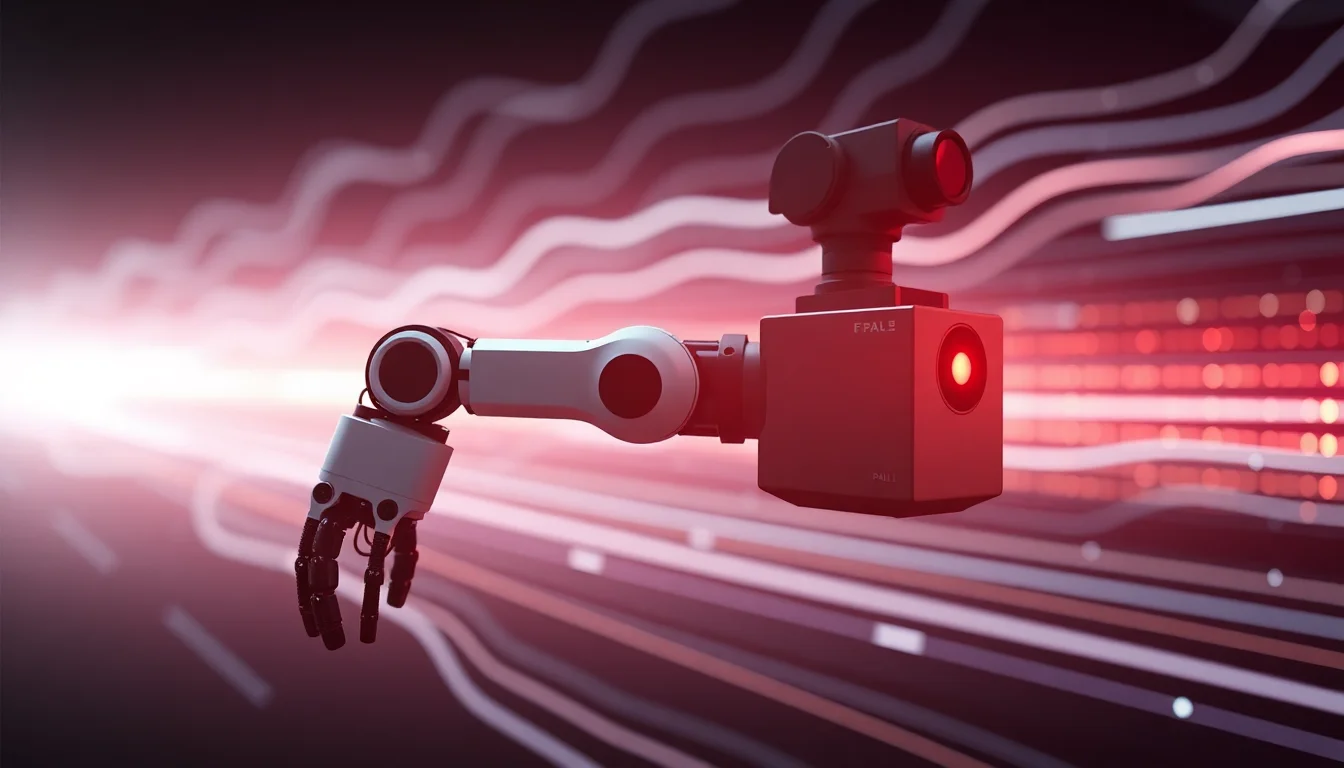
PAL Robotics is making a familiar argument in robotics, but with unusually concrete hardware behind it: if you want AI-powered manipulation to move faster, the stack needs to be lighter, more open, and easier to plug into existing tools. The company has announced a new robotic arm platform for advanced manipulation work that combines seven degrees of freedom, ROS 2 and ros_control integration, a 1 kHz low-level control loop, and Series Elastic Actuators, or SEA Arms, in a system weighing under 10 kg with a 3 kg payload.
That combination matters because the bottleneck in AI robotics is rarely just the model. It is the interface between perception, policy, control, and hardware. Research teams can iterate quickly when an arm speaks the same software language as the rest of the lab, but the move from simulation or bench testing to repeatable physical behavior usually breaks at the seams: control latency, calibration overhead, actuator behavior, and fragile integration. PAL is positioning this platform as a way to reduce those seams without abandoning the rigor needed for real manipulation work.
A lightweight arm built around open robotics standards
The core of PAL’s pitch is architectural, not just mechanical. The arm is built on ROS 2 and ros_control, which immediately places it inside a broad developer ecosystem that already underpins much of the robotics research and prototyping world. For AI teams, that means less custom middleware and fewer one-off integration layers when connecting learning-based perception, motion planning, control policies, and logging tools.
The platform’s 7-DoF configuration is also significant. Seven degrees of freedom give the arm enough kinematic flexibility to reach around obstacles, adjust wrist orientation, and handle tasks that would be awkward on a simpler manipulator. In practical terms, that opens the door to more realistic manipulation experiments, especially for work that blends learned policies with classical planning or teleoperation.
The 1 kHz control loop is another signal that this is not being framed as a toy or a slow demo platform. High-rate low-level control is essential when researchers want stable behavior under fast motion, contact-rich tasks, or policy outputs that must be translated into safe actuator commands. A 1 kHz loop does not guarantee performance by itself, but it does suggest PAL is targeting the kind of control bandwidth that serious manipulation workflows tend to demand.
SEA Arms are central to that story as well. Series Elastic Actuators introduce compliance into the drive chain, which can improve force interaction and make contact behavior more manageable. For manipulation, that can be useful when the task involves grasping, insertion, or other interactions where pure position control is too brittle. The trade-off is that compliance can add complexity to tuning and modeling, so the actuator choice helps explain PAL’s emphasis on a platform that is meant for researchers and engineers rather than a fully sealed appliance.
The physical profile rounds out the picture: under 10 kg of weight and a 3 kg payload. That is a portable combination by industrial robotics standards, and portability matters when the goal is to move an arm between labs, test stands, and operational environments. But the numbers also define the boundary of the platform. A 3 kg payload can support a meaningful set of manipulation tasks, yet it is not the same thing as broad industrial throughput. For many AI workflows, that may be enough; for heavier end-effectors or more demanding production jobs, it may not be.
What open interfaces buy AI teams — and where they still fall short
For technical users, the appeal of open robotics standards is obvious. If a platform can plug directly into ROS 2 tooling and ros_control workflows, the distance between a learning system and a working manipulator shrinks. That can speed up data collection, hardware-in-the-loop testing, policy iteration, and benchmarking. It also makes it easier to compare methods across hardware, which is still one of the hardest problems in robotics research.
This is where PAL’s timing looks strategic. AI robotics is moving toward systems that mix foundation-model-style perception, skill libraries, and closed-loop control, but that stack needs reliable hardware interfaces to be useful outside a demo. A platform designed around open standards can lower integration friction for teams trying to reproduce results or port methods from simulation into the lab. That does not mean the hard parts disappear. It means the team gets to spend more time on task design, data, and control quality instead of rebuilding plumbing.
At the same time, open interfaces are not a substitute for production readiness. Real-world deployment still depends on validation, safety envelopes, calibration workflows, durability testing, and support for the surrounding software ecosystem. The ROS world is broad, but it is also fragmented. Developers will want to know how stable the stack is across firmware updates, what tooling PAL provides for diagnostics and tuning, and how much effort is required to integrate the platform with perception systems, grippers, or facility-level orchestration.
SEA Arms may help on the control side, but they do not erase integration risk. In fact, compliance can increase the importance of careful modeling and consistent tuning, especially when policy outputs interact with physically variable tasks. That is a manageable challenge for research teams, but it is exactly the kind of issue that determines whether a platform becomes a useful standard or remains an interesting lab system.
Timing, rollout, and the ICRA 2026 checkpoint
PAL says it plans to officially unveil the arm at ICRA 2026 in Vienna, where it will reveal the robot’s name, full specifications, and live demonstrations. That matters because, in robotics, live demos often say more than a spec sheet. Researchers will want to see not just whether the arm can move, but whether it can sustain repeatable behavior under real manipulation conditions, whether the control stack behaves cleanly at speed, and how well the software environment fits into existing development practices.
The ICRA timing also puts the platform in a broader industry context. Robotics vendors and research labs alike are racing to compress the path from AI model development to physical deployment. Some systems lean heavily on proprietary integrations; others try to win by opening the software stack and making the hardware easier to work with. PAL appears to be betting on the second approach: portable hardware, open robotics standards, and enough control bandwidth to keep serious manipulation work on the table.
Whether that becomes a new baseline will depend on details that are still missing. Technical readers will want the official name, the final specification set, the nature of the live demonstrations, and evidence that the ecosystem around the platform is mature enough to support sustained use. Pricing has not been disclosed publicly in the material available here, and it would be premature to infer positioning from that silence alone.
For now, the important signal is narrower but still meaningful. PAL is trying to collapse the gap between AI experimentation and operational manipulation with a platform that is lightweight, open, and built for control-intensive work. If the company can back that architecture with a stable developer experience and credible demonstration results at ICRA 2026, it could help define what accessible AI robotics hardware looks like for the next phase of research and deployment.


