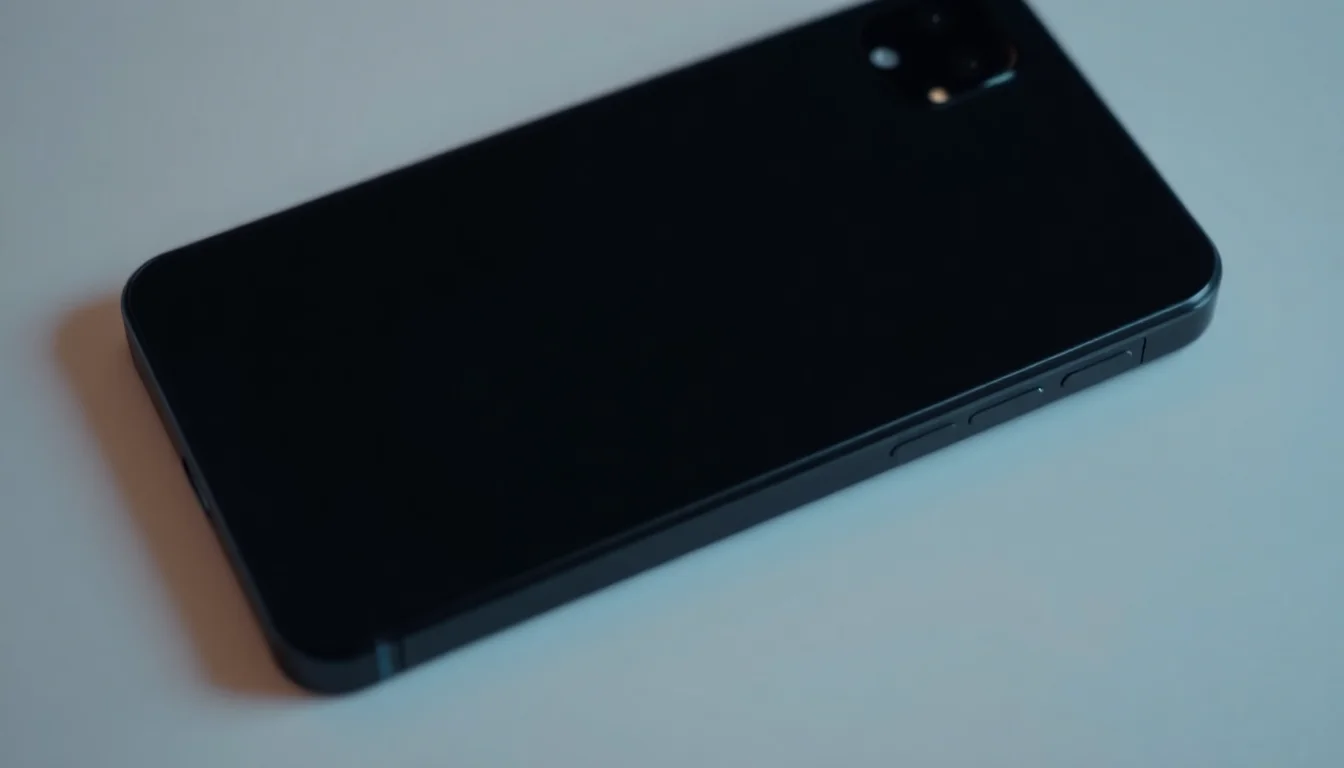
Google’s Pixel A-series has usually sold the same way: enough hardware to feel current, enough software to feel premium. The Pixel 10A tests that formula by doing even less on the hardware side and leaning harder on the part of the stack Google can update after shipment.
The headline is the price. For Prime Day, the 128GB Pixel 10A drops to $399 at Amazon and Best Buy, a clean $100 off the launch price. That matters because the phone’s otherwise thin update list had left it in an awkward middle ground at $499. At $400, the 10A starts to look less like a disappointing sequel and more like the price-adjusted version of a device strategy Google actually wants to sell: modest silicon changes, long software support, and a growing list of AI features that can be layered onto the same core hardware.
That support window is part of the pitch too. Google is keeping the familiar seven-year OS update commitment in place, which changes the economics of midrange buying as much as the discount does. If the buyer’s lifecycle expectation is closer to seven years than two or three, the phone’s initial hardware delta matters less than whether Google continues to ship meaningful software updates during that span. The Prime Day cut doesn’t just soften the sticker shock; it makes the long-tail support story feel more rational.
What is new on the Pixel 10A is mostly software-facing. Google adds features like Camera Coach and Auto Best Take, along with Satellite SOS and faster wired charging. But the important point is what does not change: the 10A still uses the Tensor G4 and a dual-camera system, so this is not a midrange device that suddenly moved up a class because of a new chip or a redesigned imaging stack.
That makes the AI features more interesting as a product pattern than as a spec-sheet event. On-device inference is doing the work here, which is the only way these capabilities make sense at this price point and power envelope. Camera Coach and Auto Best Take are the kind of features that can feel helpful without demanding dramatic changes to the underlying hardware architecture. They are iterative enhancements, not evidence of a new compute tier. In practical terms, that means the value is less about raw model novelty and more about whether Google can keep fitting small, useful AI tools into a device that remains largely unchanged from one generation to the next.
For developers and operators watching edge AI, that is the real signal. A phone like the Pixel 10A shows how consumer AI deployment is increasingly constrained by efficiency, thermal budgets, and software distribution rather than by headline-grabbing model jumps. If a feature can run locally, fit inside the Tensor G4’s envelope, and arrive through the same update channel as ordinary Android improvements, it becomes part of the device’s long-term utility instead of a one-off demo. That is useful for Google because it extends the perceived value of the handset. It is useful for anyone building on-device experiences because it sets a precedent for how much functionality can be delivered without asking users to buy a fundamentally different class of hardware.
The hardware parity with the Pixel 9A makes this even clearer. Google is not pretending the 10A is a leap forward. The company is shipping something that is, in broad terms, the same phone: same Tensor G4, same dual cameras, only a handful of incremental changes. In that sense, the 10A is a software-first midrange play dressed up as a new model number. The update cadence is now part of the product definition itself.
That approach may be exactly what Google wants. Instead of asking midrange buyers to pay for more silicon every year, it is asking them to accept a stable hardware platform whose usefulness expands through AI-enabled features and a long support window. Price becomes the lever that keeps the argument credible. At $499, the equation looked strained. At $399, it is easier to see how Google expects buyers to rationalize the device: not as a hardware upgrade, but as a serviceable, long-lived handset that keeps picking up capabilities over time.
That shift has competitive implications, even if this phone does not herald a dramatic leap in mobile AI. If Google can hold the midrange together with iterative AI tooling and a seven-year lifecycle promise, rivals may have to answer with either sharper pricing or more aggressive feature bundles. The midrange conversation then becomes less about camera count, battery size, or charging wattage in isolation and more about which company can make software feel durable enough to justify the purchase.
For buyers, the practical question is simple: are AI features like these enough to make an almost-unchanged phone feel current? The answer depends on whether they value a few useful on-device tools and long support more than a bigger hardware jump. For developers, the more durable takeaway is that the midrange is becoming a proving ground for edge AI economics. The device may barely change from one generation to the next, but the software layer can still move—and that increasingly determines whether the product feels stale or strategically sound.


