Lede: The price-to-performance inflection in budget pool robotics
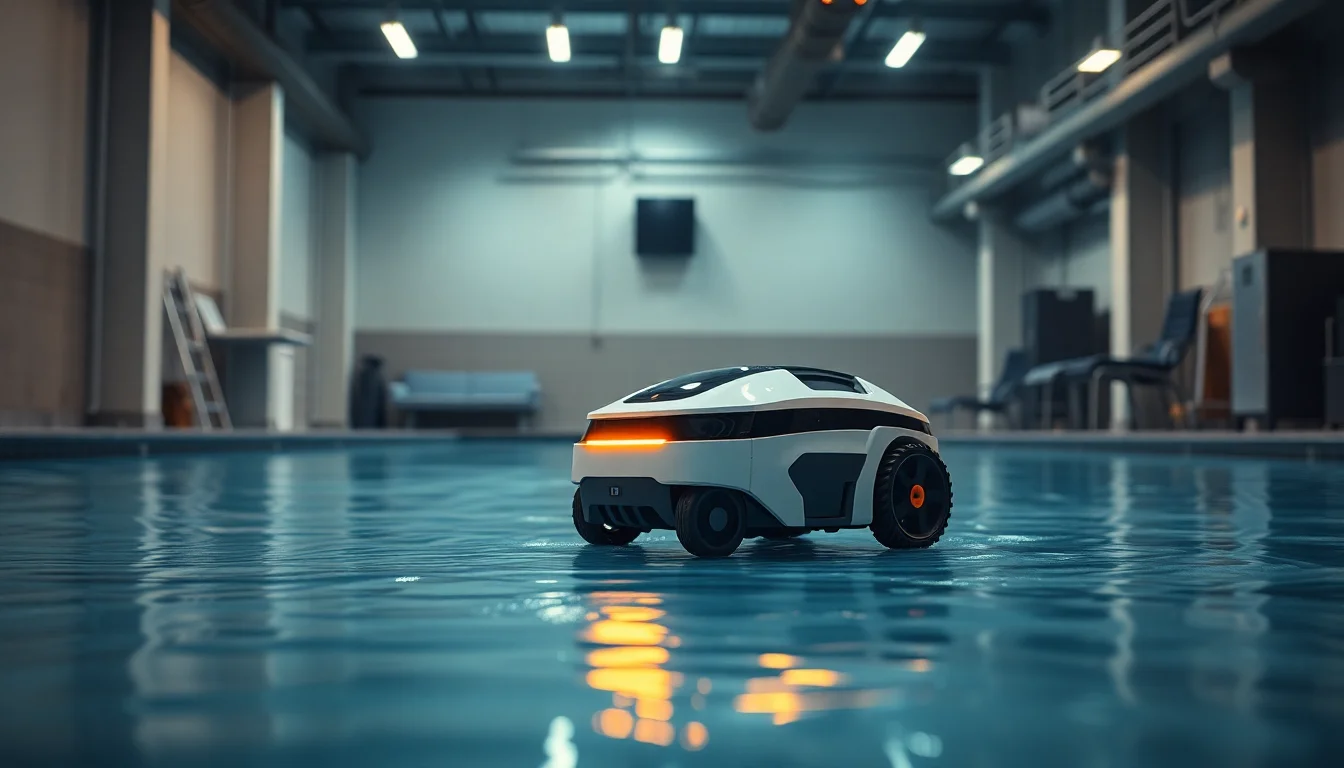
The Mammotion Spino E1 arrives as a compact, easy-to-store pool robot pitched at a budget tier. The point of its design is clear: keep costs down while shedding bulk. The evidentiary hinge for this piece is Wired’s review, published 2026-04-12, which frames the Spino E1 as a basic, entry-level option for budget-conscious buyers. In its summary, Wired notes, “This compact pool robot keeps its price down, but its performance doesn’t match that of more capable cleaners,” a stark reminder that affordability often carries a performance cost. The review anchors a broader industry shift: a price ladder that values small form factors and lower upfront costs, but must justify ongoing software and service updates against higher-priced rivals. For readers tracking AI-enabled consumer robotics, this is the moment where cost-down design tests the durability of user experience as products scale from concept to repeated deployments. The Spino E1’s value proposition—small footprint, low price—tests whether readers should expect parity with more capable devices or accept a narrower performance envelope. See Wired’s review here: https://www.wired.com/review/mammotion-spino-e1-pool-robot/.
Technical implications: performance vs. price in AI-enabled cleaning
Where price compresses, sensor fidelity and processing budgets follow. The Spino E1’s budget-orientedHardware reality translates into constraints on sensing, mapping, and control software. In practical terms, the entry-level hardware pressures the system to favor simpler, robust routines over complex, data-heavy AI pipelines. That means data quality—how accurately the robot perceives the pool, plans a path, and responds to dynamic conditions—may degrade relative to pricier competitors. Edge processing budgets constrain real-time sensor fusion and adaptive planning, and firmware update cadences become a focal point for performance gains beyond what the hardware can deliver at purchase. The Wired assessment implicitly highlights this gap: the device is easy to deploy, but its cleaning performance lags behind more capable cleaners, underscoring how cost constraints shape core algorithmic capabilities. Wired’s characterisation—“best viewed as a basic, entry-level option”—supports a picture where software updates and sensor-driven improvements become the primary channels to narrow the delta over time.
Product rollout and market positioning: how low-cost models reshape the ladder
The Spino E1’s place in the market is instructive for how manufacturers balance price bands, feature gating, and service-enabled differentiation. Budget offerings expand the addressable audience and reduce the barrier to entry—but they also raise expectations that software support and feature sets will progressively close gaps. In practice, vendors may lean on post-purchase updates and services to sustain relevance, especially when hardware constraints cap what can be delivered at the point of sale. Wired frames the Spino E1 within this mindset, noting its compact design and low price while acknowledging the performance lag. The takeaway for rollout strategy is a clear emphasis on ongoing software cadence, customer education about capability ceilings, and a roadmap that uses updates to justify continued engagement with the hardware.
What this means for the next wave of AI consumer robotics
Looking ahead, the price-performance gap illuminated by the Spino E1 review will likely drive tighter hardware-software coupling. Vendors may pursue clearer communication about capability envelopes and more rigorous validation to justify ongoing software updates and feature rollouts. In other words, the next wave will hinge on a combination of improved sensor inputs, smarter edge processing, and deliberate firmware cadences that push the performance envelope without breaking the budget narrative. The Wired review provides the evidentiary hinge for this forecast: affordability drives broad adoption, but the long arc of user trust depends on demonstrable, verifiable improvements through software, not just hardware. As the ladder broadens, expectations for how cost-conscious devices perform—and how transparently manufacturers address that performance—will define the pace and success of future AI-enabled consumer robotics product rollouts.
--- The Spino E1 case study offers a pragmatic lens on the market’s current inflection: cheap and compact buys attention, but the real test is whether software and service can sustainably elevate what a budget device can deliver in real-world cleaning tasks.


