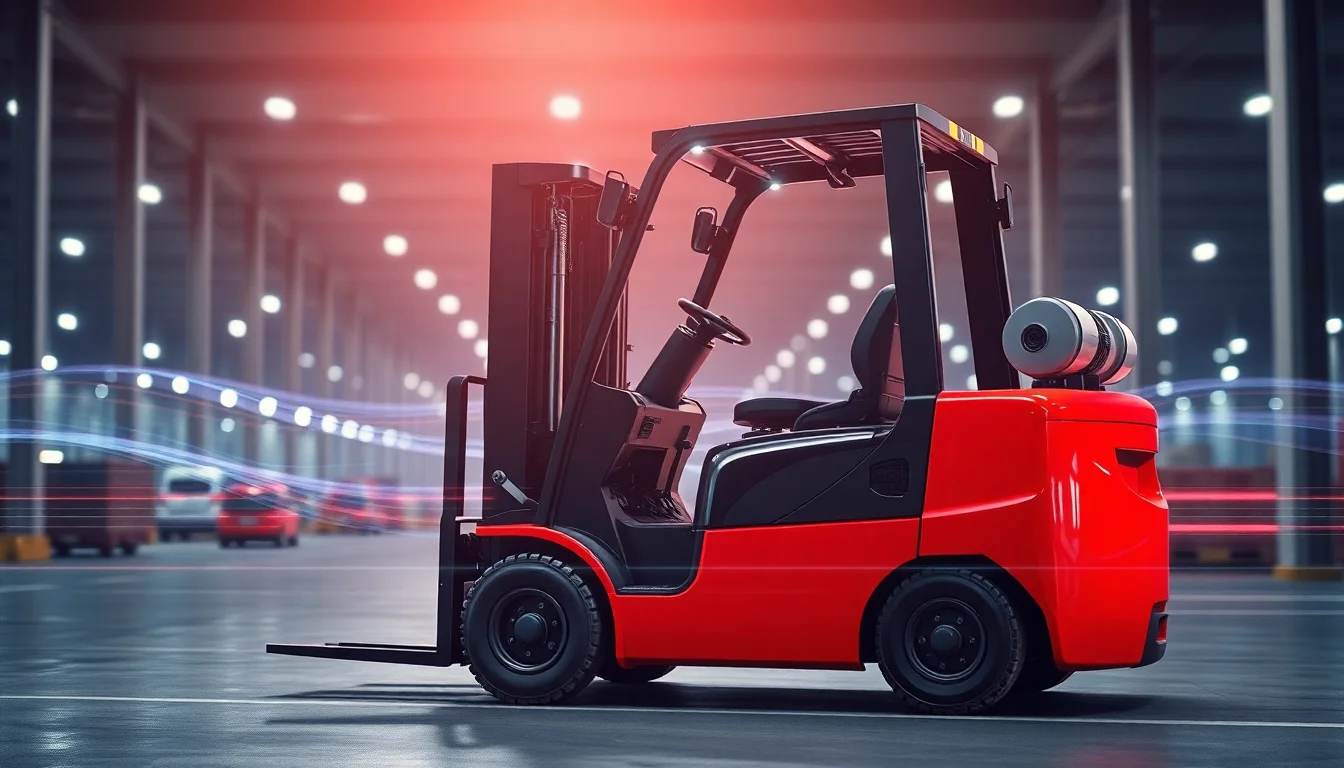
Raymond Corporation’s collaboration with Third Wave Automation is less a splashy product launch than a tell: warehouse autonomy is moving from isolated pilots into the messier world of fleet-wide deployment.
According to the companies, Third Wave’s AI-enabled physical automation will be offered across select Raymond lift trucks, extending a relationship that has been developing since 2021. That matters because the shift is not just about adding software to a machine. It suggests a deployment model in which autonomous operation becomes something customers can roll into their Raymond ecosystem, rather than a one-off test cell or a tightly constrained demo line.
For operators, the promise is straightforward: more automated movement in the warehouse, with less dependence on manual driving for repetitive transport tasks. But the technical and operational reality is more nuanced. The value of a system like this depends on how well the autonomy stack fits existing warehouse workflows, how much operational oversight is still required, and whether the deployment can scale without turning the site into a brittle integration project.
Shared autonomy on industrial hardware
At the center of the partnership is Third Wave Automation’s shared autonomy platform, which is designed to let autonomous lift trucks operate on Raymond hardware while maintaining human oversight where the system needs it. That distinction matters. In industrial environments, autonomy is rarely a matter of handing over the entire job to a model and walking away. Instead, control is distributed across the vehicle, the fleet, and the supervisory software layer that decides when the machine can act independently and when it needs intervention.
That architecture points to an edge-to-cloud split that is increasingly common in industrial AI. The local system has to make fast, safety-critical decisions close to the machine, while higher-level software coordinates data, fleet behavior, and operational visibility. In practical terms, that means the stack is doing several jobs at once: perception, motion decisioning, fleet orchestration, logging, remote monitoring and escalation handling.
The safety case is as important as the autonomy case. Warehouses are high-traffic, mixed-traffic environments, and lift trucks are consequential pieces of equipment. Any AI-enabled physical automation platform has to prove it can respect operational boundaries, detect anomalies quickly and fail safely when conditions drift. For technical teams, the real question is not whether the system can move pallets, but how it behaves when sensors degrade, the environment changes, or the workflow diverges from the training assumptions baked into deployment.
What fleet-wide deployment changes
Raymond’s role is more than that of a channel partner. By positioning Third Wave’s automation inside its ecosystem, Raymond gives customers a path to expand automation without replacing the entire material-handling fleet or rebuilding the warehouse around a single vendor’s stack. That should make adoption easier for sites that already rely on Raymond equipment and service relationships.
Still, “select automated Raymond lift trucks” is an important qualifier. The collaboration is framed as an expansion, not a universal conversion of every truck in every facility. That staged approach is typical for industrial automation because it reduces operational risk and gives integrators time to validate edge cases, route design, traffic patterns and maintenance requirements before broader rollout.
For warehouse operators, the implementation questions will likely be familiar: How much process redesign is required? What happens to exception handling? How are maps, routes and safety policies maintained as layouts change? And who owns the operational data generated by the autonomous fleet?
Those questions become more acute as deployments widen. A pilot can tolerate manual workarounds; a fleet-wide deployment cannot. Once autonomy starts to touch multiple shifts, multiple sites or multiple classes of equipment, the challenge is less about proving a concept and more about maintaining consistency across the operation.
Why the funding backers matter
The participation of Toyota Ventures and Woven Capital gives the collaboration a broader strategic context. Toyota Ventures, Toyota’s early-stage venture firm, and Woven Capital, its growth fund, are not just passive financial backers here; they signal that the companies involved see a durable market for AI-first automation in material handling.
That matters in an industry where buyers often look for evidence of staying power before committing to infrastructure-level software. Industrial customers want to know that the platform will be maintained, that service and support will scale, and that the roadmap will not disappear after the first tranche of deployments. Backing from Toyota-linked investors can help reduce that perceived risk, especially when the target customer already lives inside a Toyota-adjacent material-handling ecosystem.
It also suggests potential for tighter ecosystem alignment over time. If the automation layer is becoming a strategic piece of the broader material-handling stack, then partnerships like this can influence everything from product planning to service workflows to how future hardware is designed for autonomy-ready deployment.
The hard part is interoperability
The largest risk in enterprise AI automation is not usually the model; it is the operating environment around the model. Warehouses are full of exception cases, legacy systems and vendor-specific interfaces. As AI-enabled physical automation spreads across lift truck fleets, interoperability becomes a competitive issue as much as a technical one.
Will the system integrate cleanly with warehouse management software, telematics and safety infrastructure already in place? Can customers extract and retain the data generated by autonomous operations? Can they avoid being locked into a single automation provider for both hardware and control logic? Those are the questions that determine whether the rollout becomes a durable operating advantage or just another constrained deployment layer.
Governance will matter just as much. Safety standards, change management and data stewardship need to be defined before the fleet grows. A site that can manage a small automated cell may struggle once the same autonomy stack is spread across multiple trucks and workflows. In that sense, the Raymond–Third Wave collaboration is a useful marker of market maturity: it shows that the industry is moving beyond isolated demonstrations, but it also makes clear that scale introduces new forms of complexity.
The headline is not that warehouses are becoming autonomous overnight. It is that AI-enabled physical automation is now being packaged for fleet-wide deployment in a way that could make autonomy a normal part of material handling rather than an experimental side project. Whether that shift delivers sustained operational value will depend on the boring-but-decisive details: integration, safety, support, and who controls the system once the pilot becomes production.


