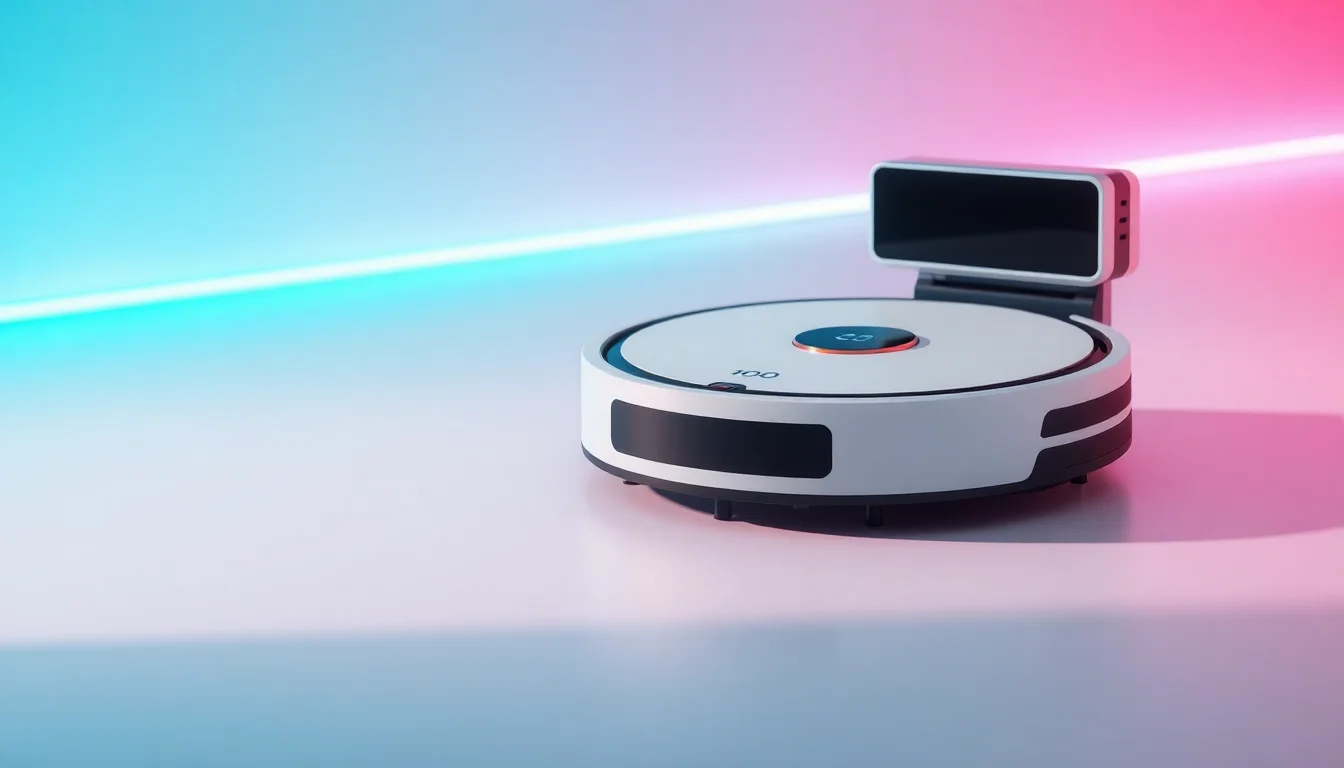
The Roborock Q10 S5 Plus is now listed at $269.99 at Wellbots when buyers use promo code NEW10, a price that matches its all-time low and puts the machine in a more crowded, more consequential bracket for consumer robotics. Amazon and Roborock are both sitting at about $279.99, so the gap is modest — but the signal is larger than the discount.
This is the point where AI-enabled robovacs stop feeling like aspirational hardware and start looking like a pricing category. The Q10 S5 Plus is not just a cheaper vacuum with app control; it bundles the kind of features that have helped define the premium tier: a self-emptying dock, AI obstacle detection and navigation, automatic carpet detection, and a mop that lifts over rugs. In practice, those capabilities matter because they reduce the number of interventions required from the user. A robot that can identify clutter more reliably, avoid getting trapped, and preserve carpeted areas without manual mode-switching is easier to deploy in real homes — especially mixed-floor layouts where reliability matters more than raw suction specs.
The Verge’s June 11 coverage frames the deal as one of the best values in its category, and that’s the right lens. A self-emptying dock changes the maintenance model: instead of daily bin clearing, the base station absorbs that chore, extending the time between user touchpoints. AI obstacle detection and navigation are the other half of the equation, because a robot vacuum is only as useful as its ability to map around cords, furniture legs, and scattered household objects without stalling. When those features work, the value isn’t just convenience; it’s consistency.
What makes the current pricing notable is the near-parity across channels. With Wellbots at $269.99 using NEW10 and Amazon and Roborock around $279.99, the market is showing a narrow band of retail discipline around a feature set that once would have been reserved for much more expensive models. That sort of alignment tends to compress the premium segment. If buyers can get self-emptying hardware, AI-based navigation, and carpet-aware mop control near the same price across sellers, brand differentiation shifts from “does it have the feature?” to “how well does it execute it?”
That has implications beyond one robot vacuum. For product teams, the move suggests that AI features in home robotics are entering a mainstream pricing stratum where they can no longer be justified purely as luxury extras. Instead, they become baseline expectations that rivals need to match in detection quality, navigation performance, and low-maintenance operation. For rollout strategy, it also hints at why vendors and retailers are willing to sharpen promotions quickly: visibility matters when the same model is priced within $10 across major outlets, because it turns the category into a comparison exercise rather than a branding exercise.
For technical buyers, the takeaway is less about the sale itself and more about the packaging of capabilities. A robot vacuum with obstacle detection that can actually operate in clutter, carpet sensing that reduces edge-case failures, and a self-emptying dock that lowers maintenance overhead is no longer automatically premium-priced. At $269.99, the Q10 S5 Plus looks like evidence that the market is moving toward feature parity at consumer-friendly price points — and that competitive pressure will likely show up next in navigation accuracy, automation reliability, and ecosystem integration rather than in headline discounts alone.


