Scout AI’s $100 million bet on Fury shows defense AI moving from demos to doctrine
At a military base in central California, four-seater ATVs were crawling over hillside trails while Scout AI’s team watched a different system being exercised: the model stack that will decide how, and how quickly, defense autonomy moves from simulated promise to something closer to field use.
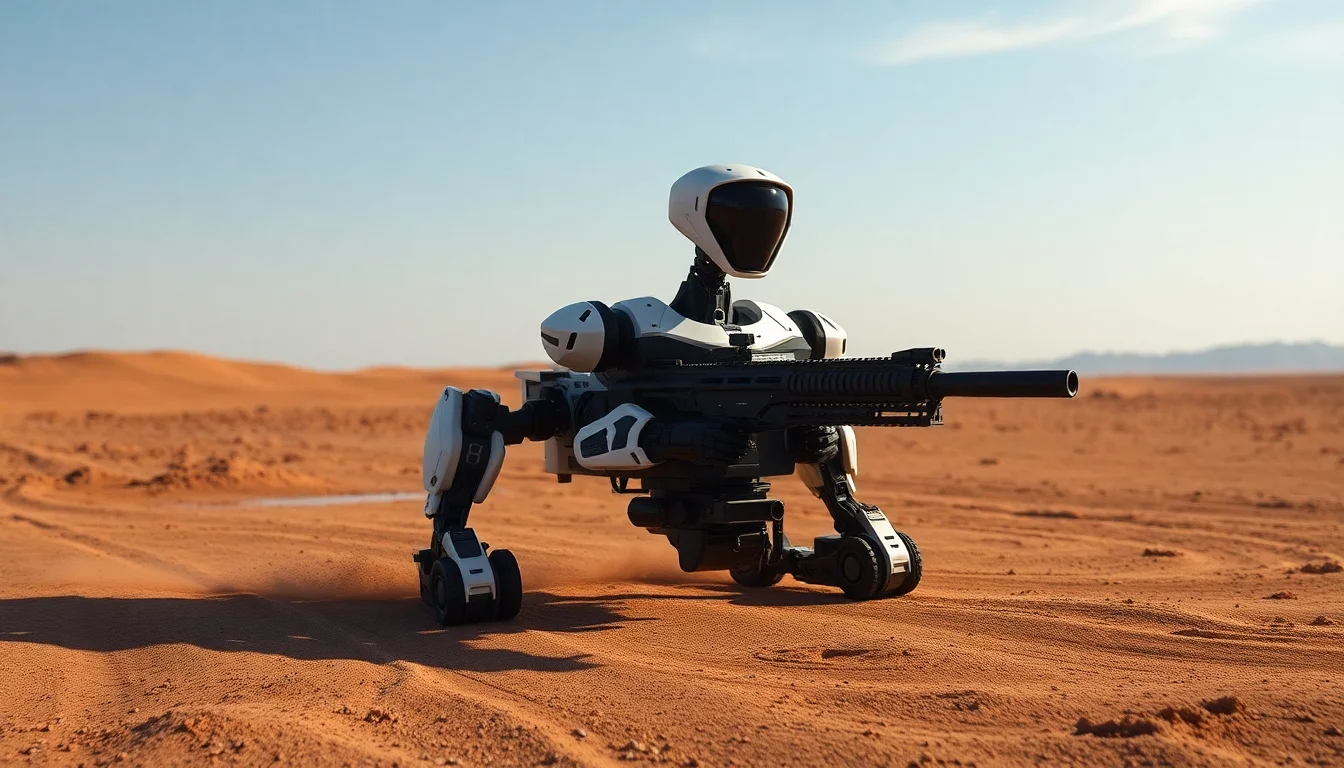
That is the strategic significance of Scout AI’s new $100 million Series A. Led by Align Ventures and Draper Associates, the round follows a $15 million seed raised in January 2025 and gives the startup the kind of capital base that can support a real training program, not just a prototype cycle. For technical readers, the signal is less about the headline number than about what the company says it intends to do with it: scale Fury, a vision-language-action stack designed to operate and command military assets, starting with logistics and eventually moving toward autonomous weapons.
The funding round matters because it suggests Scout is not treating autonomy as a lab problem. It is treating it as a data, systems, and deployment problem. In defense AI, that is a materially different claim.
Fury: a stack, not just a model
Scout describes Fury as a vision-language-action system, which is a useful shorthand for a broader architectural idea: combine perception, language-based reasoning, and action selection in one control loop. In practical terms, that means a model has to ingest images or video, interpret task instructions, reason about operating context, and then translate those decisions into commands for a vehicle, robot, or other military platform.
That architecture is familiar in adjacent fields. Robotics teams have spent years trying to fuse foundation models with control policies, usually by keeping the language model on the planning side and the low-level controller on the execution side. Defense adds a harder set of constraints: degraded connectivity, changing terrain, sparse supervision, uncertain object classes, and a much higher consequence for failure.
Scout’s CTO, Collin Otis, frames the effort as building on existing large language models rather than starting from scratch. That matters. It implies Fury is likely to depend on a base model for general reasoning and a task-specific layer for grounding that reasoning in sensor inputs and actuator outputs. In that sense, the company’s challenge is less about inventing a new foundation model architecture than about aligning a system stack around military tasks, latency budgets, and safety gates.
The phrase “military AGI” appears in the company’s own framing, but the more concrete technical question is narrower: how much competence can be achieved by chaining perception, instruction following, and action policies across real-world operational settings? That is the problem Scout is trying to answer, and the answer will depend on the quality of its training data more than on any single benchmark.
Foundry is where the hard part happens
Scout calls its training range Foundry. The company invited TechCrunch to tour the operation at a military base it did not name, underscoring both the controlled nature of the environment and the sensitivity of the work. Foundry appears designed to create a semi-realistic training loop: expose systems to field-like conditions, observe performance, collect feedback, and iterate on the model and the control stack.
That matters because defense autonomy is not just a software deployment problem. It is a domain adaptation problem.
A model that performs well in a polished demo or a simulator can fail when sensor noise increases, terrain shifts, communication is interrupted, or the mission plan changes mid-execution. Training in a range like Foundry is one way to reduce that gap. The system can learn from real motion, real environmental variation, and real operator feedback without being deployed into an actual conflict zone.
But the same loop that improves realism also intensifies the governance burden. The more the model is trained on operationally relevant scenarios, the more important it becomes to know how data is labeled, who can access it, how it is stored, what gets retained, and whether training artifacts can be reused across programs without contaminating compliance boundaries. In a defense context, data governance is not a back-office concern; it is part of the product.
There is also a safety issue specific to “in-the-wild” training. The more autonomy is exercised in semi-controlled environments, the more engineers must instrument the system for failure detection, override paths, auditability, and human-in-the-loop controls. If Fury is meant to progress from logistics support to more sensitive tasks, those safeguards will determine whether the stack can be bought, integrated, and certified at all.
The product plan is staged for a reason
Scout’s rollout appears intentionally incremental. The company says Fury will first support logistics and other non-kinetic tasks, then move toward more capable autonomous systems, including weapons-capable use cases, along a measured roadmap shaped by regulation and deployment realities.
That staging is a clue to how Scout expects adoption to work. Defense buyers rarely begin with the most sensitive mission profile. They adopt systems that can reduce toil, improve situational awareness, or automate repetitive movements, then expand only after reliability, interoperability, and operational trust are established.
From a market perspective, that is the right sequencing. It lets Scout gather real usage data, prove integration with existing platforms, and show that Fury can work across different asset classes before it has to confront the heaviest procurement, policy, and liability barriers. It also gives investors a clearer story: fund the data engine and the integration layer now, and let the higher-stakes autonomy claims mature later.
The startup’s position in the market is therefore not just that it has money. It is that it is trying to occupy the narrow zone between experimental autonomy research and productized defense software. That zone is increasingly attractive to capital because it offers a path to recurring deployment without requiring immediate proof of battlefield-level capability.
The technical risks are structural, not cosmetic
A company building military autonomy with foundation-model techniques has to solve several problems at once.
First, architecture. A vision-language-action stack must keep perception, planning, and control sufficiently coupled to be useful, but not so tightly coupled that a single model error cascades into unsafe behavior. That usually means layered controls, fallback policies, and constraints around what the language model is allowed to decide.
Second, data quality. Training on real-world military environments can improve performance, but only if labels, telemetry, and mission context are managed carefully. Otherwise, the model learns noisy correlations that may not hold under different conditions or across different theaters.
Third, interoperability. Defense systems do not live in isolation. They have to connect to legacy communications, command-and-control workflows, vendor-specific hardware, and procurement requirements that predate modern ML stacks. If Fury cannot integrate cleanly, autonomy becomes a point solution rather than a platform.
Fourth, safety and compliance. As these systems move from logistics toward more consequential tasks, they encounter export controls, procurement review, human authorization requirements, and legal constraints that can slow deployment even when the technology itself is usable. The more capable the autonomy, the more expensive the assurance case.
These are not hypothetical concerns. They are the gating factors that determine whether a defense AI startup becomes a durable supplier or just a well-funded experiment.
Why investors are still writing large checks
The size of Scout’s round says as much about the market as it does about the company. Defense-focused AI and robotics startups are attracting capital because investors are increasingly willing to underwrite practical deployment stacks rather than speculative claims about general intelligence.
That trend makes sense. Buyers in defense want systems that reduce operator burden, expand mission capacity, and fit existing procurement structures. Investors want businesses with defensible data, deployment momentum, and a route to recurring contracts. A company that can train on a live range, accumulate operational data, and package that into a deployable autonomy stack has a clearer commercial story than one that only shows benchmark performance.
Scout’s challenge is that the same properties that make it attractive to investors also make it difficult to scale. The closer the system gets to real missions, the more scrutiny it attracts. The more scrutiny it attracts, the more it has to prove that its training methods, access controls, and release gates are mature enough for use beyond the bootcamp.
What builders and buyers should watch next
For engineering teams, Scout’s move is a reminder that defense AI is converging on a full-stack problem: model architecture, hardware integration, telemetry, simulation, field training, and policy compliance all have to move together. The winning systems are likely to be the ones that can show repeatable performance in constrained environments and a credible path to safe escalation.
For buyers, the relevant question is not whether a startup can demonstrate autonomy in a controlled setting. It is whether the stack can be instrumented, audited, and integrated without creating new operational risk. That includes proving override mechanisms, logging, security boundaries, and interoperability with existing command systems.
For the broader market, Scout’s funding round is another sign that the next phase of defense AI will be shaped by access to real-world training infrastructure. Foundries, ranges, testbeds, and data pipelines may end up being as important as model size. In a sector where field conditions are the benchmark that matters, the companies with the best training loop may have the strongest long-term advantage.
Scout AI’s $100 million Series A does not prove that autonomous military systems are ready for broad deployment. It does show that the industry is moving past the stage where those systems are only ideas on a whiteboard. The hard work now is not persuading investors that the concept is real. It is proving that the stack can survive the distance between a bootcamp and a mission.


