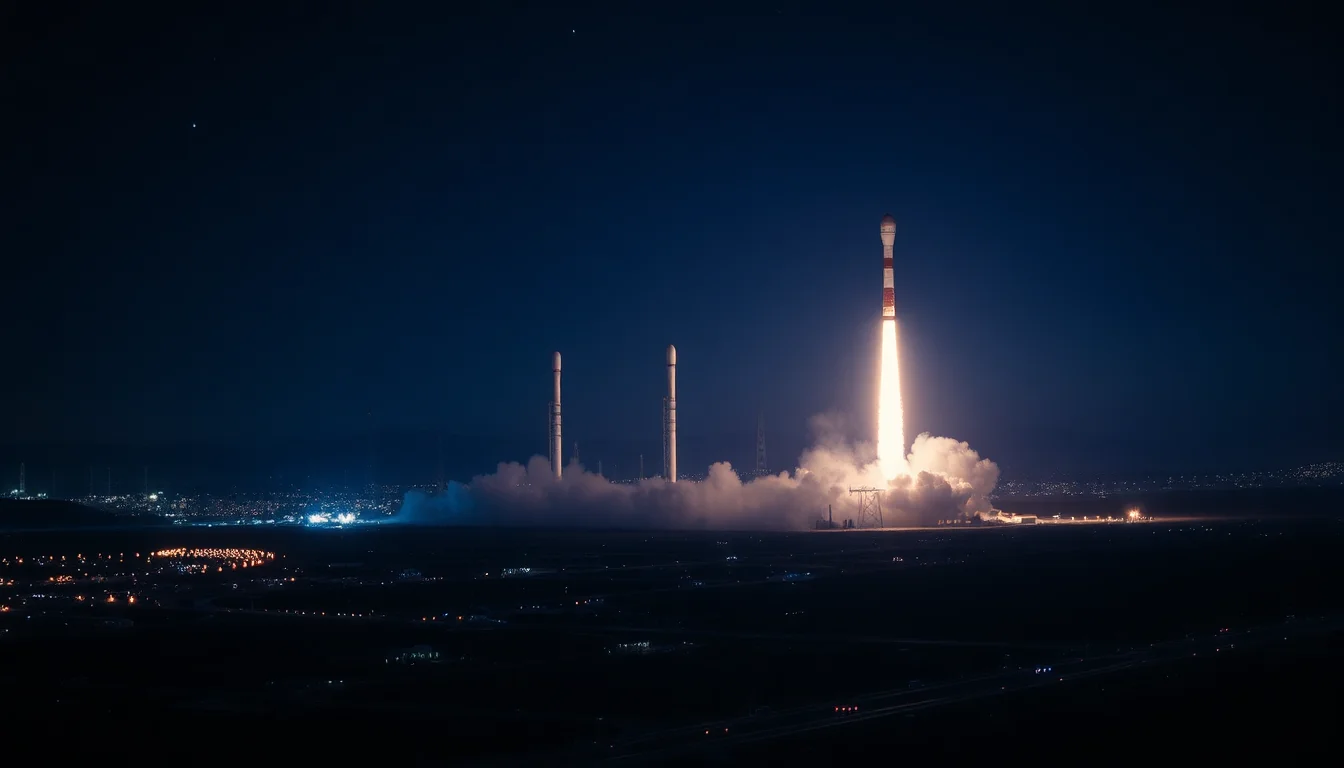
SpaceX’s IPO filing does something most AI market commentary avoids: it turns the abstract debate about “AI scale” into a balance-sheet problem. The company is asking investors to underwrite a target valuation of up to $2 trillion while disclosing a business that is already taking on billions in AI-related losses, buying power-hungry infrastructure, and accepting contractual risk that would make many product teams pause before signing.
The headline numbers matter because they describe a deployment model, not just a fundraising story. According to the filing, xAI is absorbing the bulk of AI-related spending and losses, with 2025 AI losses rising to about $6.36 billion. That is not the profile of a model business that has found efficient monetization. It is the profile of an organization pushing hard on compute, capacity, and integration, while the economics remain dominated by inference, training, and infrastructure burn.
For technical teams, the implication is straightforward: the company appears to be optimizing for scale first and unit economics second. That is a familiar pattern in frontier AI, but the filing makes the tradeoff unusually explicit. Q1 2026 already showed a net loss of $4.28 billion on $4.69 billion in revenue, reinforcing that rapid growth and heavy operating burn are advancing together. In practice, that usually means tighter constraints later, not sooner—especially when the roadmap depends on a stack that is compute-intensive from top to bottom.
The AI spend engine is now visible
The filing’s most important contribution is that it makes the AI cost structure legible. When a division like xAI is responsible for most of the AI spend and losses, the real question is not whether the product vision is ambitious. It is whether the organization can keep absorbing the cost of model training, inference serving, evaluation pipelines, and reliability engineering without forcing abrupt changes in product scope.
A $6.36 billion loss line for 2025 suggests that the burn is not incidental overhead; it is the core operating mode. That has consequences for how the stack evolves. Teams under that kind of pressure often prioritize throughput over experimentation, cache-heavy architectures over flexible ones, and deployment patterns that maximize utilization across large clusters. In other words, the economics start shaping the architecture.
That matters for AI tooling as much as for models. Tooling choices—prompt orchestration, retrieval layers, eval harnesses, and internal developer platforms—stop being neutral abstractions when compute is expensive enough to dominate the P&L. Every additional retry, agent loop, or low-signal workflow has an accounting effect.
A $60 billion Cursor deal is not just a headline number
The filing also describes a planned $60 billion acquisition of Cursor, along with significant breakup and deferred services fees if the deal fails. That structure is worth paying attention to because it changes the downside profile before any integration begins.
In product terms, a deal of that size is never only about buying a tool. It is about acquiring a workflow, a distribution channel, and a dependency surface. If the transaction closes, the integration challenge becomes how to reconcile product telemetry, model routing, developer experience, and billing across a much larger system. If it doesn’t close, the fees and contractual obligations still create drag.
For teams that use or build AI tooling, the lesson is that vendor relationships are becoming more like infrastructure commitments than software subscriptions. Deferred services fees and breakup costs are a sign that the parties expect long implementation tails and substantial switching friction. That usually means roadmap timing risk. Features are planned around a future state that may not arrive on schedule, or may arrive with different constraints than the original architecture assumed.
The broader implication is governance. If a large AI platform is willing to make a $60 billion acquisition bet with heavy contractual penalties attached, internal product teams need more rigorous thresholds for migration plans, dependency mapping, and fallback paths. Otherwise, the integration itself becomes a hidden source of delivery risk.
The physical footprint is starting to push back
The filing’s energy disclosures are the clearest reminder that AI growth is ultimately constrained by physical systems. SpaceX is purchasing billions in gas turbines as part of its data-center strategy, while reporting also points to data centers heating nearby neighborhoods. Those are not abstract externalities. They are operational signals.
Gas turbines are a blunt instrument for meeting immediate power demand. They can support rapid expansion, but they also create local emissions, siting complications, and a stronger compliance burden as deployment scales. For AI teams, this matters because capacity planning is no longer just a cloud procurement problem. It is an infrastructure-risk problem that touches permitting, neighborhood response, grid availability, and uptime guarantees.
The fact that heat from data centers is already being felt locally suggests that the physical envelope is becoming visible to outsiders, which tends to slow expansion or force redesigns. In practice, this can mean longer lead times for new clusters, more scrutiny around cooling systems, and more conservative decisions about where inference workloads are placed.
That changes model deployment strategy. When power and heat become constraints, organizations start making harder calls about model size, serving frequency, batch size, and whether certain workloads should be delayed, compressed, or offloaded. The cost of a marginal improvement in latency or capability can no longer be treated as purely digital.
The valuation story and the cash story do not match cleanly
A valuation target of up to $2 trillion is designed to tell investors that the market believes in compounding scale. But the filing also makes clear that the underlying business is still carrying heavy losses and major infrastructure commitments. That tension is the central strategic problem.
High valuations reward narratives about dominance, platform control, and long-run optionality. They do not automatically solve compute cost, energy constraint, or integration complexity. If anything, they can raise the stakes by pressuring teams to keep shipping features and capacity faster than the operating model can comfortably absorb.
That creates roadmap risk. Product teams may be pushed to justify features on near-term revenue or retention grounds even when the infrastructure behind them is still extremely expensive. Pricing models can become harder to stabilize if serving costs remain volatile. And partner dependency becomes more sensitive, because any external compute relationship or tooling dependency can alter margin structure quickly.
The contrast with the filing’s Q1 2026 results is especially stark: $4.69 billion in revenue against a $4.28 billion net loss does not leave much room for complacency. It suggests that even at massive scale, the company is still trying to outrun its own burn.
What technical teams should read into this
For AI product teams, the practical takeaway is not that scale is impossible. It is that scale is now expensive enough to shape everything from architecture to procurement. Expect more attention on compute budgets, inference efficiency, and contract terms that lock in infrastructure behavior. Expect more scrutiny on whether a feature’s model cost can be defended against its product value.
Teams should also expect more complex vendor governance. The filing’s mention of Anthropic paying roughly $1.25 billion a month for compute underscores how deeply model companies depend on external infrastructure. That kind of dependency means the real product risk often sits one layer below the app surface: in GPUs, power, cluster availability, and service-level commitments.
As AI roadmaps get more capital-intensive, deployment timelines will likely become more sensitive to infrastructure readiness. A feature is no longer just “built” when the model works. It is built when it can be served reliably, costed accurately, and scaled without exposing the organization to unexpected energy, heat, or contractual risk.
That is the broader message in SpaceX’s filing. The next phase of AI competition may be decided less by who can demo the most impressive system and more by who can afford to run it, power it, and absorb the consequences when the physical world pushes back.


