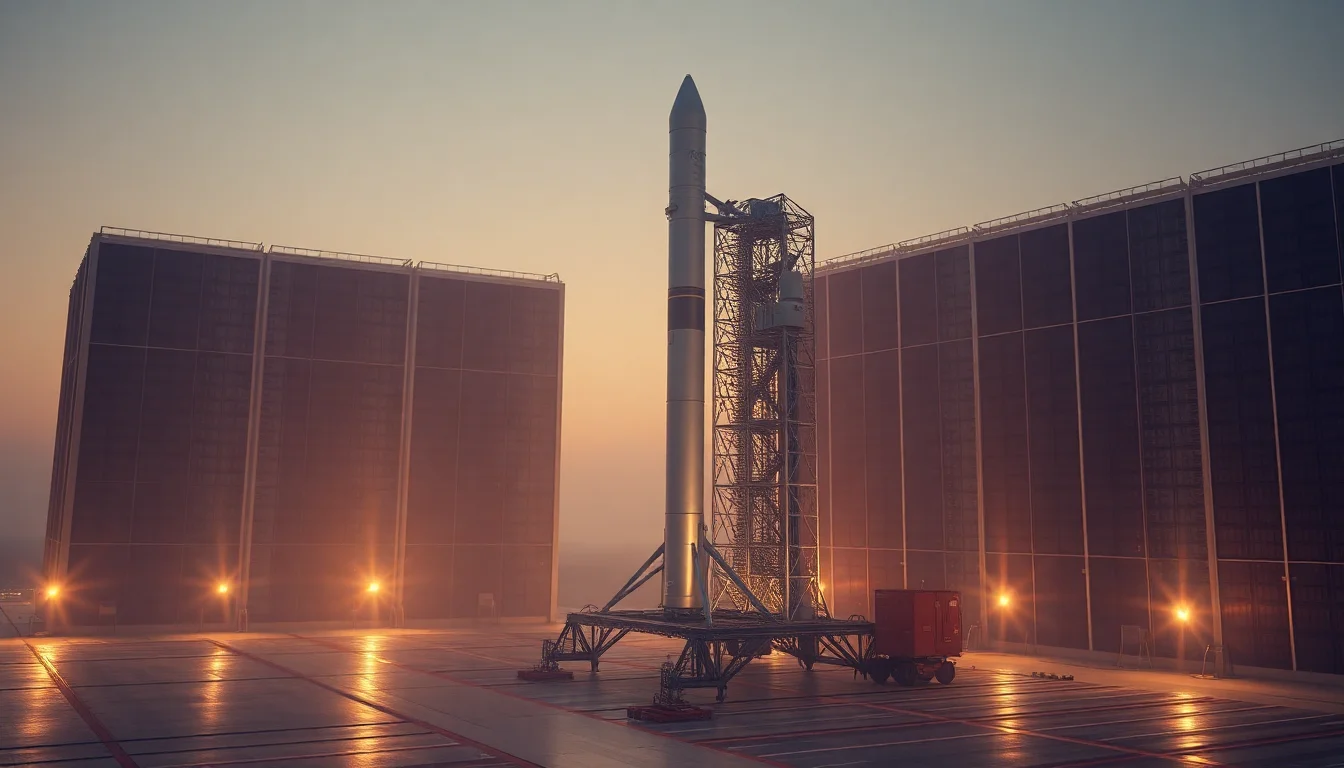
Reflection AI’s first major compute deal is also a signal flare for the market: open-weight ambitions are no longer being tested on borrowed cycles or ad hoc cloud capacity, but on a dedicated, high-volume infrastructure commitment from SpaceX.
According to the deal described by TechCrunch, SpaceX will supply Nvidia GB300 chips and supporting hardware from its Colossus 2 data center near Memphis beginning July 1, 2026, with the arrangement running through 2029. The contract is said to be worth up to $6.3 billion, priced at $150 million per month, and includes a termination option for either side with 90 days’ notice after the first three months. In practical terms, that makes Colossus 2 a strategic compute backbone for Reflection AI rather than a conventional vendor relationship.
A new compute backbone emerges: SpaceX and Reflection AI strike a high-volume, multi-year deal
The headline change is not simply that Reflection AI found a supplier. It found a supplier willing to underwrite the scale profile implied by frontier-ish model work: immediate access to GB300-class infrastructure, long-dated capacity, and enough commercial commitment to keep large training and inference programs moving on a predictable cadence.
That matters because the hardware layer shapes what an AI lab can actually promise. A multi-year, high-volume allocation gives Reflection AI more than raw FLOPs. It gives the startup a planning horizon for model releases, refresh cycles, and deployment architecture that would be difficult to build around spotty access or short-term reservations.
Open-weight AI at scale: promise and peril for openness
Reflection AI has positioned itself as an open-weight alternative in a field still dominated by closed frontier labs. The company is now using the compute deal to emphasize that open-weight models can be built and operated at serious scale.
But there is a tension embedded in that story. Open-weight distribution can broaden access to model weights, yet the production machinery behind those weights is becoming more centralized. If a single backend — in this case SpaceX’s Colossus 2 — becomes the primary platform for training and deployment, then openness at the model layer does not eliminate dependency at the infrastructure layer.
For technical teams, that creates a familiar set of tradeoffs: reproducibility depends on stable hardware and software stacks; security review depends on clear access controls and supply-chain discipline; and auditability depends on being able to explain not just what the model is, but where and how it was run. A lab can release weights broadly and still be tightly coupled to one provider’s operational constraints.
Pricing, terms, and the economics of scale
The economics are unusually aggressive even by current AI infrastructure standards. $150 million a month translates into a burn profile that effectively forces utilization. Capacity at this level has to be kept busy — in training runs, evaluation pipelines, fine-tuning, or inference workloads — or the economics break down fast.
The 90-day termination option after the first three months is the other key detail. It injects flexibility, but it also introduces risk for any roadmap built around a stable capacity assumption. Long-running training jobs, staged rollouts, and multi-iteration model updates all depend on continuity. If the contract is cancelled early, Reflection AI would need contingency plans for migration, checkpoint portability, and potentially re-optimizing workloads for a different hardware profile.
That combination — massive monthly spend paired with a relatively short exit window — is the kind of structure that can pressure the rest of the market. It signals that frontier-scale compute can be contracted with unusual speed and intensity, but it also suggests that pricing power may be shifting toward the party controlling the bottleneck.
Why SpaceX, why Colossus 2, why now?
The choice of SpaceX is striking precisely because it is not a traditional cloud provider. Yet Colossus 2, near Memphis, is clearly being used here as a serious AI infrastructure asset. The location and scale matter for more than optics.
A Memphis-area data center can be read as a logistics and energy play as much as a compute one. For large-scale AI workloads, geography is part of the architecture: it affects power delivery, network routing, operational redundancy, and how quickly systems can be stood up or expanded. With GB300-class hardware at Colossus 2, SpaceX is offering Reflection AI a platform designed for the latest generation of dense AI workloads rather than a generic rental rack.
The timing also fits a broader procurement pattern. By 2026, model builders are increasingly treating compute as a strategic dependency, not just a line item. A startup that can secure dedicated access to high-end hardware through 2029 can plan product and model milestones around infrastructure availability instead of constantly renegotiating it.
Impact on real-world deployments and product roadmaps
For teams building on top of open-weight models, this kind of deal changes the release calculus. If the underlying lab has committed to a fixed, high-capacity backbone, downstream teams can expect more predictable update schedules, better support for large retraining runs, and potentially faster iteration on variants tuned for specific enterprise use cases.
But that predictability comes with engineering consequences. Product teams will need to align data governance, model refresh policies, and deployment pipelines with a provider-specific hardware environment. Compatibility with firmware, kernel-level tooling, distributed training libraries, and inference optimizations becomes less abstract when the compute stack is tied to a particular facility and chip generation.
In other words, the practical advantage of open-weight AI is not only that you can inspect or fine-tune the model. It is that you can, in principle, build repeatable systems around it. This deal makes that claim more credible — but also more operationally contingent.
Risks, governance, and the longer-term trajectory
The central risk is concentration. If Reflection AI’s scale path depends on SpaceX infrastructure, then capacity shocks, pricing changes, and strategic reprioritization at the provider level all become product risks.
There is also a governance issue that goes beyond procurement. Open weights are easier to distribute than closed APIs, but enterprise adoption still demands controls around who trained what, on which hardware, under what security posture, and with which rollback mechanisms. A single-provider regime can simplify some operational questions while making independence, portability, and auditability harder.
That tension is likely to shape the market through 2029. If the deal works, it may demonstrate that open-weight labs can secure industrial-scale infrastructure without surrendering their distribution model. If it creates too much dependency, it may instead show that openness at the model layer is increasingly being built on top of highly centralized compute power.
Either way, the signal is clear: the competitive frontier in AI is no longer only about model architecture or benchmark performance. It is also about who can guarantee the chips, the power, and the operating envelope to keep those models alive at scale.


