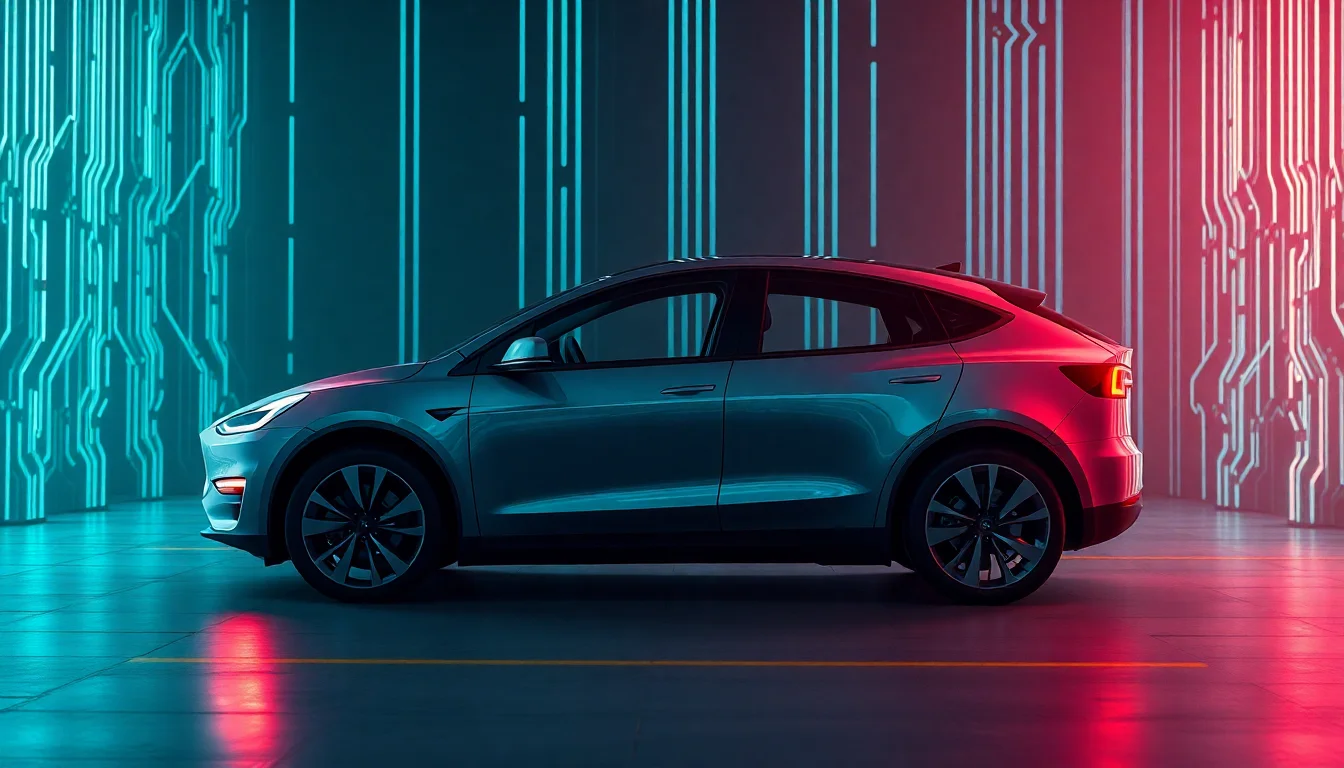
Lede Tesla has canceled the long-anticipated Model 2 and is now pursuing a new small electric vehicle, according to Ars Technica. The report frames the move as a notable shift back toward Tesla’s automotive core after a period during which the company leaned into humanoid-robotics and broader AI ambitions. As Ars Technica puts it in its piece titled “First, Tesla canceled the Model 2—now it's working on a new small EV,” the pivot signals more than a product change: it signals a refocus on the engineering and production systems that underwrite a compact-car program.
Technical implications: AI, hardware, and platform redesign The cancellation of Model 2 clears bandwidth for a fresh platform standard aligned with AI-driven product development. A new small EV implies decisions on AI/ML accelerator integration, sensor suite strategy, and a reimagined supplier and manufacturing workflow intended to leverage robotics-enabled capabilities. In practical terms, engineers may converge around a tighter software-defined platform, with autonomy software and edge-inference pipelines designed to operate across a smaller footprint vehicle while remaining compatible with the company’s broader AI stack. The Ars Technica reporting anchors this interpretation: the shift follows Tesla’s pivot toward humanoid robotics and AI, with the article framing the change as a reorientation toward a core automotive proposition rather than a detour into unrelated tech bets.
Product rollout and timing: risk, ramp, and go-to-market Moving from a familiar small-car concept to an AI-centric, robotics-enabled platform introduces a different ramp profile. The shift could influence schedule, supplier commitments, and unit economics in ways that reallocate R&D and manufacturing investment. Without firm public timelines, the piece emphasizes strategic risk rather than exact dates: a platform redesigned around AI-enabled features and manufacturing automation may trade a straightforward, high-volume ramp for a more complex, tooling-intensive production program.
Market positioning and competitive dynamics If the new small EV emphasizes software-defined value—continuous OTA updates, modular feature sets, and AI-driven user experiences—Tesla could differentiate on more than base price. The opportunity would be to frame the compact car as a cost-per-feature play, where autonomy advances, on-vehicle intelligence, and manufacturing efficiency contribute to total cost of ownership and perceived value even at a price point where volume matters most.
Implications for AI tooling and real-world deployments The pivot underscores a broader industry imperative: production-grade AI tooling must anchor both hardware and software lifecycles. Real-world deployment at scale will hinge on robust pipelines that move models from prototyping to integration with automotive-grade firmware, sensor payloads, and autonomous stacks. Governance around deployment in a manufacturing environment, cross-domain data flows, and end-to-end testing will become visible constraints as production planning coalesces around a robotics-enabled, AI-first platform.
Evidence anchor All framing here draws on Ars Technica’s report—First, Tesla canceled the Model 2—now it's working on a new small EV—published 2026-04-09—which documents the cancellation and the pivot toward a new small EV, alongside the broader context of Tesla’s recent AI and robotics ventures. The article serves as the central evidence anchor for the analysis presented above.


