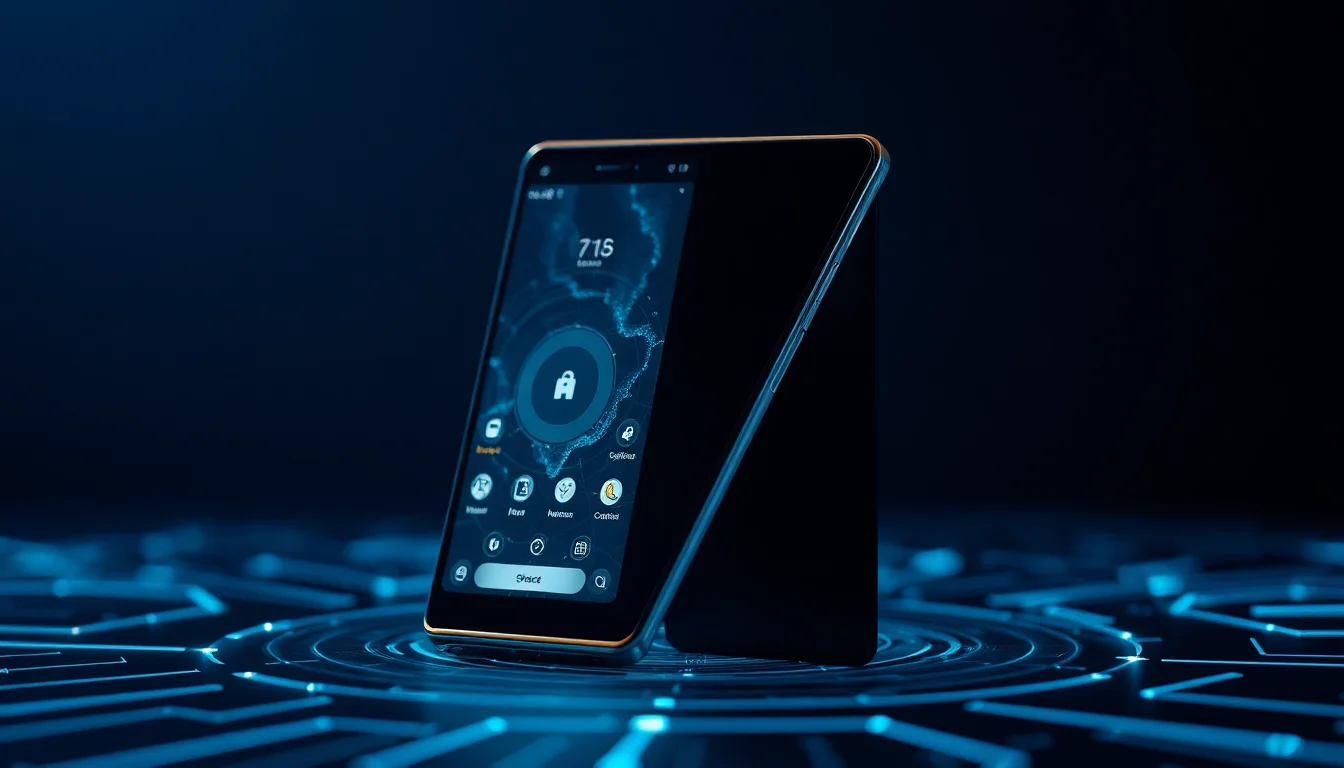
Vertu is trying to recast the executive phone as something closer to a pocket-sized control plane. Its new Alphafold is a foldable aimed at CEOs on the move, and the pitch is not just about materials or industrial design. It is about running enterprise workflows from a luxury handset starting at $6,880, with Hermes Agent positioned as the software layer that connects the device to ERP/CRM systems and coordinates business activity from the edge.
That framing matters because it moves Vertu out of the familiar luxury-phone lane and into a more complicated category: mobile enterprise AI. The company is not selling a consumer assistant with generic prompts. It is selling a device that claims to sit closer to corporate systems, surface relevant context, and help executives move between communications, approvals, and operational decisions without being tied to a laptop or desktop client.
Hermes Agent as the integration layer
The technical premise appears to rest on Hermes Agent acting as a bridge between the Alphafold and enterprise software stacks. In practical terms, that means ERP/CRM connectivity, workflow coordination, and contextual assistance that can pull from business data rather than only local apps or public web content.
That architecture suggests a few things. First, the device is likely meant to do more than summarize messages or draft text. If Hermes Agent is truly wired into enterprise systems, it can potentially surface account status, order updates, pipeline notes, or approval tasks in a way that is specific to the executive’s role. Second, the foldable form factor is part of the workflow story: a larger screen on a phone-sized device is useful if the user is jumping between dashboards, chats, and approvals throughout the day.
Vertu also appears to be leaning into on-device inference, with selective cloud sync implied by the broader enterprise positioning. For security-conscious buyers, that combination is important. Keeping some AI processing local can reduce exposure compared with a fully cloud-dependent assistant, especially if the device is handling sensitive communications or decision support. But any real enterprise deployment will still depend on how the system authenticates users, scopes access, and logs what the agent can read or do inside connected applications.
Luxury hardware meets enterprise software
Vertu’s pricing strategy makes the product story even more unusual. The calfskin version starts at $6,880, which places the Alphafold firmly in the premium luxury segment before any bespoke customization enters the picture. Higher-end variants push into much more expensive territory, with finishes such as alligator leather, gold, and diamond accents reinforcing the brand’s long-running status-symbol identity.
That would be easy to dismiss as pure extravagance if the software layer were superficial. But the inclusion of Hermes Agent and ERP/CRM integration changes the positioning. Vertu is effectively arguing that the value of the device is not just in the craft of the hardware, but in the ability to compress executive work into a single mobile surface. In other words: luxury hardware meets enterprise software.
The challenge is that those are two markets with very different buying criteria. Luxury buyers often accept scarcity, craftsmanship, and brand signaling. Enterprise buyers care about reliability, manageability, identity and access controls, device policy enforcement, and supportability across fleets. Vertu is trying to satisfy both at once, which creates a narrow but potentially distinct category: a premium device justified by workflow utility rather than specs alone.
The security and governance problem is the real product test
Any system that bridges a mobile device into ERP/CRM environments needs to be treated as part of the enterprise attack surface. That means the obvious questions are the ones Vertu will have to answer if it wants this to be more than a boutique concept: How are credentials stored? What can Hermes Agent access by default? Can administrators define policy per role? Are prompts and outputs logged? Can the system be audited after the fact?
On-device AI offers some privacy and latency advantages, but the enterprise risk does not disappear just because the model runs locally. The critical issue is the workflow boundary. Once the agent can touch customer records, sales pipelines, internal approvals, or financial workflows, governance becomes central. A secure deployment would need encryption at rest and in transit, strong device attestation, fine-grained access controls, revocation mechanisms, and a clear update path for both the OS and the agent itself.
The more deeply the Alphafold plugs into corporate systems, the more carefully buyers will want to think about data residency, model behavior, and change management. If a CEO is using the handset to coordinate enterprise workflows, then a compromised device or misconfigured connector is no longer a personal privacy problem; it is a corporate systems problem.
What this means for the market
Vertu is not the first company to link AI to mobile hardware, but its move is notable because it wraps enterprise ambitions in a luxury package. That may sound niche, yet niches can matter when they reveal a broader direction. If executives are willing to pay for a device that compresses communication, approvals, and data access into a single secure mobile workflow, other hardware and software vendors will notice.
It also pressures enterprise software ecosystems to think more seriously about mobile-first, AI-mediated workflows. ERP and CRM vendors have spent years pushing dashboards, apps, and notifications to phones. Hermes Agent raises the bar by suggesting that the device itself can become a workflow coordinator, not just a notification sink. If the integration is real and durable, the Alphafold could serve as a proof point for a premium class of AI-enabled enterprise devices.
Still, the ROI question is unresolved. A $6,880 foldable can only justify itself if it delivers measurable operational value. For most companies, that means concrete outcomes: less time spent triaging messages, faster approvals, shorter decision loops, fewer workflow handoffs, and fewer security exceptions than a less controlled consumer device.
What adoption would have to prove
Without public pilot data, Vertu will need to show more than a polished demo and a striking materials story. The adoption path for the Alphafold would likely start with a small executive pilot, where the company can measure how often Hermes Agent is used, which enterprise systems are connected, and whether the device actually reduces friction in day-to-day work.
Success metrics will probably have to be mundane to be credible: time saved per workflow, decision latency, administrator overhead, compliance outcomes, and incident rates. If the product is going to live up to its positioning, it will also need a clear model for governance updates, connector maintenance, and policy enforcement as enterprise systems change.
That is the real test for Vertu’s bet. The Alphafold is more than a foldable with expensive finishes. It is an attempt to create a premium channel for enterprise AI at the edge, targeted at CEOs who want to run companies from a handset rather than a laptop. Whether that translates into meaningful adoption will depend on whether the company can prove that Hermes Agent is not just elegant, but operationally trustworthy.


