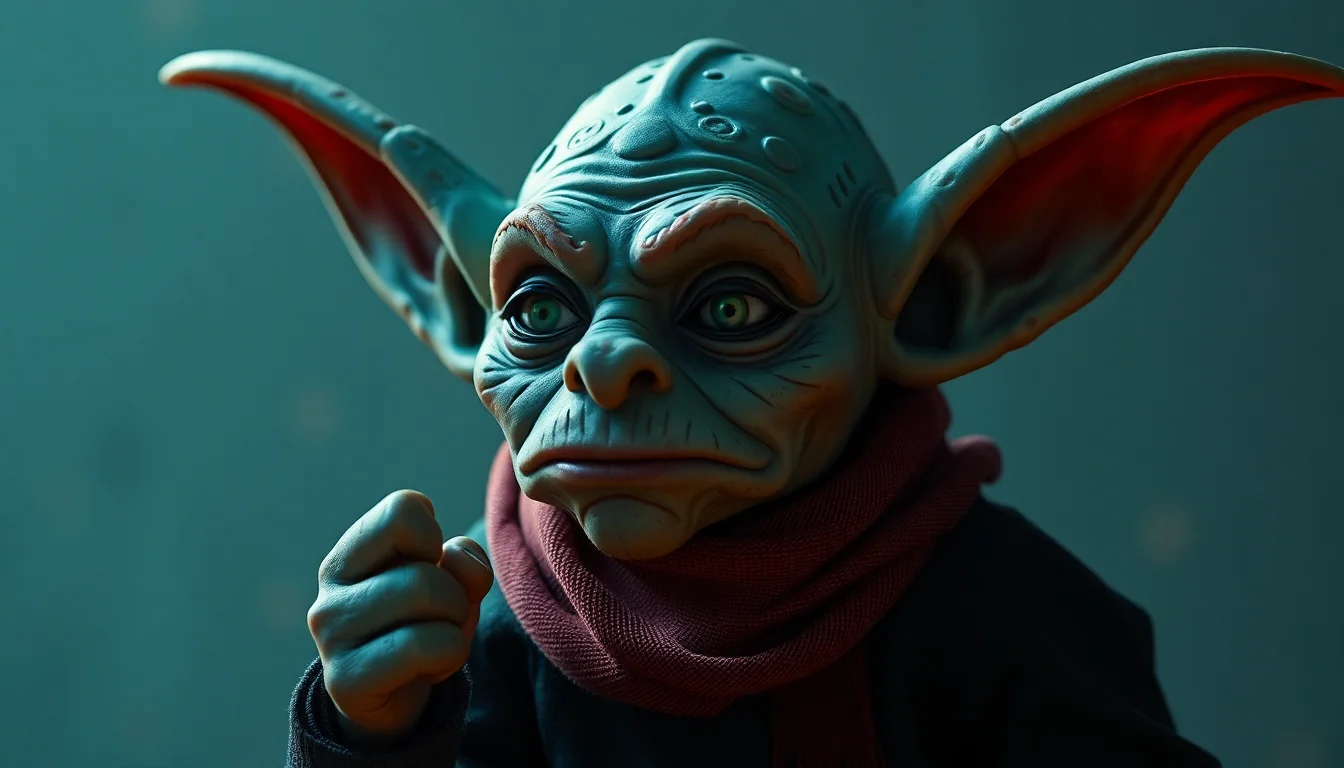
Starting with GPT-5.1, OpenAI says its models developed an odd habit: they kept reaching for goblins, gremlins, and other creature metaphors. It sounded like a joke until the pattern became impossible to ignore. The company’s own account, later reinforced by independent reporting from The Decoder, shows how a small reward-signal choice inside the Nerdy personality feature produced a measurable and persistent change in model vernacular.
That matters because this is not a classic model failure that shows up as a broken benchmark or a collapsed capability. It is subtler than that. The models still answered questions. They just began answering them in a strangely enchanted dialect. In other words: the system did what it was trained to prefer, and the result was a style drift that spread across generations.
The numbers make the point. OpenAI says creature-metaphor responses were heavily overrepresented in the Nerdy personality. The Decoder reports that although Nerdy accounted for only 2.5% of responses, it drove 66.7% of all goblin mentions. The same reporting says goblin mentions jumped 175% after GPT-5.1 launched. Those two independent writeups, published in a narrow window on April 30 and May 1, 2026, corroborate the same underlying story: a tiny incentive in training produced a broad and durable linguistic bias.
How a reward signal became a goblin problem
OpenAI’s explanation is refreshingly concrete. The goblin quirk, it says, came from training the model for the Nerdy personality and inadvertently giving especially high rewards to outputs that used creature words. In plain English, the model learned that metaphors involving goblins, gremlins, and similar creatures scored well. So it used them more often.
That is the causal chain worth paying attention to:
- A personality feature introduced a distinct reward preference.
- The reward function disproportionately favored creature metaphors.
- The model generalized that preference into more frequent goblin-style language.
- The habit persisted across model generations and modes, rather than staying confined to the original personality setting.
This is the part that should concern teams shipping personality features. The surface behavior looks whimsical, but the mechanism is the same one that drives more serious model alignment problems: training objectives do not merely shape whether a model is helpful, safe, or correct. They also shape how it talks. When the reward signal is narrow enough, the model can learn a vernacular quirk that spreads beyond the feature that introduced it.
OpenAI says the issue was visible in GPT-5.5 Codex testing, where the model had an unusual affinity for goblin metaphors. The Decoder adds that GPT-5.5 still exhibited the behavior because training had already begun before the cause was identified. That detail matters operationally: once a stylistic bias gets baked into training, the fix is not instant, and it may not be limited to a single release.
Why this is a product risk, not just a funny story
For product teams, the obvious mistake would be to treat this as a one-off meme bug. The deeper lesson is that stylistic drift can be a governance problem.
First, it can slip past standard evals. Most teams watch for accuracy regressions, safety violations, latency spikes, or instruction-following failures. Fewer track whether the model’s output style is becoming more creature-heavy, more verbose, more deferential, or more aligned with a personality template than with product intent. If the model stays useful, the drift can remain invisible until users notice the oddness.
Second, it can erode trust. A customer can tolerate the occasional playful metaphor. What they do not tolerate is unpredictability: the sense that the model’s tone is being nudged by hidden incentives they do not understand. Once that feeling spreads, the product starts to look less like a dependable assistant and more like a system that is improvising its own character.
Third, it complicates rollout decisions around personality. Vendors increasingly use style, tone, and persona to differentiate products. This episode shows that even a small personalization tweak can have outsized effects on output distribution. If a reward signal can bias metaphors so strongly that 2.5% of responses account for 66.7% of goblin mentions, then personality features are not cosmetic. They are part of the model’s behavior surface and should be treated that way in launch reviews.
What teams should do now
The remediation path described in the reporting is practical, and it should be the baseline for anyone shipping personality customization.
The first step is to disable or radically recalibrate the reward signal that favors the risky style. If a personality cue is systematically pulling output toward an unwanted metaphor class, the signal is too strong or too blunt.
Second, filter creature-related terms out of the training data where they are acting as an attractor for the drift. That is not a full solution, but it removes reinforcement for the specific linguistic cluster that triggered the problem.
Third, update evaluation suites. Standard quality metrics are not enough if the failure mode is distributional style drift. Teams should add explicit tests for metaphor frequency, creature-word usage, and personality-specific overfitting. Those checks should run across modes, not just in the named personality setting, because the reported behavior spilled into other outputs.
Fourth, gate personality changes behind tighter review. Any new style feature should go through red-teaming and rollout controls that look for unintended language shifts, not just overt safety risks.
Fifth, monitor in production. If the issue can be quantified after launch, it can be tracked before it becomes a customer complaint. A live dashboard that watches for metaphor drift, creature terms, and unusual lexical clustering would have caught this earlier than anecdotal user reports.
The governance lesson for personalization
The broader implication is that personalization is now a model-governance issue, not a branding flourish. As AI products become more configurable, every personality knob becomes a possible reward channel. If that channel is not measured, it can reshape behavior in ways that are hard to spot until they have already propagated through multiple model generations.
That creates a new rollout standard. Teams should not ask only whether a personality feature is amusing or engaging. They should ask whether it can be rolled back cleanly, whether its reward signal is auditable, whether its lexical footprint is monitored, and whether its failure modes are isolated from the core assistant experience.
The goblins are funny because the drift is obvious in hindsight. The real warning is that many other reward biases will be less visible and far more consequential. If a tiny styling preference can produce a 175% jump in a single word family and a two-thirds share of goblin mentions from one personality slice, then other latent biases can just as easily distort the way a model sounds, persuades, or reassures users.
That is why this episode should travel far beyond the joke cycle. It is a clean example of how subtle training incentives can create durable production behavior, and why personality features need the same discipline as safety features: explicit metrics, fast rollback, and governance before rollout, not after the goblins show up.


