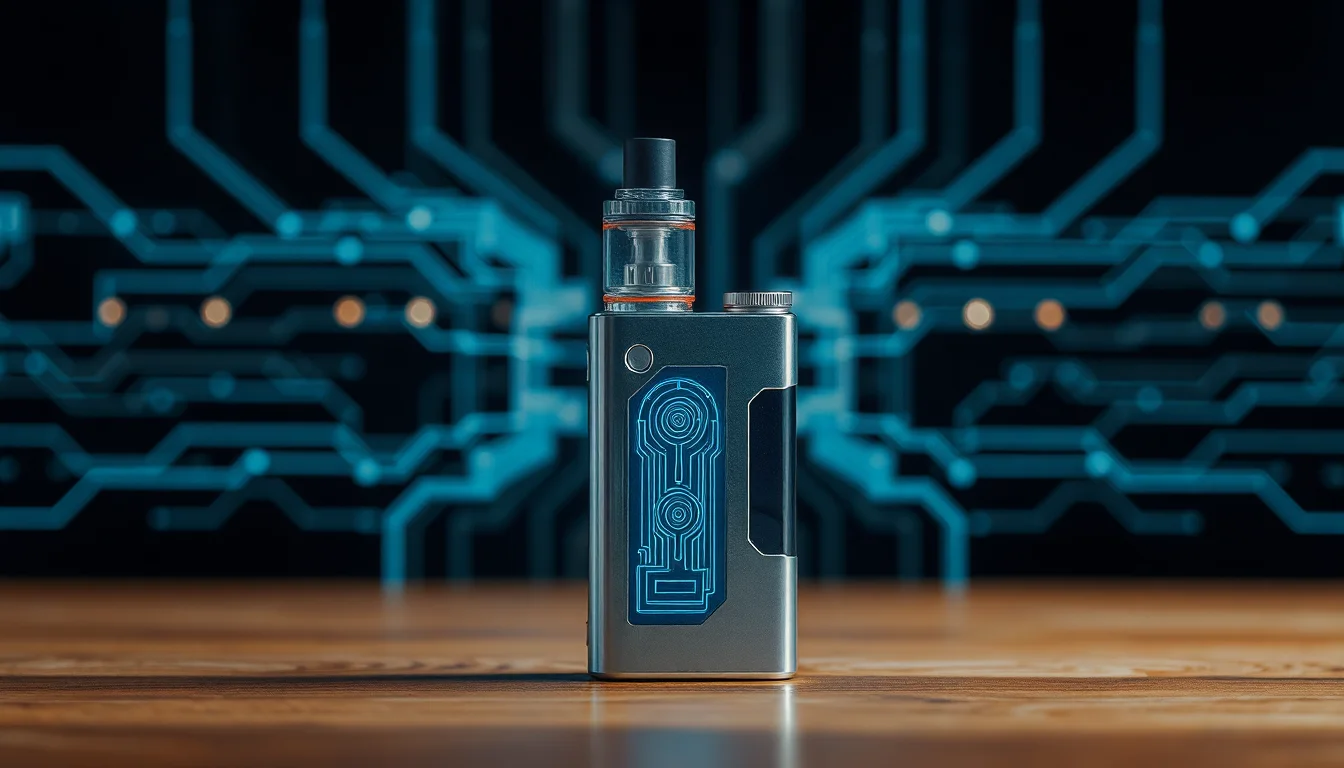
Your Vape Wants to Know How Old You Are
What changed is not that vape sellers want to keep minors out of restricted products; it’s that the control point is moving. According to a recent Wired report, companies are exploring biometric age-verification inside vape cartridges and related hardware, a design that would verify age at the device layer rather than at the point of sale. That matters because once age-gating lives inside the product, the problem stops being a simple retail checkout workflow and becomes an embedded identity system with all the engineering, privacy, and failure-mode baggage that implies.
The business logic is easy to see. If a vendor can show regulators that only age-eligible users can activate or unlock flavored products, it can make a narrower argument for bringing restricted SKUs back into circulation. In other words, compliance becomes the pitch for reopening a market. But the pitch only works if the underlying system can do something much harder than scanning an ID once at checkout: it has to keep verifying access over time, in the hands of users, in a cheap consumer device that is often small, disposable, refillable, or shared.
That distinction is the whole story. A point-of-sale age check is a one-time transaction with a clerk, a scanner, or an app. Device-level age verification is a distributed control system. It needs some combination of biometric capture, identity proofing, device attestation, secure enrollment, and tamper resistance. In practice that could mean a fingerprint reader or face-based check on a companion phone, a cloud service that binds a verified identity to a device token, and firmware that refuses to unlock until the device has been authenticated. The technology stack is plausible. The question is whether it can be made reliable enough, cheap enough, and private enough to survive contact with consumers.
The most realistic architecture would not rely on biometrics alone, because biometrics are better at confirming that the same person is present than at proving that person is old enough to buy a regulated product. A workable design would likely pair a biometric signal with standard identity proofing: government ID capture during enrollment, liveness detection to avoid photo or replay attacks, and a backend that maps the verified adult identity to a cryptographic credential or device-bound entitlement. The biometric component might be used locally as a recurring unlock step, while the age claim itself is established once through a separate verification workflow. That means the real product is not a sensor. It is a chain of trust.
This is where the engineering gets ugly. Consumer hardware optimized for cost and convenience is a bad fit for high-assurance identity enforcement. A vape cartridge or compact device has little room for robust sensors, secure elements, tamper-evident packaging, or a battery budget that can tolerate repeated verification. If the system depends on cloud checks, it now needs connectivity at the moment of use; if it works offline, it needs a securely signed local credential with an expiration policy and some way to prevent replay or cloning. If it uses a phone as the verifier, then the enforcement point quietly shifts away from the device and back to the user’s phone ecosystem, which is much easier to update but also much easier to bypass, spoof, or jailbreak.
The failure modes are not abstract. Enrollment fraud is an obvious one: if a bad actor can verify once with a borrowed ID, a synthetic identity, or a coerced adult account, the system may happily issue an entitlement that can be shared, sold, or replayed. Device sharing is another: a verified adult can hand the product to an unverified user if the unlock state persists too long or the credential can be transferred. Offline operation creates still another problem, because devices that are supposed to enforce age restrictions in the wild will eventually be used where network access is poor or absent. At that point, the product designer has to choose between denying access in edge cases and creating a local bypass. Either option is operationally painful.
Spoofing and tamper resistance are just as hard. A biometric reader in a consumer device is only as strong as its sensor quality, anti-spoofing measures, and firmware integrity. Fingerprint systems can be attacked with lifted prints, fabricated overlays, or poorly implemented liveness checks. Camera-based systems can be fooled by screens, masks, or replayed video if the challenge-response logic is weak. And because the hardware is physically accessible, attackers can probe firmware, replace components, patch update paths, or extract keys if secure boot and hardware root-of-trust protections are not serious enough. The basic tension is that the cheaper and more portable the device, the easier it is to crack. High-assurance identity enforcement usually wants the opposite: a controlled environment, stable hardware, and a strong trust anchor.
Latency and battery life matter too, and they are easy to underestimate. If the device has to wake a sensor, talk to a verifier, or wait on a cloud round trip before every activation, the user experience can degrade quickly. If the verification is too slow, users will look for workarounds. If it is too permissive, the compliance claim weakens. If it is too strict, false rejects create support costs and push legitimate buyers away. That false-positive risk is not just a UX problem; in a regulated market, it can become a commercial one. A system that locks out legitimate adult customers because of sensor drift, lighting conditions, or account mismatches may satisfy a legal theory while failing as a product.
Then there is the privacy burden, which is not a side issue here but a core design constraint. Once a company collects biometric signals or identity-linked verification data, it inherits obligations around retention, consent, breach exposure, and secondary use. If age verification happens repeatedly, the system may need to store a reusable credential, a device history, or some form of audit log proving that a check occurred. Each of those artifacts can become sensitive data. If the verification is cloud-based, the company also has to answer where the biometric or identity proofing data is processed, how long it persists, and who can access it. Even if the raw biometric template is not stored, the metadata linking a verified person to a device can still be highly revealing.
That governance layer is where the proposal becomes more than a technical stunt. If the system is designed well, the least risky path is usually to avoid storing raw biometrics on the vape hardware itself and instead store a revocable token or signed entitlement. But that pushes the trust boundary into a backend service, which means the vendor now has to operate like an identity provider, not just a product manufacturer. Consent has to be explicit, revocation has to be possible, and the business has to decide whether verification records are ephemeral, cached, or retained for compliance review. If those rules are vague, the device becomes a surveillance surface disguised as a consumer product.
That is also why this is a platform strategy story, not just a vape story. If age gating moves into devices, the company that controls the verification stack may capture more value than the brand that sells the cartridge. The real leverage sits in the identity proofing service, the attestation layer, the policy engine that decides when a user must re-verify, and the telemetry that proves compliance to regulators or retail partners. In that world, the product manufacturer becomes a thin wrapper around someone else’s infrastructure. The vendor that owns the credential model and the device trust framework can charge for enrollment, verification, auditability, and ongoing policy updates. That is a very different business than selling flavored consumables.
There is a reason this idea is attractive to companies trying to regain access to restricted categories: it offers a way to translate compliance into product differentiation. But it also creates a dependency on a stack that is expensive to build, expensive to maintain, and easy to overpromise. The closer the system gets to real enforcement, the more it resembles a secure identity platform embedded in low-margin consumer hardware. The farther it backs away from that standard, the less persuasive the compliance claim becomes.
So the concept is technically plausible. A biometric-assisted age check can be built, and some version of device-level gating could probably reduce casual misuse compared with a simple age-gate at checkout. But the commercial and operational math is fragile. The system must survive spoofing, enrollment abuse, offline use, battery limits, firmware tampering, and false rejects, while also answering hard questions about where biometric data lives, who processes it, how long it persists, and whether consent is truly optional. That is not just a policy challenge. It is a product-design problem with security, privacy, and business-model consequences baked into the hardware.


