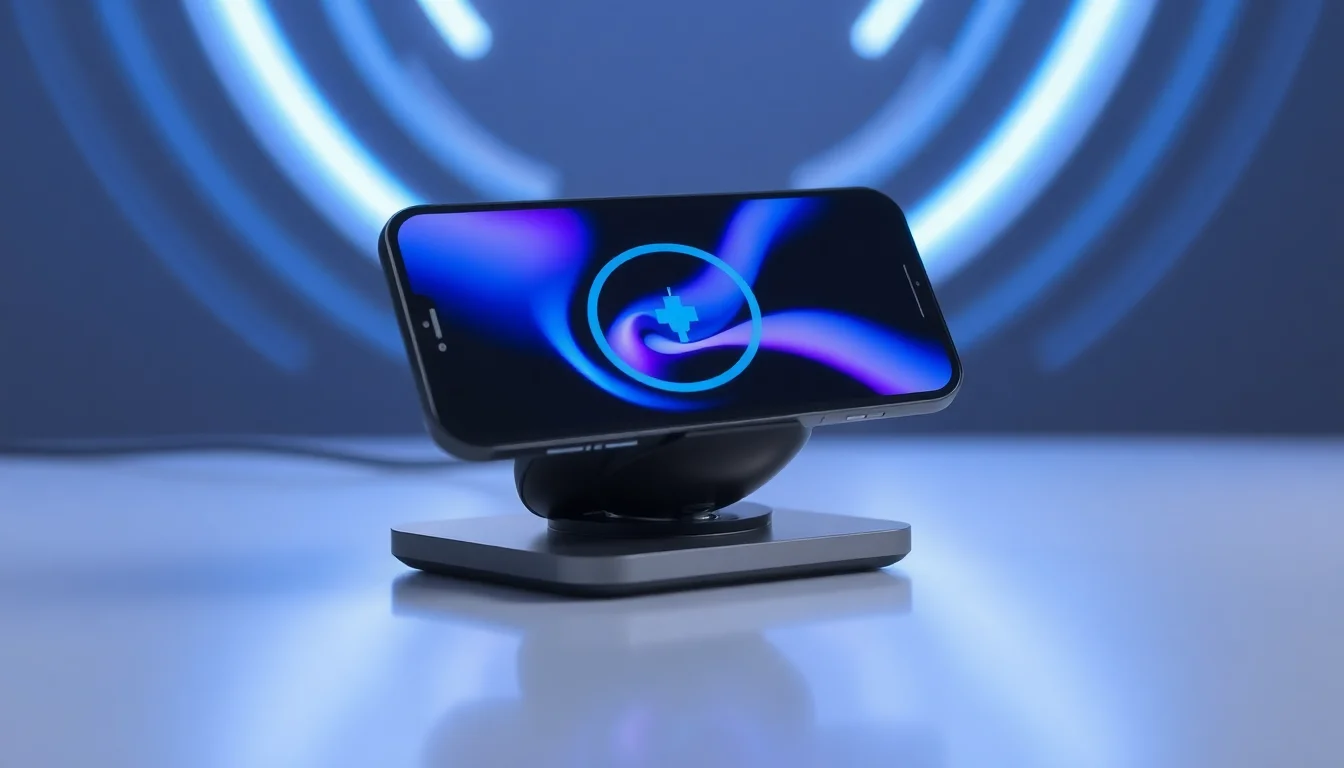
Anker’s Prime Wireless Charging Station has slipped back to $104.99 at Amazon, Best Buy, and Walmart, returning to its best price since the device launched in February. For anyone building an AI-heavy desk setup, that matters more than it would for a generic charging accessory. The station is not trying to be a showpiece; it is trying to solve the boring but persistent problem that comes with long hours of laptop work, model testing, calls, and constant device turnover: keeping a phone, watch, and earbuds powered without turning the desk into cable sprawl.
The timing also fits the way AI work is changing hardware expectations. As local inference, video calls, and always-on mobile workflows keep phones and companion devices in heavier rotation, a charger is no longer just a background utility. It becomes part of the desk’s thermal and spatial budget. In that context, the Prime’s foldable 3-in-1 design looks less like a convenience feature than an attempt to compress a whole charging stack into a single, predictable footprint.
At the center of the product is a Qi2.2 wireless pad that Anker says can deliver up to 25W to compatible iPhone models, including iPhone 16 and newer. That is a meaningful step up from the slower magnetic chargers that have long populated workbenches and bedside tables. The company also claims the charger can take an iPhone 17 Pro from 0 to 50 percent in under 30 minutes. That figure should be read as Anker’s own statement rather than an independently verified benchmark, but it does point to the class of charging behavior the station is built for: short, high-throughput top-ups between sessions rather than overnight trickle charging.
The second engineering piece is the AirCool system on the phone pad. Fast wireless charging is useful only as long as the charger can avoid thermal backoff, because heat is the usual enemy of sustained charging speed and battery longevity. In practical terms, that means a charger like this has to do two things at once: move power efficiently and keep surface temperatures controlled enough that the phone does not spend too much time throttling itself. AirCool is Anker’s answer to that problem, and it is the feature that most directly determines whether the station makes sense in a full workday environment.
That matters for AI-oriented desks specifically because those setups tend to push every device harder, for longer. A phone may be used for authentication prompts, messaging, camera capture, verification, or secondary-screen duties while a laptop is running local tools or cloud-connected workloads. An Apple Watch stays on the wrist all day, then needs a quick top-up. Earbuds cycle through meetings, recordings, and playback. A 3-in-1 charger does not accelerate the AI work itself, but it reduces the friction around the support devices that keep the work moving.
The foldable layout is what makes the station viable on crowded desks in the first place. Instead of distributing three chargers across multiple outlets and cables, Anker has compressed the system into a compact form that can be opened when needed and stowed when it is not. For technical users who already manage monitors, docks, microphones, and external storage, that reduction in surface clutter is not cosmetic. It is part of keeping the workspace legible and easier to reconfigure.
That also helps explain why the current price move is interesting from a market perspective. The $104.99 street price is being offered simultaneously at Amazon, Best Buy, and Walmart, which suggests a coordinated promotion rather than an isolated retailer discount. The fact that this is the lowest price since the February launch hints at a familiar accessory lifecycle: initial premium pricing, followed by a broader push once the product has had time to establish its feature set and compete for shelf space.
For Anker, that kind of promotion does double duty. It keeps the device visible in a crowded 3-in-1 and fast-charging category, and it positions the station as an attainable upgrade for buyers who are already spending on desk infrastructure tied to modern computing habits. In other words, the company is not just discounting a charger. It is anchoring the product at a level that makes it easier to slot into AI-era desk builds where reliability, compactness, and thermal control matter more than novelty.
That is probably the right lens for evaluating the Prime Wireless Charging Station now. Its value is not that it charges one phone especially fast; it is that it packages fast wireless charging, smartwatch support, earbud support, and active cooling into something small enough to live on an otherwise crowded workspace. For the technical buyer, that combination is what turns a charging accessory into infrastructure.


