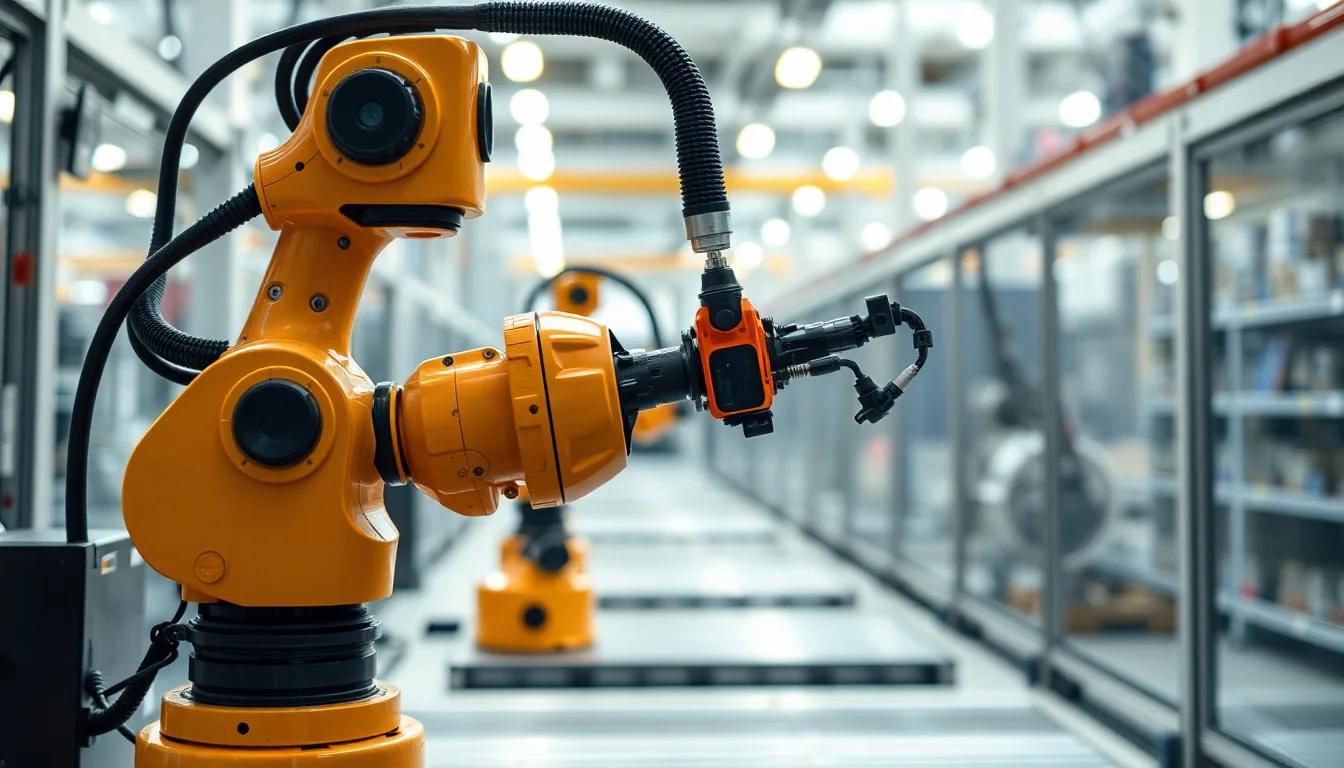
Ency Software’s latest Ency Hyper update is notable less for any single feature than for the direction it points. The platform now extends hybrid robot programming across mixed-brand cells, adds support for SCARA robots, and integrates 3D vision into a workflow that blends offline simulation with real-time shop-floor interaction. For manufacturers operating heterogeneous fleets, that combination matters because it targets one of automation’s most persistent bottlenecks: getting programs into production without long commissioning cycles or unnecessary downtime.
The core promise of hybrid programming is straightforward. Teams build and validate robot logic in offline simulation, then bring that program into the cell for live verification and adjustment before full deployment. In practice, that can reduce the gap between engineering intent and physical execution, especially when the line includes multiple robot brands and varied work envelopes. Ency says the updated Ency Hyper now supports mixed-brand cells spanning ABB, Fanuc, Kuka, Yaskawa, Universal Robots, and others, which makes the platform relevant to plants that cannot assume a single-vendor environment.
That cross-brand angle is important because the industry has increasingly converged on mixed fleets rather than greenfield installs. In those settings, programming tools that can abstract away brand differences while still preserving enough specificity for safe execution become strategically useful. The update also broadens the platform into SCARA applications, which suggests Ency is aiming beyond general-purpose articulated arms into compact, high-speed pick-and-place and handling workflows where cycle consistency and footprint matter.
The addition of 3D vision is another meaningful technical layer. According to the update, 3D cameras enable surface detection and part localization, allowing robot motion to adapt to real geometry instead of relying only on predefined paths. That matters for cells where part presentation is imperfect, tolerances vary, or fixture alignment is not guaranteed. In those cases, a simulation-first tool still needs a feedback loop from the actual environment, and vision is what makes that loop useful rather than merely decorative.
This is where the enterprise-SaaS relevance comes into view. Platforms like Ency Hyper are increasingly judged not just by programming convenience but by how they fit into a broader automation operating model: faster deployment, less line disruption, and better orchestration across robot types and sites. The promise is not a flashy productivity leap so much as a cleaner path to reducing downtime and standardizing workflows across a fleet that may have been assembled incrementally over years.
That also explains why this kind of update lands at the intersection of software architecture and plant governance. Cross-brand, simulation-first programming can improve flexibility, but it also raises practical questions about interoperability, version control, licensing, and data standards. If a company wants to use one platform across brands, it needs to understand how program logic maps to each controller, how updates are managed, and where the system depends on vendor-specific connectors or configuration assumptions.
For integrators, the technical implication is clear: the value shifts from writing robot code in isolation to managing a workflow that connects digital models, live validation, and site-specific constraints. For operators, the question is less about whether the platform can simulate motion than whether it can support reliable change management across production lines. And for product teams, the challenge is to make sure that 3D vision, SCARA support, and mixed-brand compatibility are not treated as separate features, but as parts of one deployable system.
The broader signal is that automation software is moving closer to the enterprise-software playbook. Buyers increasingly expect vendor-agnostic tooling, governed data flows, and deployment models that can be rolled out across plants without recreating the stack each time. Ency Hyper’s update does not settle those issues, but it does show where the market is heading: toward hybrid programming environments that can bridge simulation and the shop floor while accommodating the reality of mixed-brand robotics.
What teams should watch next is less the headline feature list than the operational plumbing behind it. Can the platform integrate cleanly with MES and PLC environments? How much manual work is still required to adapt programs across brands? What are the licensing terms for multi-cell or multi-site use? And how does Ency handle updates as the ecosystem of supported robots expands? Those questions will determine whether this update becomes a practical standardization tool or just another point solution in an already crowded automation stack.


