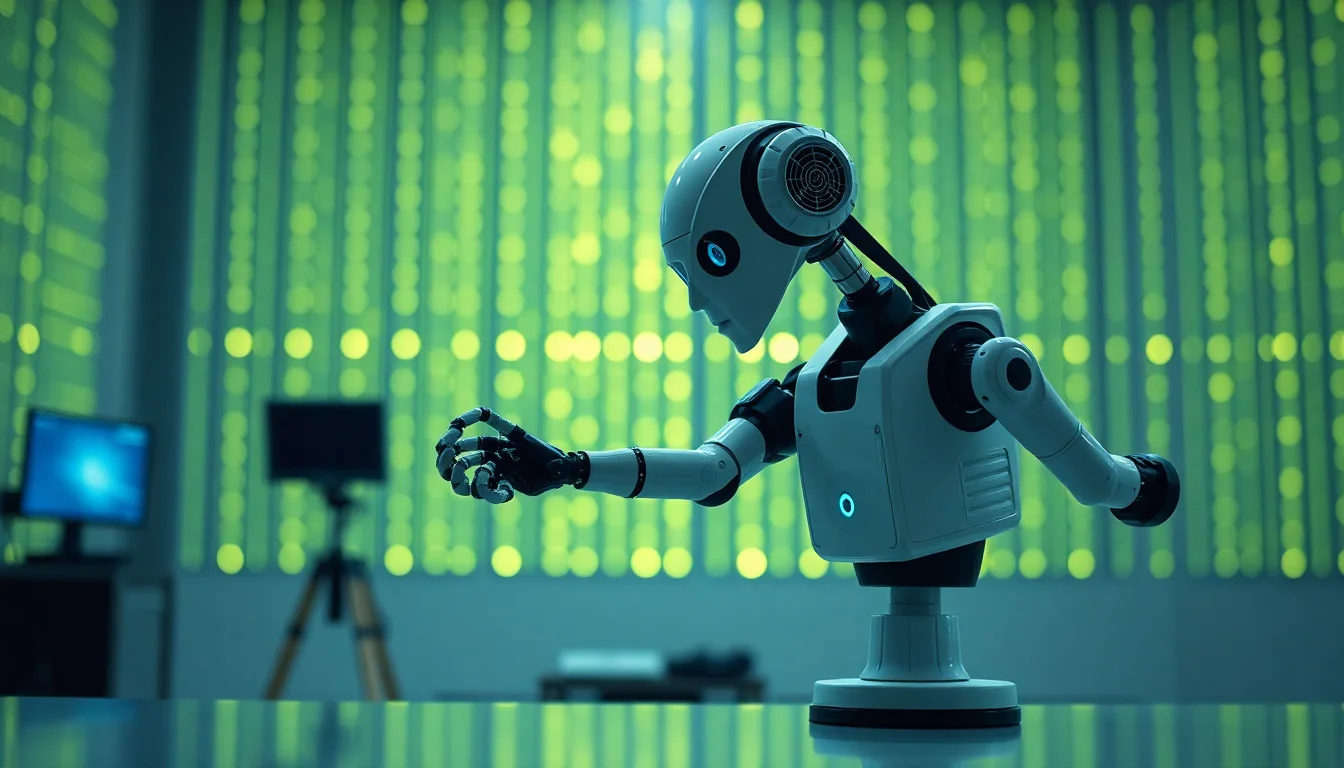
PAL Robotics is using ICRA 2026 in Vienna to make a point that matters well beyond a single product launch: advanced manipulation hardware is no longer being presented as a standalone machine, but as part of a workflow that ties together teleoperation, embodied AI, data collection, and sim-to-real deployment.
The company says it will debut a new manipulation robot at the IEEE International Conference on Robotics and Automation, held June 1–5, with live interactive demos at booth 067. That framing is important. Rather than treating the robot as a static exhibit, PAL is putting the emphasis on how people interact with it, how data is gathered from those interactions, and how that data can feed development loops that start in simulation and end in the field.
For technical readers, that shift matters because manipulation is increasingly a software-and-systems problem as much as a hardware one. The underlying question is not only whether a platform can grasp, place, or recover from error in a demo. It is whether the stack around it can capture useful trajectories, transfer policies from simulated environments into physical ones, and support repeatable evaluation when the system is operated by humans, autonomy modules, or some combination of both.
PAL’s public framing suggests that is the center of gravity here. The company is explicitly connecting embodied AI with teleoperation and data collection, which implies a platform built to generate operational traces rather than just showcase movement. In practical terms, that kind of setup can be more useful to teams trying to build robotic products because it aligns the robot, the interface, and the learning pipeline around the same deployment problem.
That is especially relevant for manipulation, where the gap between simulation and reality remains a stubborn issue. Sim-to-real transfer is often discussed as if it were a model selection problem, but in production it usually depends on the fidelity of the data pipeline, the consistency of teleoperation inputs, the quality of annotation or episode structuring, and the safety envelope around each trial. A platform that foregrounds those pieces is not just adding features; it is proposing a workflow.
If PAL’s showcase is executed as described, the most consequential element may be the tooling layer around the robot. Live teleoperation suggests a path for collecting demonstrations, debugging edge cases, and staging human-in-the-loop interventions. Data collection in a conference demo setting can also hint at how the company expects teams to build training corpora: not as one-off clips, but as structured episodes that can be replayed, benchmarked, and mapped back to specific physical behaviors.
That creates technical implications for anyone evaluating manipulation platforms. First, the data schema starts to matter as much as the actuator stack. If the robot is meant to support embodied AI workflows, teams will want to know what is captured: control signals, time-stamped sensor streams, task metadata, failure modes, recovery actions, and whether simulation artifacts can be aligned with real-world runs in a way that is actually reusable.
Second, teleoperation becomes a product surface, not an afterthought. For deployment teams, the quality of teleoperation tooling can determine whether a robot is useful for bootstrapping policies, collecting corrective demonstrations, or handling exceptions safely. If the interface is poor, data quality suffers. If it is strong, it can accelerate both training and operational oversight.
Third, benchmarking will need to account for the full loop, not just isolated task success. A manipulation system that looks promising in a demo may still struggle under different lighting, object variability, latency, or operator skill variance. The relevant benchmark is increasingly a combination of simulated performance, physical performance, and the cost of moving between the two.
That is where PAL’s positioning could influence the market even without any dramatic spec sheet claims. Competitors in manipulation are already being pushed to think beyond isolated robot arms or narrow autonomy claims. A platform that combines hardware with live teleoperation and data-centric workflows nudges the conversation toward deployability: how quickly a team can instrument the system, collect useful traces, and close the loop from research to operations.
It may also affect procurement logic. Buyers in robotics are often forced to choose between a promising research platform and an operationally viable product. By making embodied AI and sim-to-real the headline, PAL is signaling that those categories should not be separate. For organizations building AI-enabled robotics products, that creates pressure to evaluate whether a platform fits into existing MLOps-style or data-engineering-style processes, not just whether it can complete a task in a booth demo.
Still, the event should be watched with a healthy skepticism appropriate to any conference launch. The key unknowns are not whether the robot can attract attention at ICRA 2026, but whether the surrounding workflow scales beyond live demonstrations. Can it support reproducible data capture across different operators? Can it maintain safety and consistency when moved from a controlled booth environment into less curated settings? Can the sim-to-real bridge survive task diversity, changing objects, and non-ideal conditions?
Those questions are especially important because manipulation systems are often judged on headline behavior rather than on the boring infrastructure that makes them useful. The real test is whether the platform reduces integration friction for teams that need to train, validate, and deploy embodied systems repeatedly. That means looking closely at how PAL structures its teleoperation pipeline, what assumptions its embodied AI layer makes about environment consistency, and how the robot handles failure recovery during live interaction.
For practitioners, the announcement is a reminder to treat robot platforms like data products. If you are assessing something like PAL’s new manipulation robot, ask how the system records demonstrations, how those episodes are versioned, whether the control interface can be standardized across operators, and how the resulting datasets map back to simulation assets. Those are the details that determine whether a robot can become part of a real deployment playbook.
ICRA has always been a place where prototypes meet scrutiny. PAL Robotics appears to be leaning into that dynamic by making booth 067 about workflow, not spectacle. If the company can show a credible connection between teleoperation, embodied AI, and sim-to-real transfer, the debut will matter less as a one-off unveiling and more as a preview of how manipulation platforms may be judged going forward.


